Katie Zacharia’s First White House Briefing Draws Attention—and Sparks an Online Debate
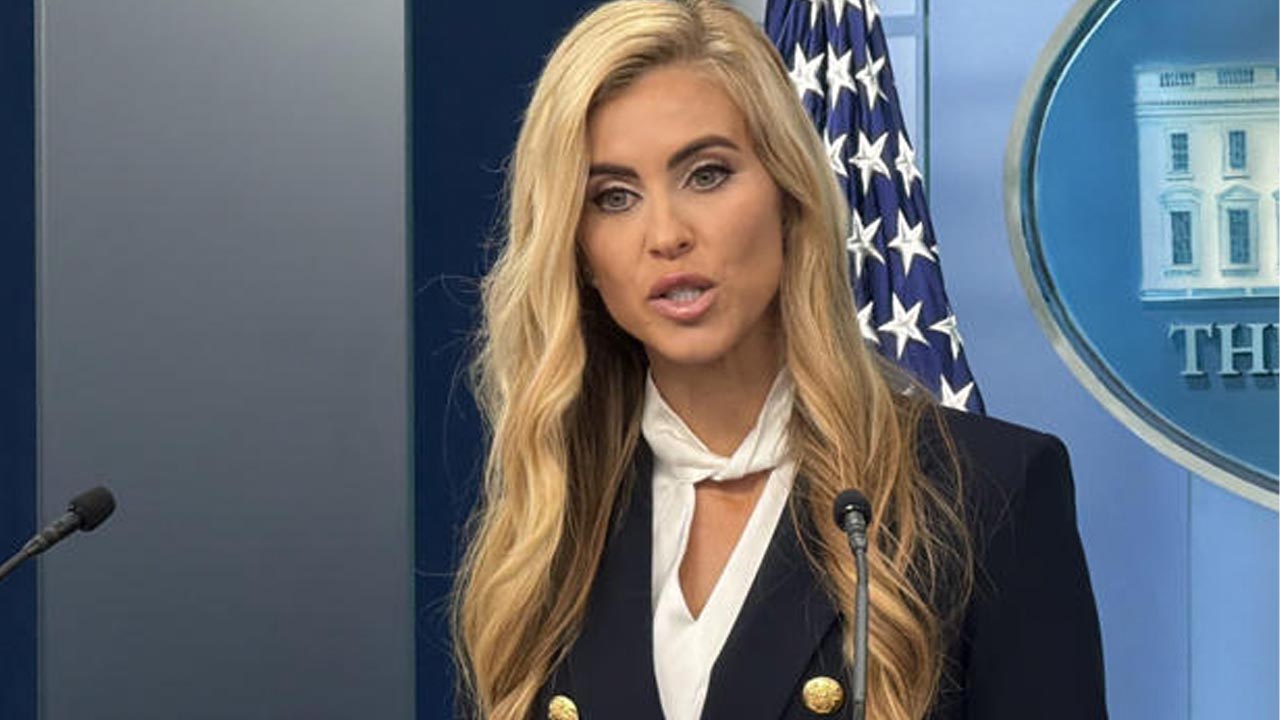
Katie Zacharia stepped behind the podium in the White House briefing room for her first appearance as press secretary, facing a room full of journalists and an audience watching closely from home. But the briefing soon became a topic of online debate, with reactions focusing on both her performance and her appearance.
According to reports, the briefing lasted less than 15 minutes, and only three reporters had an opportunity to ask questions. While some viewers considered the short appearance an underwhelming introduction, others urged people to give the new press secretary time to settle into the role.
The mixed response quickly spread across social media, turning Zacharia’s first briefing into a wider conversation about public scrutiny, political communication, and the way women in high-profile positions are judged.
Social Media Reacts to Her First Briefing
Online responses to Zacharia’s debut varied considerably. Some users criticized her delivery and questioned whether she had made a strong first impression. Others compared her performance with that of former White House press secretary Karoline Leavitt.
One social media user described the briefing as resembling a “flight attendant doing the safety briefing for the first time,” while another made a pointed comparison between Zacharia and Leavitt.
Some comments went further, questioning Zacharia’s qualifications and suggesting that her appearance played an outsized role in public perceptions of her appointment.
Such reactions illustrate the challenges facing anyone who takes on a highly visible communications role in a politically divided environment. A first briefing can generate immediate judgments, but a short appearance offers only a limited basis for assessing someone’s long-term performance.
White House Officials Defend Zacharia
Not everyone joined in the criticism. White House communications director Steven Cheung publicly expressed support for Zacharia, describing her as a strong addition to the administration’s team.
He praised her intelligence and qualifications, saying he believed she would do an excellent job communicating with the American public about the administration’s work.
The defense highlights the contrast between the administration’s confidence in its appointee and the skepticism expressed by some online commentators.
Ultimately, Zacharia’s performance in the role will be judged over time, through her handling of reporters’ questions, the clarity of her communications, and her ability to represent the administration during daily briefings.
An Old Photograph Fuels a Separate Conversation
Following the briefing, social media users began circulating older photographs of Zacharia, including an Instagram image reportedly shared in March 2013.
The resurfaced image prompted discussion about how her appearance may have changed over the years. Some commenters described the difference as dramatic, while others pointed out that hairstyles, makeup, fashion, photography, and personal preferences can change substantially over more than a decade.
The comparison also revived discussion of phrases such as “MAGA makeover” and “Mar-a-Lago face,” informal labels used online to describe certain beauty and cosmetic trends associated by some observers with women in conservative political and social circles.
However, these phrases are subjective social-media labels, not medical or scientific categories. Photographs alone cannot establish whether someone has undergone cosmetic procedures, and changes in appearance should not be treated as proof of any particular intervention.
What Does “MAGA Makeover” Mean?
The phrase “MAGA makeover” has appeared in online discussions about the appearance and styling of some women associated with Donald Trump’s political circle. The related expression “Mar-a-Lago face” is also used by commentators to describe a perceived aesthetic involving carefully styled hair, pronounced makeup, and sculpted facial features.
The labels reflect a cultural conversation about beauty, politics, and social identity. They do not necessarily describe a consistent look, nor do they establish that the people being discussed have undergone cosmetic procedures.
In Zacharia’s case, the online discussion has largely revolved around comparisons between an older photograph and more recent public images. Without reliable confirmation, claims about specific cosmetic treatments remain speculation.
Others Push Back Against the Appearance Criticism
As the debate continued, some social media users challenged the tone of the conversation. They argued that looking different from 13 years ago is hardly unusual and that people should be cautious about criticizing someone based on photographs taken at different points in their life.
One commenter noted that personal styles change over time, while another encouraged people to be kinder about the natural process of aging.
Their responses offered a counterpoint to the more personal criticism directed at Zacharia. They also raised a broader question about the standards applied to women in public life, whose appearance can become a subject of intense discussion even when their professional performance is the original news event.
The Debate Goes Beyond One Briefing
Zacharia’s first appearance has prompted two distinct conversations: whether her initial briefing met viewers’ expectations and why her appearance became such a prominent subject of discussion.
The first question can be assessed through her future briefings, the information she provides, and how effectively she responds to journalists. The second reflects a familiar pattern in public life, where women in visible roles often face scrutiny over their looks alongside their professional responsibilities.
For now, online reactions remain divided. Supporters have defended Zacharia and expressed confidence in her appointment, while critics have questioned her first performance and commented on her appearance.
As she continues in the role, her work at the podium will provide a clearer basis for evaluating her effectiveness as White House press secretary than viral comparisons or speculation about photographs from years ago.