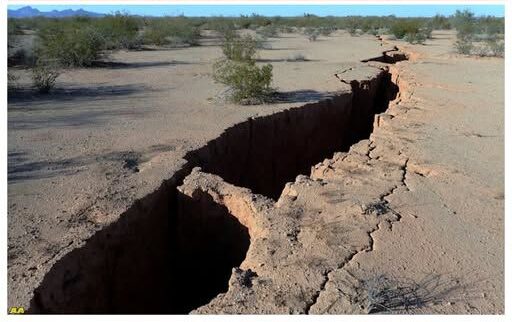
Across Arizona, the ground is quietly giving way. No earthquakes, no sirens—just sudden cracks splitting driveways, tilting walls, and tearing roads apart. One day the land feels solid. The next, it isn’t.
These are earth fissures, and they’re spreading across Arizona’s fastest-growing regions.
On the surface, the state looks like a success story. Phoenix, Tucson, and surrounding suburbs keep expanding. New homes replace farmland, distribution centers sprout, and highways stretch deeper into the desert. But beneath that growth, the ground is literally collapsing.
It’s not tectonics. It’s water—or rather, the lack of it.
For decades, Arizona has relied on groundwater to fuel cities, farms, and industry. Aquifers formed over thousands of years have been drained faster than nature can refill them. When water disappears, underground sediment layers compress—and once compressed, they don’t bounce back. The surface sinks, creating land subsidence. Earth fissures are the dramatic, jagged result.
These cracks can stretch for miles, slicing through desert, neighborhoods, and farmland. Some are mere inches wide. Others open into gaping trenches several feet across. They appear without warning—and once they form, they never heal.
Continue reading on next page…