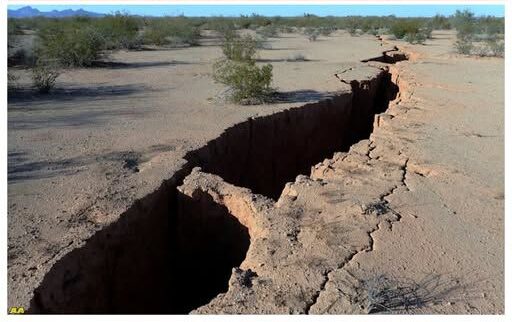
For homeowners, the consequences are severe. Foundations split. Garages separate from houses. Interior walls fracture. Insurance coverage is spotty, and repairs can cost tens of thousands—or leave property permanently unsafe. Farmers see fields cut in half, irrigation systems destroyed, and equipment made dangerous to operate. Roads, canals, and utilities all suffer, spreading the impact beyond individual properties.
Scientists can map fissure-prone zones and track groundwater loss—but they cannot reverse the damage. Once an aquifer collapses, the underground support is gone forever.
Arizona now faces hard choices. Growth has long assumed water will always be found—deeper wells, new pipelines, imported supplies. Fissures show the limits of that logic. Areas that appear safe today may be the disasters of tomorrow.
Policy has struggled to keep up. Groundwater laws differ across regions. Some enforce strict management; others barely regulate pumping. Developers can legally build in subsiding zones, leaving future homeowners with the fallout. Disclosure rules exist, but long-term risks are often underplayed.
The human cost is real. Residents describe the shock of seeing the earth open beneath them, and anxiety lingers where fissures run. Property values can crash. Selling becomes difficult. Staying feels risky.
The warning signs are clear. Groundwater levels are plummeting. Satellite data shows the land sinking every year. Fissure maps grow longer. Scientists agree: the question isn’t if fissures will appear, but where and how close to people and infrastructure they will strike next.
Experts recommend bold steps: restricting development in high-risk areas, recharging aquifers, and redesigning cities to use less water. None are simple, but the alternative is building on borrowed ground—betting against physics, with the land silently keeping score.
Arizona’s deserts demand respect. Fissures aren’t sudden disasters—they’re decades-long consequences, reminders that water and land have limits. The cracks are already forming. Whether policy acts before it’s too late remains the state’s greatest challenge.
Have you noticed changes in the land where you live? Share your experience in the comments and let’s talk about how communities can adapt.