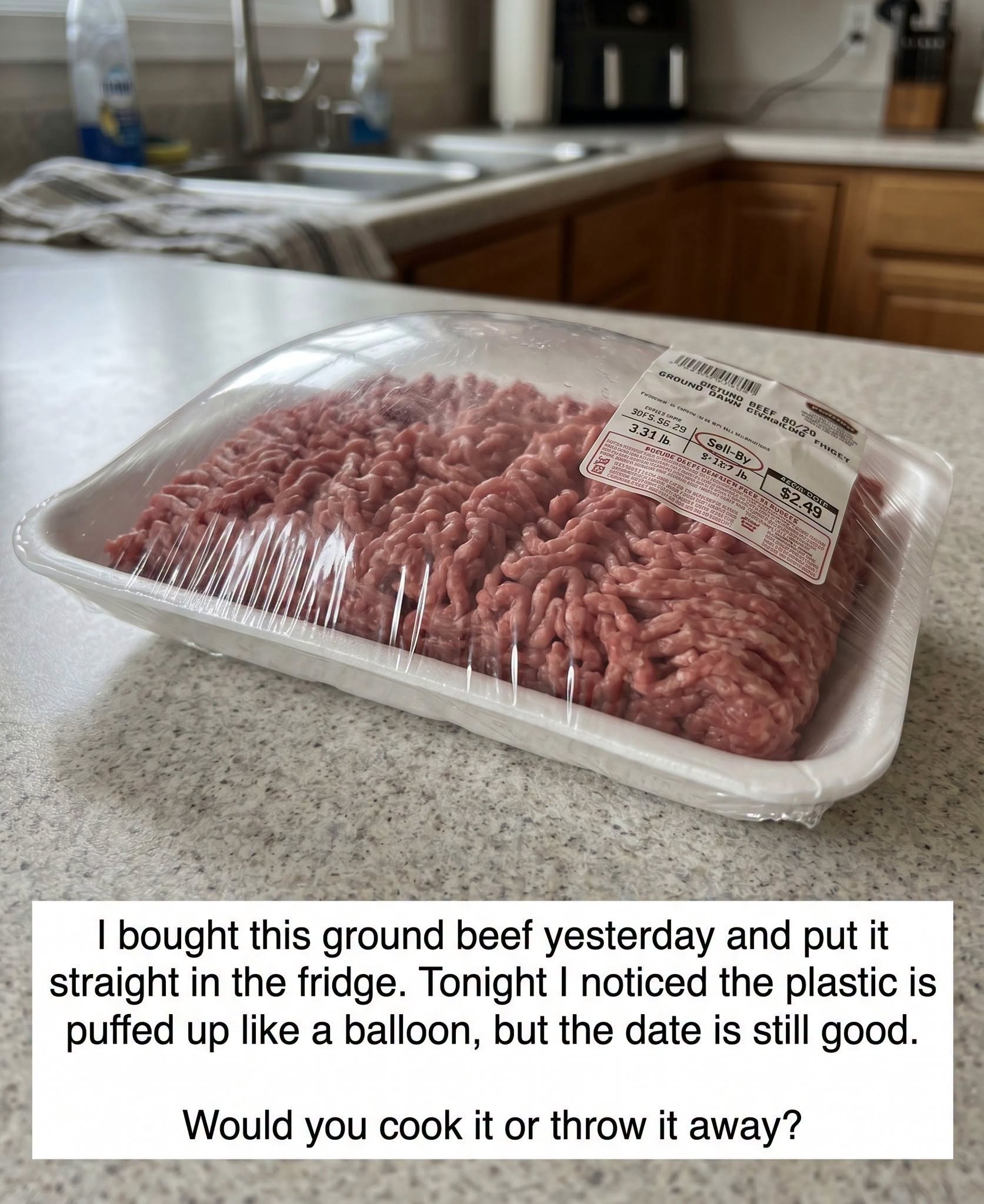
A swollen food package can catch your attention in seconds. Whether it’s a bag of chips that seems unusually full or a container of refrigerated food that looks puffed up, it’s natural to wonder whether the product is still safe to eat.
The answer depends on what’s inside the package.
Not all bloated packaging is a sign that something is wrong. In fact, some products are intentionally packed with extra gas to protect their contents. Potato chips are one of the best-known examples. Manufacturers often fill chip bags with nitrogen, an odorless, food-safe gas that helps prevent the chips from breaking during shipping and storage. The gas also helps preserve freshness by reducing exposure to oxygen, which can cause chips to become stale.
So if a bag of chips feels inflated, there is usually no reason for concern. That extra space is part of the product’s design, not a manufacturing mistake.
However, the situation is very different when it comes to perishable foods.
If packages containing items such as fresh meat, cheese, deli products, dairy, or refrigerated prepared meals appear swollen, it may indicate that gas has built up inside the package. In some cases, this can happen as microorganisms grow and produce gases during the spoilage process. While not every swollen package contains harmful bacteria, visible inflation is a warning sign that the product may no longer be safe or of good quality.
The same caution applies to canned foods. Bulging or swollen cans should never be ignored. Damage, improper storage, or contamination can cause pressure to build inside the can, making it unsafe to consume. If a can is leaking, dented near the seams, or noticeably expanded, it is generally safest to dispose of it without opening it.
Keep reading…