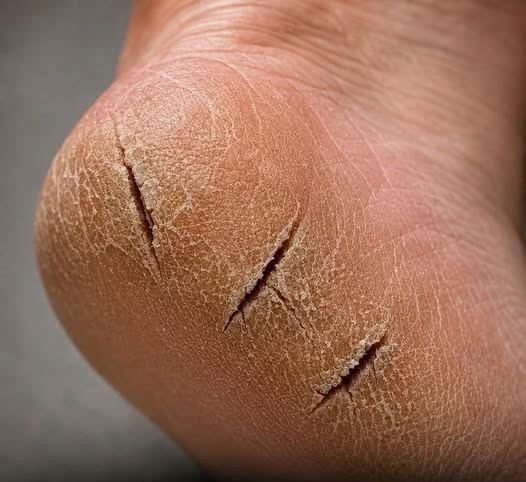
Dry, cracked heels often begin as a small cosmetic issue.
The skin may feel rough.
It may look flaky.
You may notice a hard patch around the back or sides of the heel.
At first, it can seem harmless.
But when dryness continues and pressure repeatedly stretches the skin, those rough areas can eventually split into visible cracks.
In mild cases, the cracks stay near the surface.
In more severe cases, they can deepen enough to make standing or walking uncomfortable.
The good news is that simple, consistent care can often make a noticeable difference.
One of the easiest options is something many people already have at home:
Petroleum jelly.
Why Heels Crack So Easily
Your heels handle a large amount of pressure every day.
Every time you stand or take a step, body weight pushes down on the heel and causes the surrounding skin to spread slightly outward.
Healthy skin is flexible enough to tolerate that movement.
Dry skin is not.
When the heel loses moisture, the skin becomes harder, stiffer, and less elastic.
That means normal pressure from walking can eventually cause the surface to split.
So cracked heels are usually not caused by dryness alone.
They are often the result of two things happening together:
Dry skin and repeated pressure.
Everyday Habits Can Make the Problem Worse
Several ordinary habits can increase heel dryness.
Very hot showers may strip moisture from the skin.
Walking barefoot can place additional stress directly on the heel.
Open-back shoes such as sandals or flip-flops can allow the heel to spread outward more during walking.
Standing for long periods can also increase sustained pressure.
For someone whose skin is already naturally dry, those everyday factors may be enough to turn mild roughness into deeper cracking over time.
Why Petroleum Jelly Can Help
Petroleum jelly works differently from exfoliating creams or foot files.
It does not remove thick skin.
Instead, it forms a protective layer over the surface.
That layer helps reduce water loss from the skin.
In simple terms, it helps lock moisture in.
As the heel stays better moisturized, the skin can gradually become softer and more flexible.
That flexibility matters because softer skin is less likely to keep splitting under normal pressure.
Continue reading…