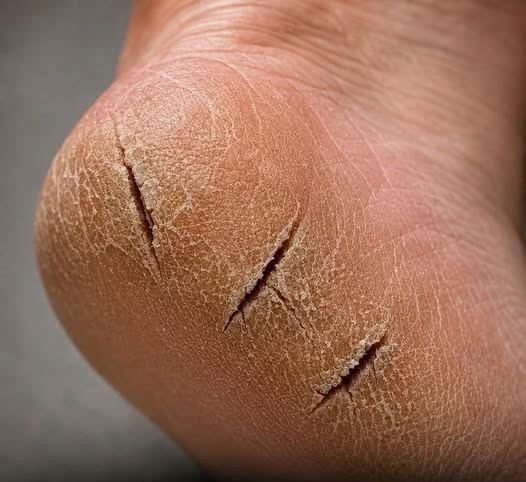
For this reason, petroleum jelly is often used as part of a nighttime routine for dry heels.
Start With a Warm Foot Soak
A simple routine can begin with a short soak in warm water.
The goal is not to keep the feet underwater for a long time.
A few minutes can help soften thick, dry skin before moisturizing.
The water should be warm rather than very hot.
Hot water may actually make dryness worse.
After soaking, gently pat the feet dry.
The skin can remain slightly damp.
That small amount of moisture gives the petroleum jelly something to seal in.
Remove Loose Skin Carefully
If thick dead skin has built up, it may help to gently smooth the area.
A pumice stone or soft foot file can be used with light pressure.
The key word is gently.
Trying to scrape away all rough skin at once can irritate the heel and make existing cracks worse.
If the area is painful, bleeding, or deeply cracked, aggressive filing should be avoided altogether.
The goal is gradual improvement, not removing as much skin as possible in one session.
Apply a Generous Layer
Once the heel is clean and slightly damp, apply petroleum jelly over the dry areas.
Spread it across the rough skin and around the edges of existing cracks.
It does not need to be rubbed in completely.
Its main job is to sit on the surface and slow moisture loss.
Consistency matters more than using a huge amount once.
Applying it regularly gives the skin a better chance to stay soft over time.
Cotton Socks Can Help Overnight
After applying petroleum jelly, cotton socks can be useful.
They help keep the product in contact with the heel instead of allowing it to rub off on bedding.
They also make nighttime a convenient treatment period because the feet remain relatively still for several hours.
By morning, the skin may feel noticeably softer.
For mild dryness, a difference may be visible within a few days.
More pronounced cracking can take longer.
Do Not Expect Deep Cracks to Disappear Overnight
Mild dryness can respond quickly to regular moisturizing.
Deeper fissures may take one to two weeks or longer.
The timeline depends on several factors:
How thick the skin is.
How deep the cracks are.
How much pressure the heels continue to receive.
Whether the moisturizing routine is done consistently.
Stopping as soon as the heels start feeling better may allow dryness to return.
Regular maintenance is often necessary, especially for people who naturally develop thick heel skin.
Thick Calluses May Need More Than Petroleum Jelly
Petroleum jelly is good at sealing in moisture.
But it does not actively break down thick callused skin.
If the heel has developed a heavy buildup, products containing other ingredients may be more helpful.
Common options include:
Urea.
Salicylic acid.
Alpha hydroxy acids.
These ingredients help soften or loosen hardened surface skin.
That makes them different from petroleum jelly, which mainly works as a moisture barrier.
For some people, combining gentle callus care with consistent moisturizing works better than either approach alone.
Footwear Matters More Than Many People Realize
You can moisturize every night and still struggle with cracked heels if the same pressure keeps returning during the day.
Open-back shoes can make the problem worse because the heel is allowed to spread outward with each step.
Flip-flops and similar footwear may provide limited support.
Supportive shoes can reduce some of the repeated stress placed on the heel.
That gives moisturized skin a better chance to recover instead of repeatedly stretching and splitting.
Avoid the Temptation to Scrub Too Hard
Rough heels can make aggressive exfoliation feel like the fastest solution.
It usually is not.
Scrubbing too hard may irritate the skin, create tenderness, or worsen small cracks.
A slower approach is safer:
Gentle filing.
Regular moisturizing.
Better footwear.
Patience.
The goal is not to strip away every hard layer immediately.
The goal is to gradually restore softer, more flexible skin.
Some Cracked Heels Need Medical Attention
Home care is not always enough.
Medical evaluation may be appropriate if cracks become painful, begin bleeding, or fail to improve after several weeks.
Deep fissures are more than a cosmetic problem because they involve damaged skin.
Continued walking places pressure on those areas and may delay healing.
If the heel is becoming worse instead of better, repeatedly applying moisturizer without further assessment may not be enough.
Watch for Signs of Infection
Once a crack becomes deep, the skin barrier is no longer fully intact.
That means bacteria may have an easier route into the tissue.
Any concerning changes around the crack deserve attention.
Increasing pain, worsening redness, swelling, drainage, or other unusual changes should not simply be treated as routine dryness.
At that point, the priority shifts from softening the skin to protecting damaged tissue.
People With Diabetes Should Be Extra Careful
Foot problems require additional caution in people with diabetes.
Aggressive scraping should be avoided.
Any crack that becomes painful, starts bleeding, looks infected, or does not improve should be taken seriously.
Regular foot checks are especially important because significant skin problems should not be overlooked.
Home treatment can be helpful for mild dryness, but persistent or worsening damage may require professional care.
The Best Results Come From Consistency
Dry heels usually develop gradually.
Improvement often works the same way.
A simple routine can make a real difference:
Soak the feet briefly in warm water.
Gently remove loose dead skin if appropriate.
Apply petroleum jelly while the skin is still slightly damp.
Wear cotton socks overnight.
Use more supportive footwear during the day.
Repeat consistently.
For thicker calluses, products containing ingredients such as urea or other softening agents may provide additional help.
The Bottom Line
Petroleum jelly will not magically remove hardened skin overnight.
But it can be a very effective way to reduce moisture loss and help dry heel skin become softer and more flexible.
That alone may lower the chance of cracks continuing to split under normal pressure.
For uncomplicated dryness, steady care can often improve comfort within days and produce larger changes over one to two weeks.
If the heels become painful, bleed, appear infected, or do not improve despite regular care, medical advice is the safer next step.
Have you ever tried petroleum jelly for cracked heels? Share what worked best for you in the comments.