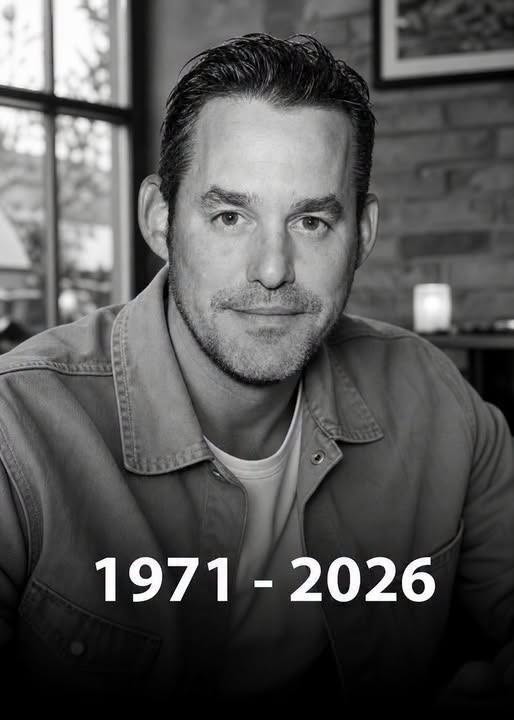
When Buffy the Vampire Slayer premiered in 1997, Brendon became Xander Harris, one of Buffy’s closest friends.
Xander wasn’t the strongest person in the group.
He wasn’t a vampire, witch, or supernatural warrior.
Instead, he was the ordinary human who kept showing up.
His humor often provided relief when the story became darker, while his vulnerability made him feel remarkably human. Over the show’s seven-season run, Xander grew from an insecure teenager into someone who repeatedly demonstrated loyalty and courage.
That combination helped make the character memorable.
Brendon played him with an awkward charm that allowed viewers to laugh at Xander without losing sight of the person underneath the jokes.
For many fans, that performance became inseparable from memories of the show itself.
A Familiar Face Returned on Criminal Minds
After Buffy ended in 2003, Brendon continued working in television.
One of his best-known later roles was Kevin Lynch on Criminal Minds, where he played an FBI technical analyst who became part of the show’s extended ensemble.
He appeared across multiple seasons, giving viewers who had known him as Xander a chance to see a very different side of his acting.
His other television work included appearances on Private Practice, Without a Trace, and Kitchen Confidential, while his film credits included Psycho Beach Party and other independent projects.
His career was not defined by one role alone.
But Xander remained the character that brought the strongest emotional connection for many people.
Why His Performances Stayed With Viewers
There was something recognizable about Brendon’s screen presence.
His characters could be funny without being polished, vulnerable without becoming sentimental, and imperfect without becoming difficult to care about.
That quality mattered.
Television audiences often remember actors not because they delivered the biggest dramatic monologue, but because they made a character feel like someone you knew.
For viewers who spent years watching Buffy, Xander could feel like the friend who was always there—even when everything around him became supernatural and impossible.
That familiarity is difficult to replace.
A Life More Complicated Than the Screen
Brendon’s life outside acting included significant personal and health challenges.
He had spoken publicly about mental-health and addiction struggles and experienced serious medical problems, including a heart attack and surgeries related to cauda equina syndrome. His family said that, at the time of his death, he was receiving treatment and remained optimistic about the future.
Those experiences are part of his biography, but they do not have to become the entire story of his life.
His family emphasized another part of his later years: art.
They described him as passionate, sensitive, and driven to create, noting that painting had become an important source of meaning for him.
That detail offers another way to remember Brendon—not simply through his difficulties, but through his creativity.
Fans Remember More Than a Credit
Following news of his death, tributes from former co-stars and fans highlighted the lasting connection people had with his work.
Sarah Michelle Gellar, who played Buffy, shared a tribute to her longtime co-star. Alyson Hannigan and Emma Caulfield also remembered him publicly.
For audiences, the memories can be much simpler.
A favorite Buffy episode.
A particular Xander joke.
A Criminal Minds storyline.
A convention encounter.
Or simply the feeling of turning on the television and seeing a familiar face.
That is one of the unusual gifts of acting.
A performer may never personally know most of the people who watch their work, yet their performance can become attached to important periods in those viewers’ lives.
The Strange Permanence of Television
Television has a way of preserving people.
An actor can be gone, but an old episode remains.
Someone discovering Buffy years after Brendon’s death can still meet Xander Harris for the first time.
A viewer rewatching Criminal Minds can still see Kevin Lynch appear on screen.
The performances don’t age in quite the same way people do.
They remain available.
And that means a new generation can continue discovering the work long after the actor who created it is no longer here.
Remembering Nicholas Brendon Beyond One Role
Nicholas Brendon’s legacy is not simply a list of television appearances.
It is the connection between an actor and the people who found something meaningful in his performances.
He played characters who were often imperfect, funny, uncertain, and deeply human.
Perhaps that is why his work continues to resonate.
People don’t necessarily remember every episode.
They remember how a character made them feel.
They remember laughing at the right moment.
They remember seeing someone awkwardly trying to do the right thing.
They remember a familiar face appearing during a particular chapter of their own lives.
That kind of legacy is quieter than fame, but it can last much longer.
Nicholas Brendon was 54 when he died, but the characters he brought to life remain.
For longtime Buffy fans, Xander Harris will still be there whenever they return to Sunnydale.
And for those who watched his later work, Kevin Lynch and the many other characters he played will continue to offer another reminder of an actor whose performances became part of people’s lives.
The screen can go dark. The connection doesn’t always end with it.