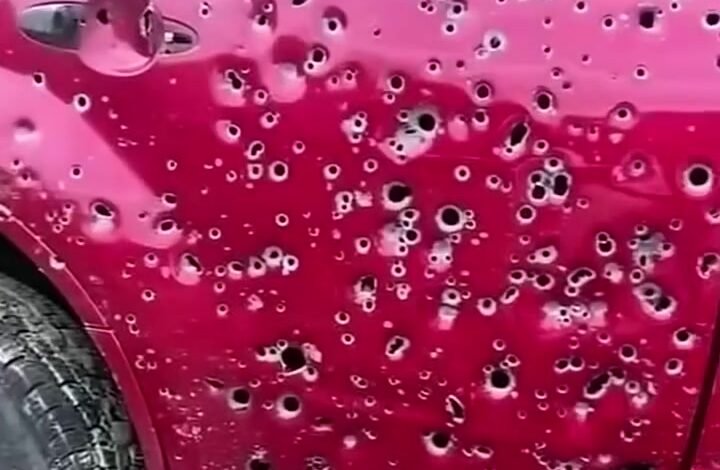
Some of the holes may resemble projectile impacts, but the video does not document their cause. The appearance and number of marks alone cannot confirm the circumstances, who was nearby, or whether anyone was injured.
What the linked article says — and what it does not
A repost of the same reel links to an article that describes an apparent accident and an emergency response. The page says emergency workers arrived and that people gathered nearby. It also says the circumstances were still unclear and that authorities were expected to investigate.
However, the article does not provide a location, a date for the incident, or a detailed description of the vehicle. It does not name the authorities involved or include a quoted statement from them. Based on the information supplied, the reported response cannot be tied to a specific place or confirmed investigation.
Why the caption is not enough to confirm the story
The short caption attached to the clip begins with a breaking-news label and ends with an ellipsis, leaving the event unspecified. Other copies of the reel use the same teaser, which helps show that the clip is being shared by more than one account.
That repetition does not establish who recorded the video or which account posted it first. Duplicate posts also cannot add facts missing from the footage, such as the vehicle’s location, the cause of the damage or the outcome of the incident.
With the available material, the video and the linked article support separate conclusions. The reel shows extensive damage along the side doors of a red vehicle. The linked article shows how one repost framed the clip, but it does not verify the missing details needed to explain what happened.
For readers encountering the video through its breaking-news caption, the central questions remain unanswered: where the vehicle was, what caused the marks and what happened afterward.