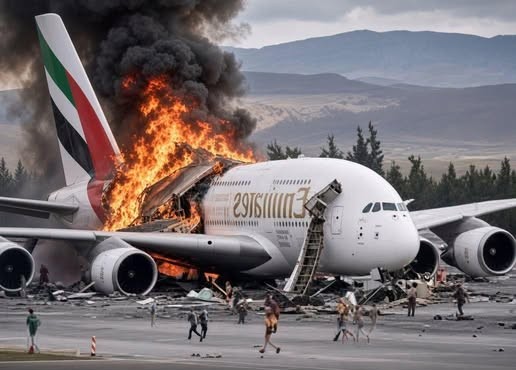
Emirates Flight EK521 Crash-Landing: How 300 People Escaped a Burning Plane in Dubai
On August 3, 2016, passengers aboard Emirates Flight EK521 experienced a terrifying aviation emergency when their aircraft crash-landed at Dubai International Airport. What began as a routine journey from Thiruvananthapuram, India, to Dubai ended with the aircraft engulfed in flames and emergency crews racing to evacuate everyone on board.
The incident quickly attracted international attention. All 300 people aboard the aircraft—282 passengers and 18 crew members—survived the crash-landing and were evacuated. However, the rescue operation came at a tragic cost: a firefighter died while responding to the emergency.
The event became a powerful reminder of the importance of emergency procedures, cabin crew training, and the work of first responders during aviation disasters.
A Routine Flight Ends in an Emergency
Emirates Flight EK521 was approaching Dubai International Airport after departing from Thiruvananthapuram, the capital of the Indian state of Kerala.
As the aircraft approached the runway, the landing did not go as expected. The Boeing 777 made a hard landing and slid along the runway before coming to a stop. A fire subsequently broke out, sending smoke and flames into the air.
Passengers who had expected an ordinary arrival suddenly found themselves facing an emergency. Airport rescue and firefighting teams rushed to the aircraft as the situation developed.
The incident prompted an immediate evacuation, with the safety of passengers and crew becoming the primary concern.
How Passengers and Crew Escaped
The evacuation was one of the most critical parts of the response. With smoke and fire threatening the aircraft, passengers needed to leave quickly while following instructions from the cabin crew.
Emergency evacuation slides were deployed, allowing people to exit the aircraft and move away from the immediate danger.
All 282 passengers and 18 crew members survived. Their safe evacuation was a significant outcome in an incident that could have resulted in a much greater loss of life.
Emergency procedures are designed to help passengers leave an aircraft quickly when remaining inside becomes unsafe. Cabin crew members receive training to direct evacuations, assess available exits, and help passengers respond to rapidly changing conditions.
The EK521 incident demonstrated why these procedures and regular safety training are essential.
Firefighter Dies During Rescue Operation
Although everyone aboard the aircraft survived, the incident was not without a fatality.
A firefighter, Jassim Issa Mohammed Hassan, died while responding to the emergency. His death underscored the serious risks faced by airport emergency personnel, who must approach burning aircraft and other dangerous situations to protect passengers and colleagues.
Firefighters responding to aircraft incidents may encounter intense heat, smoke, hazardous materials, and rapidly changing conditions. Their work requires specialized equipment, coordination, and extensive training.
The loss of a responder cast a shadow over the successful evacuation and highlighted the human cost that can accompany emergency operations, even when those aboard an aircraft survive.
Continue reading..