Massive Los Angeles Warehouse Fire: Investigators Reveal What They Found
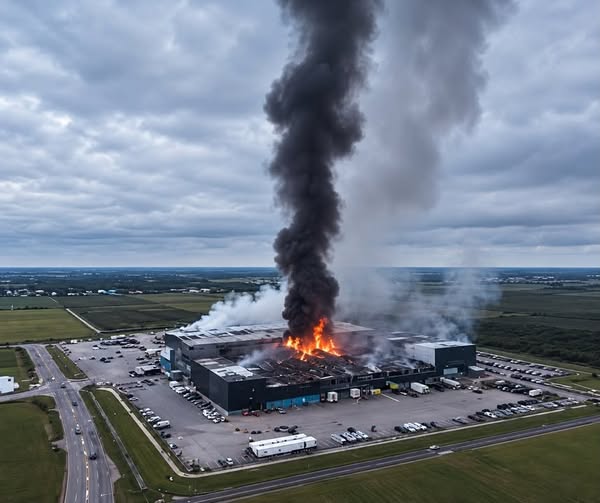
A massive fire at a Los Angeles cold-storage warehouse burned for eight days, sent thick smoke into nearby neighborhoods, and triggered emergency measures to protect residents. Months later, investigators released their findings—but one crucial question remains unanswered: What exactly started the fire?
The blaze broke out on June 17, 2026, at a large Lineage cold-storage facility in Boyle Heights, near downtown Los Angeles. The incident required an extensive firefighting response and raised concerns about air quality, building safety, and the challenges of containing fires inside large industrial structures.
On September 22, the Los Angeles Fire Department (LAFD) announced that its investigation had concluded. Officials determined that the fire originated on the warehouse roof, at or near a section of solar panels, where an electrical event occurred. However, investigators could not establish the precise cause of that event. The official classification therefore remains undetermined.
What Happened at the Lineage Warehouse?
The fire struck a heavily insulated cold-storage facility measuring approximately 491,000 square feet. The building was used to store temperature-controlled food products, making the incident particularly challenging for emergency crews.
Firefighters faced persistent flare-ups and difficult conditions inside the structure. The fire continued for eight days before it was fully extinguished, according to reporting by NBC Los Angeles.
The scale of the incident also created concerns beyond the building itself. Smoke spread through surrounding communities, prompting authorities to issue a shelter-in-place order and air-quality advisories.
Residents were advised to reduce their exposure to smoke while emergency personnel worked to control the fire and assess the potential risks.
The incident demonstrated how a fire at a single industrial facility can affect neighboring communities, local businesses, and emergency services long after the initial flames appear.
What Investigators Discovered About the Fire’s Origin
The LAFD’s investigation focused on the roof area where the fire was believed to have started.
Investigators examined the available evidence to determine the likely area of origin and evaluate potential ignition sources. Their findings pointed to an electrical event on the roof, at or near part of the solar-panel installation.
However, establishing where a fire began is not the same as determining exactly what caused it.
Although investigators identified the general area and determined that an electrical event occurred, they could not conclusively identify the specific failure or sequence of events that ignited the blaze.
The department therefore classified the cause as undetermined.
This distinction is important because the investigation did not establish that a particular company, individual, or component was definitively responsible.
Did the Rooftop Solar Panels Cause the Fire?
The warehouse’s rooftop solar installation became a major focus of attention following the incident.
According to the LAFD’s findings, investigators could not rule out the solar panels and their connected components as a possible ignition source. However, the department did not conclusively determine that the equipment caused the fire.
The distinction matters.
Solar installations contain electrical equipment and connections that require appropriate installation, inspection, maintenance, and safety procedures. But the presence of solar panels near a fire’s origin does not, by itself, establish the exact cause.
The warehouse operator, Lineage, has publicly argued that the findings support its position that the fire originated in the solar-panel area while contractors were working on the system.
Other parties have disputed aspects of the claims surrounding responsibility for the incident. The official finding remains undetermined, and allegations about liability should not be confused with a final determination of cause.
Why Was the Warehouse Fire So Difficult to Extinguish?
Large industrial warehouses present several challenges for firefighters, particularly when they contain temperature-controlled storage systems and extensive shelving.
The Boyle Heights facility was heavily insulated and contained large quantities of frozen food. Its size, internal layout, and structural conditions complicated firefighting operations.
As the fire progressed, persistent flare-ups made it difficult to bring the incident to a complete end. Officials also had to consider the risks associated with entering a damaged building.
These conditions illustrate why a warehouse fire can require a prolonged emergency response rather than a single operation to extinguish visible flames.
Firefighters must consider the stability of the structure, access to the affected areas, the possibility of hidden fire, and the hazards associated with industrial equipment and stored materials.
The incident also required coordination among emergency responders and other agencies responsible for monitoring conditions in the surrounding community.
How the Fire Affected Nearby Residents
The consequences extended beyond the warehouse property.
Smoke from the blaze prompted officials to issue a shelter-in-place order and air-quality advisories. Residents were encouraged to limit exposure while authorities monitored conditions and managed the emergency.
The incident highlighted the importance of communicating clear safety information during large industrial fires.
Smoke from a major structure fire can contain fine particles and other combustion products. The precise risks depend on what is burning, the conditions of the fire, and the concentration of pollutants in the surrounding air.
For residents, official emergency alerts and air-quality guidance are more reliable than assumptions based solely on the appearance or color of smoke.
The event also raised questions about how industrial facilities can prepare for emergencies and reduce the effects of major incidents on nearby neighborhoods.
What National Fire Statistics Reveal
Warehouse fires are not limited to a single city or facility.
Research published by the National Fire Protection Association (NFPA) examines the frequency, causes, and consequences of warehouse structure fires across the United States.
Its 2020–2024 annual averages show that equipment-related incidents, electrical systems, and other ignition sources are important areas of concern. The research also distinguishes between fires with identified causes and those that remain undetermined after investigation.
These findings reinforce the importance of appropriate fire prevention measures, routine inspections, well-maintained electrical systems, and effective emergency planning.
However, national statistics cannot determine the cause of an individual fire. Each incident requires its own investigation based on the available evidence.
In the Boyle Heights case, investigators conducted a separate examination of the warehouse and its rooftop equipment before reaching their final classification.
What Happens When Investigators Cannot Determine a Fire’s Cause?
An undetermined classification does not necessarily mean that investigators found no evidence or failed to conduct a thorough examination.
In some cases, investigators can establish the area where a fire began but cannot identify the precise ignition source. Heat damage, destruction of equipment, complex electrical systems, and limitations in the available evidence can make a definitive conclusion difficult.
That appears to be the central distinction in the Boyle Heights investigation.
Officials identified the roof area where the fire originated and determined that an electrical event occurred. They could not establish exactly what caused that event, so the specific cause remained undetermined.
This classification should not be interpreted as proof for or against any particular party.
Determining legal responsibility is also a separate question. Civil claims, contractual obligations, and allegations involving equipment or maintenance may be examined through a different process from the fire department’s investigation.
Readers should therefore distinguish between official findings, statements from interested parties, and any conclusions ultimately reached through legal proceedings.
What the Investigation Means for Industrial Safety
The Lineage warehouse fire highlights the importance of understanding the risks associated with large industrial facilities and their electrical infrastructure.
Rooftop solar systems can provide energy benefits, but they also require appropriate design, installation, inspection, and maintenance. Facilities using such systems should have clear procedures for electrical safety and emergency response.
Warehouse operators, contractors, property owners, and local authorities each have responsibilities that may vary according to their roles, agreements, and applicable regulations.
The incident also demonstrates why emergency planning must account for neighboring communities. Large fires can affect air quality, disrupt local activity, and require coordination among multiple public agencies.
While the investigation did not establish a definitive cause, its findings provide important information about the area where the fire originated and the electrical event identified by investigators.
The Key Question Remains Unanswered
The investigation into the June 17, 2026, Lineage warehouse fire has concluded, but the precise cause remains officially undetermined.
Investigators traced the fire’s origin to the roof near a section of solar panels and identified an electrical event in that area. They could not conclusively establish what caused the event, and the available findings do not justify assigning definitive responsibility to a particular person or company.
For residents, the incident serves as a reminder of the potential effects of major industrial emergencies. For facility operators and safety professionals, it underscores the importance of electrical maintenance, fire prevention, and well-coordinated emergency planning.
The most important takeaway is the distinction between what investigators confirmed and what remains unknown. The origin of the fire was identified, but its precise cause was not.
That unresolved question is what makes the investigation significant—and why its findings should be understood through verified evidence rather than speculation.