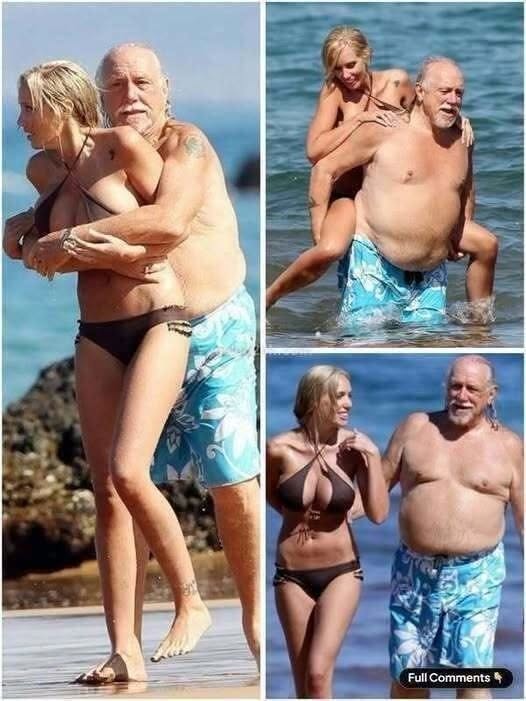
That contrast can make an ordinary photograph particularly interesting to fans. A familiar public image feels different when presented in an informal setting, especially when the caption suggests that a well-known musician may be involved.
However, curiosity should not be confused with confirmation. The photographs may attract attention, but their appearance alone does not establish who the people are.
What Can Actually Be Confirmed From the Images?
The collage appears to contain several views of two people together near the water. Beyond that basic visual description, the available information is limited.
The photographs do not independently establish the subjects’ names, careers, relationship status, or personal history. Those details require reliable supporting information rather than assumptions based on appearance.
A resemblance to a familiar musician is not enough to confirm an identity. People can look similar, and photographs shared without their original context can easily be misunderstood.
A stronger identification would normally include information such as:
- A credited photographer or original publication.
- A caption naming the people shown.
- A date and location for the photographs.
- A direct statement from the individuals or an authorized representative.
- A reliable source connecting the same images to a documented public appearance.
Without this information, the identity suggested by the caption remains unverified.
Why Photo Credits and Original Sources Matter
Images often travel far beyond the websites or social media accounts where they first appeared. A photograph may be copied, cropped, placed into a collage, or shared with a new caption.
As it circulates, important details can disappear. The original date, photographer, location, and description may no longer accompany the image.
This creates an opportunity for misleading interpretations. Once a phrase such as “legendary rock star” becomes attached to a photograph, other pages may repeat it without checking the original source.
Repeated claims can create an impression of certainty, even when no new evidence has been provided.
For readers, one of the most useful steps is to trace the image back to its earliest identifiable publication. A credible source should explain where the photograph came from and how the people pictured were identified.
What Readers Should Check Before Accepting an Identification
Anyone interested in discovering who appears in the photographs can begin by examining the publication that shared them.
Does the article name the individuals? Does it provide a photo credit? Is there a date or location? Does the publisher explain how the identification was confirmed?
It is also important to distinguish between a source identifying the exact photographs and a separate article featuring a similar-looking couple. Two images taken at different beaches or on different occasions should not automatically be treated as evidence of the same event.
These details may seem small, but they make a significant difference when evaluating celebrity photographs and online entertainment stories.
The Interest in Celebrity Life Beyond the Spotlight
The popularity of candid celebrity photographs is understandable. Fans are often interested in seeing a different side of performers they recognize from music, television, or public appearances.
A relaxed beach setting can create a sense of familiarity that is quite different from a concert photograph or a carefully arranged publicity image.
But responsible reporting still requires context. A photograph can show what is visible in the frame, while claims about identity, relationships, and personal circumstances need separate evidence.
For now, the available article presents a couple enjoying time beside the water and invites readers to guess their identities. It does not provide enough information to confirm that either person is a particular rock musician or to establish a relationship history.
Until the original source or a reliable identification becomes available, the photographs are best treated as an intriguing but unverified glimpse rather than a confirmed celebrity story.