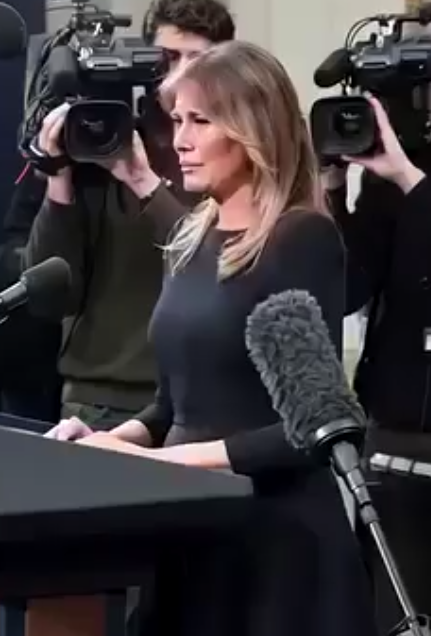
Yet versions of this viral story often provide none of those essential details.
Instead, they describe the scene in cinematic terms while leaving readers unable to verify where or when the conversation supposedly happened.
That should immediately encourage caution.
The Quotes Also Need Verification
The viral story attributes several highly personal statements to the First Lady.
They concern public scrutiny, emotional exhaustion, family pressures, and supposedly considering leaving public life.
Statements like these should not be presented as direct quotations unless they can be traced to an authentic interview, speech, recording, or official statement.
Without that evidence, readers cannot know whether the remarks were actually made, paraphrased from something unrelated, or created entirely for the story.
What Is Verified About the Current First Lady
The current First Lady of the United States is Melania Trump.
She has continued making public appearances during President Donald Trump’s second term and has been involved in initiatives connected with children, education, technology, and online safety.
Recent verified coverage has also documented interviews and appearances in which she discussed her work and personal experiences.
For example, she has spoken publicly about meetings involving released hostages and about aspects of life during the administration.
Those are identifiable appearances with traceable sources.
That is very different from an unnamed interview described only through viral articles.
Why Stories Like This Spread So Quickly
The formula is extremely effective online.
Take a famous public figure.
Describe them as normally private or emotionally restrained.
Introduce a supposedly hidden struggle.
Add an emotional revelation.
Then suggest that viewers witnessed something they had never seen before.
That structure naturally creates curiosity.
Readers want to know what happened.
They want to discover the “secret.”
They want to understand why the person became emotional.
But curiosity-driven writing becomes misleading when the central event cannot be verified.
Emotional Language Is Not Evidence
One reason these stories can feel convincing is the level of detail.
Descriptions of silence in a studio.
A person looking down.
Tears forming.
An interviewer appearing surprised.
An audience becoming emotional.
Those details create the feeling of eyewitness reporting.
But unless they are attached to a real, identifiable recording or reliable report, they remain unsupported narrative details.
A story can sound realistic without being factual.
Public Figures Are Especially Vulnerable to This Format
First ladies occupy an unusual position.
They are extremely recognizable but often reveal relatively little about their private lives.
That creates a gap between public curiosity and available information.
Viral publishers can exploit that gap by attaching dramatic private stories to a recognizable figure.
The less specific the article is about dates, programs, interviewers, or sources, the harder it becomes for readers to check the claims.
Look for the Missing Details
When reading a story like this, several questions can help determine whether it is credible.
Which interview was it?
Who conducted it?
When did it air?
Where is the video?
Which reputable outlets reported on it?
Are the quotes available in context?
If an article cannot answer those basic questions, its most dramatic claims should not be treated as established fact.
Real Emotional Moments Do Exist
None of this means public figures never become emotional.
Melania Trump has participated in public events involving subjects such as grief, hostages, children, war, and family experiences.
Some of those appearances have genuinely included emotional subjects.
But a real emotional appearance should not be blended with an unrelated or unsupported story about a secret confession.
Each claim still needs its own evidence.
Why This Matters
False or exaggerated stories about political figures can spread quickly because people already have strong opinions about them.
Some readers may immediately believe a flattering story.
Others may immediately believe a negative one.
The safer approach is the same in either case:
Check the source before accepting the claim.
That matters especially when direct quotations and private emotional experiences are involved.
The Bottom Line
A viral article claims that the First Lady broke down during a nationally televised interview and revealed that she had privately considered leaving public life because of years of intense pressure.
However, the circulating story does not provide the kind of clear sourcing needed to verify those claims.
What can be confirmed is that Melania Trump remains the current First Lady and continues making public appearances and participating in official initiatives.
Until a verifiable interview, recording, transcript, or reliable report surfaces, the dramatic “secret finally revealed” narrative should be treated as unconfirmed rather than established fact.
Have you noticed more viral stories using emotional headlines without showing the original source? Share your thoughts in the comments.