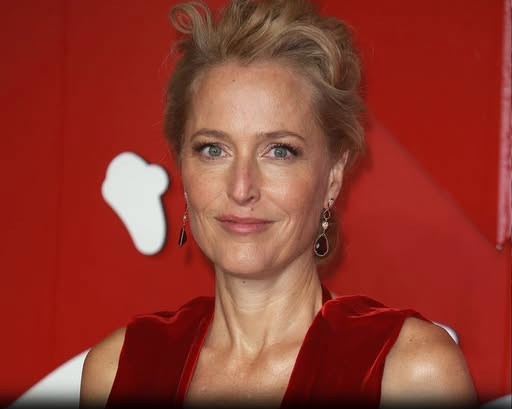
The actress has previously spoken about relationships with women, particularly during her younger years, while also emphasizing that she has been careful about choosing a label that genuinely felt appropriate.
In a 2024 interview with The New Yorker, Anderson discussed the question of whether “bisexual” or “pansexual” better described her experiences.
That uncertainty is significant because Anderson has previously indicated that she didn’t want to claim an identity simply because it seemed expected or because aspects of her past could be interpreted a certain way.
Her latest comments therefore represent something more definitive: rather than continuing to debate the terminology publicly, she now describes herself as pansexual.
A Partner’s Gender Doesn’t Tell the Whole Story
Anderson’s comments also highlight an important distinction between someone’s current relationship and their broader understanding of attraction.
The actress has been linked to playwright and screenwriter Peter Morgan, and her current or recent relationships have involved men. But, as her comments make clear, having a male partner doesn’t necessarily determine how she understands her sexuality.
For Anderson, attraction is not limited to one gender.
That distinction is at the heart of the term pansexual, which generally describes attraction to people regardless of gender or without gender being a defining factor in attraction.
Rather than suggesting that her identity has suddenly changed, Anderson’s remarks appear to reflect a growing comfort with language that she feels better represents her.
Her Work Has Also Explored Sexuality
Anderson’s openness comes at a time when sexuality and desire remain prominent themes in her creative work.
Her new book, More, follows her bestselling 2024 collection Want. The books bring together anonymous sexual fantasies submitted by women, giving Anderson another avenue for exploring intimacy and desire outside the roles she has played on screen.
Her portrayal of sex therapist Jean Milburn in Sex Education also placed her in a character-driven story where conversations about sexuality were central.
Anderson has previously credited that experience with helping her become more comfortable discussing subjects that many people find difficult to talk about openly.
In that sense, her latest comments fit into a broader chapter of her career—one in which she has increasingly explored sexuality not only through acting, but also through writing and public conversation.
“The End of This Chapter of My Life”
The interview also touched on a broader transition in Anderson’s life and career.
Speaking about More and her starring role in the film Miasma, she suggested that completing both projects could mark the end of a particular period for her.
“Once this book is done and once this film [Miasma] is done,” Anderson said, “I feel like… it might be the end of this chapter of my life.”
Her words suggest that the discussion about sexuality is part of a larger period of reflection rather than an isolated announcement.
For years, Anderson has spoken openly about relationships, attraction and the difficulty of finding language that accurately captures something as personal as identity. Her latest comments show where that reflection has led her now.
A More Certain Description
What makes Anderson’s revelation notable is not simply the label itself, but the journey behind it.
Earlier comments showed someone considering different ways of describing her sexuality and questioning whether a particular term truly fit. Her newer statement is considerably more direct.
That progression is a reminder that personal identity doesn’t always arrive with an immediate, perfectly defined answer. For some people, finding the language that feels right can take years of reflection and experience.
Anderson’s current description is her own.
After decades in the public eye, she has chosen to describe herself as pansexual while continuing to explore themes of desire, intimacy and identity through her work.
For a performer who has spent much of her career inhabiting complicated characters, her latest revelation is strikingly simple: she has found a word that, at this point in her life, feels right.