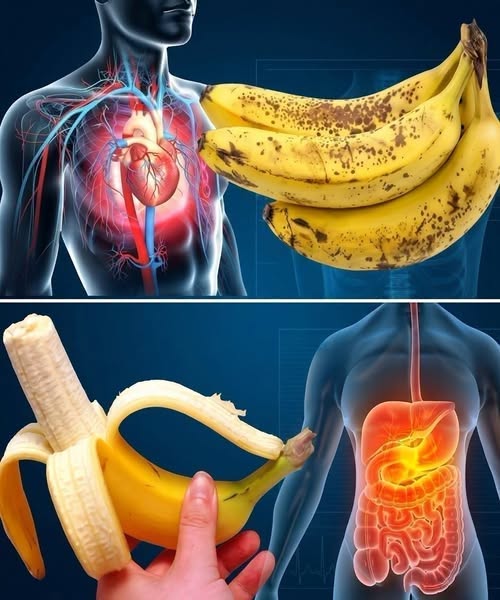
Potassium is also involved in regulating blood pressure as part of an overall healthy diet.
A medium banana provides roughly 400 milligrams of potassium, although the amount varies with its size. Bananas can contribute to your daily intake, but other foods—including potatoes, beans, leafy greens, and yogurt—also provide this important mineral. (USDA FoodData Central)
Eating bananas alone does not guarantee healthy blood pressure. Overall eating habits, physical activity, genetics, and other health factors also matter.
2. They Contain Dietary Fiber
Bananas provide dietary fiber, which supports normal digestion and can help make meals more satisfying.
A medium banana typically contains around three grams of fiber, depending on its size and variety.
Fiber is an important part of a balanced diet because it supports bowel regularity and contributes to digestive health. Getting enough fiber generally means eating a variety of plant foods, including vegetables, whole grains, legumes, nuts, seeds, and fruit.
If your usual diet is low in fiber, increase your intake gradually and drink enough fluids to help your digestive system adjust.
3. Bananas Supply Energy
Bananas contain carbohydrates, including naturally occurring sugars and starch. These provide energy that the body can use throughout the day.
That makes a banana a convenient snack before a walk, during a busy morning, or after physical activity.
However, bananas are not a special energy treatment, and their effects depend on the amount eaten and the rest of your diet. Pairing one with foods that contain protein or healthy fats, such as plain yogurt, nuts, or nut butter, can create a more substantial snack.
4. Ripeness Changes Their Composition
Have you noticed that green bananas taste different from yellow or heavily spotted ones?
As a banana ripens, some of its starch is converted into sugars, making the fruit taste sweeter and its texture softer.
Less-ripe bananas generally contain more resistant starch than fully ripe bananas. Resistant starch is a type of carbohydrate that resists digestion in the small intestine and can be fermented by gut bacteria.
The precise amount depends on ripeness and other factors, so it is not possible to predict the exact effect of a banana on digestion or blood sugar simply by looking at its peel.
Both ripe and less-ripe bananas can fit into a balanced eating pattern. The best choice often comes down to taste, texture, and personal preference.
5. They Provide Vitamin B6
Bananas also contain vitamin B6, which helps the body carry out several important functions, including protein metabolism and the production of certain neurotransmitters.
The vitamin supports normal nervous-system function and contributes to the formation of red blood cells.
Bananas are one source of vitamin B6, but they are not the only one. Fish, poultry, potatoes, chickpeas, and other foods can also contribute to daily intake.
Eating a varied diet is generally a more reliable way to obtain the nutrients your body needs than depending on a single food.
6. They Contain Other Useful Nutrients
In addition to potassium, fiber, and vitamin B6, bananas provide smaller amounts of other nutrients, including vitamin C and magnesium.
Vitamin C supports normal immune function and helps the body absorb iron from plant-based foods. Magnesium contributes to normal muscle and nerve function.
A banana does not supply every nutrient in large amounts, which is why variety matters. Different fruits and vegetables have different nutritional profiles, and eating a range of them can help provide a broader selection of vitamins, minerals, and plant compounds.
7. Are Bananas a Good Choice for Blood Sugar Management?
Bananas contain carbohydrates, so they can raise blood glucose after eating. How much this affects an individual depends on factors such as portion size, ripeness, the rest of the meal, medication, and personal metabolism.
People managing diabetes do not necessarily need to avoid bananas. However, they may find it useful to consider portion sizes and how fruit fits into their overall meal plan.
Combining a banana with a source of protein or fat may change how quickly a meal is digested, but it does not eliminate the fruit’s carbohydrate content.
If you have diabetes or another condition that requires specific carbohydrate management, follow guidance from your healthcare professional or registered dietitian rather than relying on general claims about individual foods.
8. Do You Need to Eat a Banana Every Day?
No single fruit is essential for everyone.
Bananas can be a convenient way to include fruit in your diet, but apples, oranges, berries, pears, and other fruits offer different combinations of nutrients and can provide variety.
Whether eating a banana daily suits you depends on your preferences, nutritional needs, and overall eating habits.
For most people, the more useful goal is to eat a diverse range of fruits and vegetables rather than focusing on one food as a solution to every nutritional concern.
People who have been advised to limit potassium because of certain medical conditions, including some kidney disorders, should follow individualized medical advice about their food choices.
9. Easy Ways to Add Bananas to Your Meals
One reason bananas are so popular is that they are easy to use in everyday cooking.
Here are a few simple ideas:
- Breakfast: Slice a banana over oatmeal or whole-grain cereal.
- A filling snack: Combine banana slices with plain yogurt and a small handful of nuts.
- Smoothies: Blend a banana with milk or an unsweetened alternative and other fruit.
- Baking: Use mashed ripe bananas to add sweetness and moisture to homemade muffins or banana bread.
- Frozen treats: Freeze banana slices and blend them into a thick fruit dessert.
Remember that additions such as syrup, sugar, chocolate, or sweetened yogurt can change the overall nutritional profile of a meal.
The Bottom Line
Bananas are a practical, nutrient-containing fruit that can contribute potassium, dietary fiber, vitamin B6, and carbohydrates to your diet.
They are not a miracle food, and eating them does not guarantee weight loss, improved blood pressure, or better blood sugar control. Their value comes from the nutrients they provide as part of an overall balanced eating pattern.
The next time you reach for a banana, you can enjoy it for what it is: a convenient fruit that offers useful nutrition without needing exaggerated health claims to make it worthwhile.