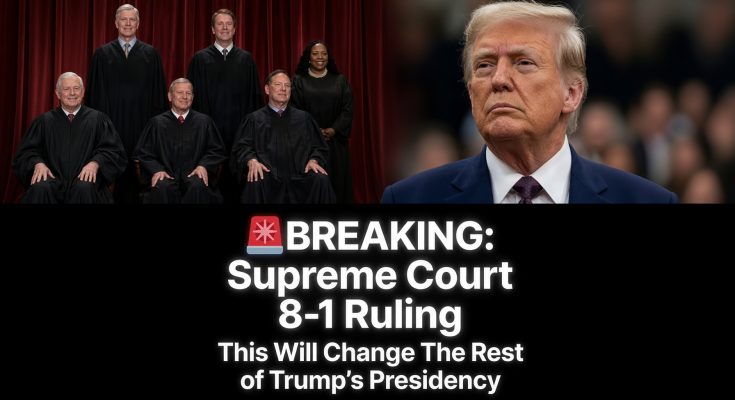
Why the Supreme Court Rejected the Claims
At the center of the dispute were two federal laws with different purposes and legal requirements.
The Alien Tort Statute, enacted in 1789, gives federal district courts jurisdiction over certain civil claims brought by foreign nationals involving violations of international law. Although the statute has been used in human rights litigation, the Supreme Court has repeatedly addressed limits on its reach.
In the 2004 case Sosa v. Alvarez-Machain, the Court described the ATS as a jurisdictional statute while leaving open a narrow possibility that judges could recognize certain claims based on established international norms.
Justice Barrett’s opinion rejected that possibility.
The majority concluded that federal courts lack authority to create new causes of action under the ATS for violations of international norms. In its view, doing so would risk intruding on Congress’s legislative authority and the constitutional responsibilities of the political branches in foreign affairs.
As a result, the plaintiffs could not proceed with their ATS claims against Cisco on the theory that the company aided and abetted violations of international law.
What the Ruling Means for the Torture Victim Protection Act
The Court also examined the Torture Victim Protection Act of 1991, which expressly authorizes civil claims for certain acts of torture and extrajudicial killing.
The plaintiffs argued that the statute could cover people who knowingly assist others in committing torture, rather than only those who directly carry out the abuse.
The Court rejected that interpretation, concluding that the TVPA does not establish aiding-and-abetting liability.
This part of the decision requires an important distinction: the TVPA claim concerned individual Cisco executives, while the ATS claims targeted the company’s alleged role in the events. The ruling did not establish a blanket immunity for every American company facing allegations involving conduct overseas. Instead, it addressed the specific legal theories presented under these two statutes.
The distinction matters because the availability of a legal claim depends on the wording of the relevant law, the parties involved, and the circumstances of a particular case.
The Justices Disagreed Over the Scope of Judicial Authority
Justice Barrett was joined in the majority opinion by Chief Justice John Roberts and Justices Clarence Thomas, Samuel Alito, Neil Gorsuch, and Brett Kavanaugh.
Justice Sonia Sotomayor dissented, arguing that the Court should have allowed the plaintiffs’ ATS claims to proceed under the applicable legal framework.
Sotomayor’s opinion emphasized the allegations that Cisco knowingly provided technology that helped Chinese authorities identify and persecute religious minorities. She argued that existing precedent supported allowing the plaintiffs to pursue their claims, rather than foreclosing the legal theory entirely.
Justices Elena Kagan and Ketanji Brown Jackson joined portions of Sotomayor’s dissent. However, their positions on the separate TVPA issue differed from Sotomayor’s: Jackson, joined by Kagan, agreed with the conclusion that the statute does not provide for aiding-and-abetting liability.
The opinions therefore reflected a disagreement primarily over the scope of judicial authority under the ATS, rather than a unanimous division across every issue in the case.
Implications for Companies Operating Internationally
The decision narrows one avenue through which foreign plaintiffs have sought compensation in U.S. courts for alleged human rights violations involving corporate conduct abroad.
For companies operating internationally, the ruling provides greater clarity about the limits of claims under the ATS and TVPA. Businesses facing allegations that their products or services assisted foreign governments can point to the Court’s restrictions when challenging lawsuits brought under those statutes.
However, the decision does not eliminate every potential form of corporate liability. Other federal or state laws, claims involving different conduct, and legal proceedings in other jurisdictions may raise separate questions.
The practical effect will depend on how lower courts apply the ruling to future disputes and whether Congress chooses to establish additional legal remedies.
The case also highlights a broader debate about the relationship between commercial activity, human rights, and accountability across national borders.
What the Decision Means for Future Human Rights Cases
For human rights advocates, the ruling presents a significant obstacle to using the Alien Tort Statute as a basis for newly recognized claims involving alleged assistance by corporations or other parties.
For the majority, the decision reflects a constitutional principle: federal courts should not create new legal remedies in areas where Congress has not authorized them, particularly when those remedies could affect American foreign policy.
The disagreement illustrates the competing concerns at the heart of transnational human rights litigation. One concerns access to legal remedies for people alleging serious abuses; the other concerns the limits of judicial power and the role of elected lawmakers in defining liability.
Ultimately, Cisco Systems, Inc. v. Doe establishes a clearer boundary for claims under the two statutes at issue. It leaves Congress with the authority to decide whether additional remedies should be created and under what conditions.
For companies, human rights organizations, and individuals pursuing accountability for alleged abuses abroad, the decision is likely to remain an important reference point in future legal disputes.
What do you think should be the role of U.S. courts in human rights cases involving American companies and conduct overseas? Share your perspective respectfully in the comments.