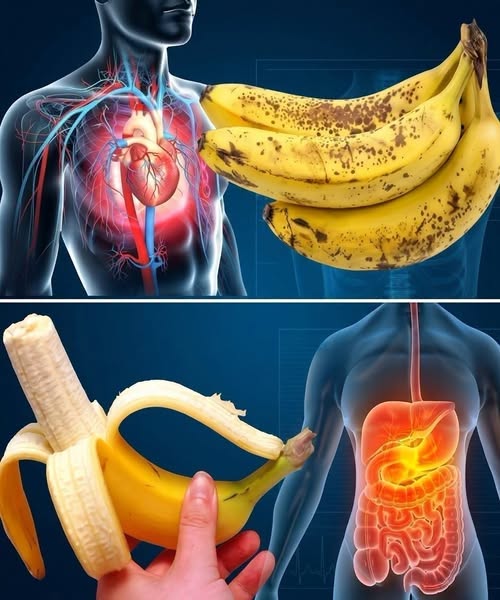
Bananas Offer More Than Natural Sweetness
Like other whole fruits, bananas provide nutrients that can contribute to an overall balanced eating pattern.
They contain dietary fiber and potassium, along with other nutrients. USDA guidance lists bananas among fruit choices that can contribute potassium to the diet.
Fiber is particularly useful because it contributes to normal digestive function and can help make meals and snacks more satisfying.
That doesn’t make bananas a miracle food.
It simply means they can be a practical way to include whole fruit in your everyday eating pattern.
The Way You Eat a Banana Can Change the Meal
A banana eaten by itself is quite different from a banana added to a larger meal.
For example, combining sliced banana with plain yogurt, oats, or nuts can create a snack or breakfast containing several different nutrients.
The banana doesn’t need to do all the work.
That’s an important point because nutrition generally isn’t about finding one food that provides everything your body needs. Current dietary guidance emphasizes variety and an overall healthy eating pattern rather than relying on individual foods.
What About Banana Ripeness?
You’ve probably noticed that a greenish banana and a heavily spotted banana don’t taste the same.
As bananas ripen, their texture becomes softer and their flavor becomes sweeter. That can influence how you prefer to use them.
A firmer banana may work well sliced into a snack, while a very ripe one can be useful in baking or smoothies.
So if you’ve heard that one stage of ripeness is automatically “best,” be cautious with that kind of claim.
Your choice can simply depend on taste, texture, and how you’re planning to use the fruit.
Are Bananas Too High in Sugar?
This is another area where online nutrition discussions can become unnecessarily complicated.
Bananas contain naturally occurring sugars, but they are also a whole fruit that provides fiber and nutrients.
USDA guidance distinguishes whole fruit from foods with added sugars and encourages making whole fruits a regular part of a varied diet.
For most people, the more useful question isn’t whether a banana contains sugar.
It’s how the food fits into the person’s overall eating pattern.
What About Potassium?
Bananas are well known for their potassium content, and that reputation isn’t entirely accidental.
USDA nutrition guidance specifically identifies bananas as a fruit source of potassium. Potassium is an essential nutrient involved in normal body functions, including maintaining healthy blood pressure as part of an appropriate overall diet.
Still, bananas aren’t the only source.
Other fruits and many vegetables, legumes, dairy foods, and other foods can also contribute potassium.
So there’s no need to treat a banana as the sole answer to meeting your potassium needs.
Can You Eat Bananas Every Day?
For many people, a banana can easily fit into a varied diet.
But “every day” doesn’t automatically make a food healthier.
The bigger picture matters: the overall variety of fruits and vegetables you eat, your sources of protein and whole grains, your total energy intake, and your individual nutritional needs.
USDA dietary guidance emphasizes variety, appropriate amounts, and overall nutritional quality rather than focusing on one particular food.
The Peel Question
And then there’s the question people occasionally ask online:
Are we eating the banana incorrectly because we throw away the peel?
For ordinary eating, the answer is that the edible portion is what most people consume.
There is no requirement to eat the peel to get the nutritional benefits of the fruit, and its texture can make it unappealing to many people.
In other words, you don’t need to turn your breakfast into a strange internet food challenge to enjoy a banana.
A Simple Way to Include Bananas
If you enjoy bananas, there are plenty of straightforward ways to use them:
- Slice one over oatmeal.
- Add it to plain yogurt.
- Blend it into a smoothie.
- Pair it with nuts or nut butter.
- Add mashed banana to homemade baked goods.
- Eat it as a convenient snack.
The goal isn’t to make the banana responsible for your entire diet.
It’s simply another useful whole-fruit option.
So, Have You Been Eating Bananas “Wrong”?
Probably not.
There isn’t one secret method that suddenly transforms a banana into a dramatically different food.
The more interesting truth is that bananas are useful precisely because they’re simple.
They provide fiber and potassium, are easy to store and carry, and can fit into many different meals and snacks.
Instead of worrying about a supposed “correct” way to eat them, think about the bigger picture.
A banana doesn’t need to be a miracle food to be a good food choice.
Sometimes the most useful foods are simply the ones that are easy to enjoy, easy to prepare, and easy to fit into a varied diet.