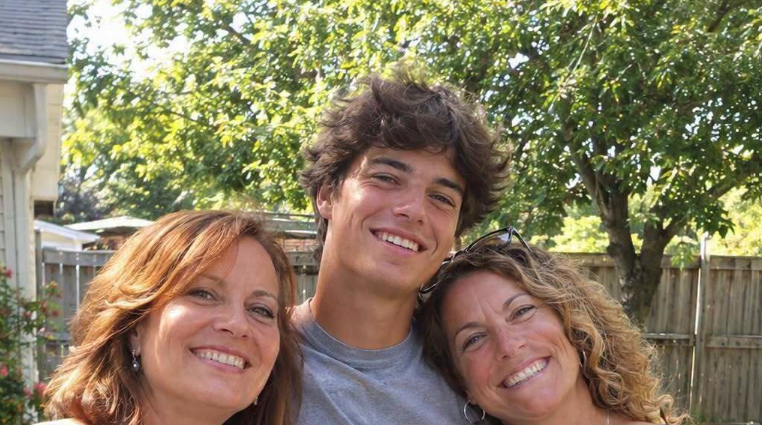
I had brought him there for a birthday dinner. I did not yet understand that I was about to see a part of my son’s life that had been growing quietly for ten years.
The son I thought I was protecting
Chloe and I had known each other since elementary school. She had stood beside me through college years, weddings, family events, hard seasons, and the day Leo was born.
When Leo was three, he was diagnosed with autism. I tried to learn everything I could. I read, attended meetings, listened to advice, and paid close attention to what made his days easier or harder.
Leo loved astronomy, birds, numbers, and order. He noticed things other people missed. But busy restaurants could overwhelm him. The sounds, lights, fast questions, and unpredictable movement often made it difficult for him to respond quickly.
Because I loved him, I tried to help. Often, that meant answering for him.
Once, when Leo was eight, Chloe and I took him to a crowded restaurant. When the waitress asked what he wanted, Leo looked at the menu and paused. Before he spoke, I ordered fries for him.
He ate them without complaint. Later, Chloe asked him whether he had wanted fries.
He said yes. Then he added that he had wanted to say it himself.
I remembered the words, but I did not fully understand them then.
How The Blue Spoon became part of his routine
A few weeks after that meal, Chloe came to my house and announced that she was taking Leo out for three hours.
I began listing routines, preferences, and reminders. Chloe stopped me gently.
She told me she knew him and that they would be fine. Leo was already wearing his shoes.
When they returned, he described a park, a bookstore, and a small diner. He was especially clear about the fries.
They were, in his words, correct: crispy outside and soft inside.
That was the beginning of Leo’s visits to The Blue Spoon. At first, Chloe took him once a month, sometimes twice. He came home talking about Marcy, the waitress who greeted him; Mr. Howard, the older man who sat at the counter and drank coffee; and the way the restaurant was organized.
He mentioned small things over the years. Marcy had stopped ringing a service bell when he was there because the sound bothered him. He had arranged sugar packets by color. He helped with ketchup bottles and napkin holders.
I thought these were pleasant details from outings with his aunt. I did not realize they were pieces of a much larger story.
A birthday dinner with too many familiar faces
For Leo’s eighteenth birthday, I asked where he wanted to go.
He answered immediately: The Blue Spoon.
Chloe suggested a steakhouse. Then an Italian restaurant. Leo declined each idea politely and repeated that he wanted the diner.
When I asked Chloe why she seemed uncomfortable, she avoided giving me a clear answer. Still, we went.
Inside, the staff knew exactly how to treat Leo. Marcy did not rush him. His grilled cheese came cut into four equal triangles, with the pickle set apart. When she brought chocolate cake with one candle, there was no loud birthday song. The employees clapped gently and returned to work.
Danny, a younger employee, passed our booth and asked Leo whether Saturday was still good. Mr. Howard came over, wished him a happy birthday, and tapped the table twice. Leo tapped twice back.
It was clearly a familiar greeting. I had never seen it before.
I asked Chloe what was going on. She whispered that we should not talk about it there.
So I watched instead. I watched people give my son time. I watched them avoid sudden touch and unnecessary noise. I watched them understand details I had spent years trying to explain to others.
Marcy showed me what I had missed
After dinner, I stepped away. When I returned, Marcy was waiting in the hallway.
She told me there was something I should know about Leo, then asked me to watch him for a moment.
Leo had gone behind the counter. No one looked alarmed. He put on a black apron, washed his hands, checked the condiment station, straightened napkin holders, inspected ketchup bottles, and helped bring Mr. Howard his coffee.
Marcy explained that ten years earlier, Chloe had brought Leo to the diner for the first time. The visit had been difficult. The diner was busy, the bell kept ringing, and Leo needed more time than the staff expected.
But Chloe came back the next month with a different kind of question. Instead of asking how Leo could adapt to the diner, she asked what the diner could adjust to make the experience easier for him.
The changes were small. They stopped using the service bell around him. They lowered the radio. They gave him time to answer. They approached where he could see them. They learned not to rush his choices.
Marcy said none of it was complicated. It required patience and attention.
Then Leo began helping. First came the sugar packets. Then the napkin holders. Then the condiment bottles. The staff noticed that he had a strong eye for order and routine. Some of his systems became useful to the employees, too.
All those years, Leo had been telling me about this. I simply had not understood what it meant.
The card with his name on it
Marcy handed me a small white card. Leo’s name was written across the top.
It was a time card.
The diner had offered him a job. He was to start that Saturday, working from ten in the morning until one in the afternoon.
Jerry, the manager, had asked Leo what schedule would work for him. Leo chose three morning hours because the lunch period was louder and busier. The staff agreed to begin there.
Marcy made clear that this was not charity. Leo had skills they valued. He noticed details, remembered routines, and took his responsibilities seriously.
I had spent so much of Leo’s life thinking about what support he needed. At The Blue Spoon, I saw people who also recognized what he could offer.
Later, Leo came to our table in his black apron with an order pad. When he asked what we wanted, I almost answered for Richard out of habit. Richard gently stopped me and answered for himself.
Then Leo looked at me.
I ordered tea with lemon. He wrote it down carefully and walked away.
That moment taught me something I should have learned much earlier: sometimes help is not stepping in. Sometimes it is waiting.
His first Saturday on the job
The following Saturday, I drove Leo to his first official shift. He had wanted to take the bus, but I asked to drive him just once.
When we arrived, he sat quietly, then told me I could go home. Marcy would be there. Danny would be there. Mr. Howard would be there. He knew where everything belonged.
I did not go home at first. I parked across the street with coffee and tried not to interfere.
Chloe soon appeared with another cup. She knew exactly where to find me.
At ten after one, Leo came outside carrying his time card. He noticed that I had not gone home and told me that next time I could.
His report was simple. The shift had gone well. He organized bottles, fixed sugar packets, and brought Mr. Howard his coffee. Mr. Howard always had four cups.
Leo also mentioned that a plate had fallen in the kitchen. Someone warned everyone before the loud sound, so he was prepared. It was one more sign that the diner staff were still learning and adjusting together.
Learning not to step in every time
Over the next several weeks, Leo grew more comfortable at work. Eventually, he began taking the bus. He knew the route, the stop, and the timing. I was nervous, but I learned to trust his planning.
When I visited the diner, I sat away from his work area. Marcy had suggested that he needed space to do his job without feeling watched by his mother.
One afternoon, a customer ordered while looking at his phone. Leo asked which cheese the man wanted on his burger. The man did not answer. Leo asked again. The customer grew impatient and wondered whether someone else could take the order.
I started to stand.
Mr. Howard stopped me gently and told me to give Leo a moment.
Leo took a breath, repeated the choices, and waited. The customer finally chose cheddar. Leo wrote it down and continued working.
Marcy later thanked him for handling it professionally. I understood then that he was learning through moments I could not manage for him.
When Mr. Howard missed his usual visit
One Saturday, Leo came home quiet. Mr. Howard had not come to the diner.
I suggested he might have had other plans, but Leo knew his routine. Mr. Howard came at the same time, sat in the same place, and ordered his coffee.
Leo said Marcy had his address and that someone should check on him.
After discussing it with the family, we went to Mr. Howard’s small white house. Newspapers were on the porch. Emergency responders later found that he had fallen inside and needed help. Thankfully, he received medical attention and was taken to the hospital.
Mr. Howard spent several days in the hospital and then moved to rehabilitation. Leo visited after work when he could, bringing diner coffee when permitted and updating him on the sugar packet arrangements.
When Mr. Howard returned to The Blue Spoon, the staff greeted him warmly but quietly. Leo had already prepared his usual coffee.
Later, Mr. Howard’s son came to our home to thank Leo for noticing that his father had missed his regular visit.
Leo’s explanation was straightforward: Mr. Howard always came, and that day he did not.
That was enough for Leo to notice. And it mattered.
A future he could describe for himself
A few months later, Leo attended a transition planning meeting at school. In earlier years, I would have arrived with folders and answered most of the questions. This time, I tried to let him speak first.
When the vocational counselor asked what kind of workplace might suit him, Leo answered that he already had a job.
He explained that he worked Saturdays at The Blue Spoon from ten until one. He organized condiments, sugar, and napkins, helped with orders, and brought Mr. Howard his coffee.
Then he placed his time card on the table.
He said he wanted more hours after graduation, perhaps Tuesday and Thursday mornings, but not during the lunch rush because it was too loud. Jerry had said they could discuss it.
The counselor included those goals in his plan.
I sat quietly, listening to my son describe his work, his limits, his preferences, and his future. He did not need me to explain everything. He needed room to speak.
What booth seven taught me
I still visit The Blue Spoon, though not every Saturday. Leo says that would be too much time with his mother.
When I do go, I often sit in booth seven. The table leg is still uneven, and Jerry still says he will fix it. Leo works in his black apron, checking the condiment station and helping customers.
Sometimes he comes over with his order pad. I do not rush him. I do not finish his sentences. I wait.
For years, I thought being a good mother meant anticipating every difficulty before Leo faced it. I now understand that support can also mean giving him the dignity of time, responsibility, and trust.
The Blue Spoon did not become important because everyone there was perfect. It became important because people listened, adjusted, and kept learning.
Leo found a place that understood his preferences. In return, he became someone others relied on. He noticed routines. He saw when something was missing. He built friendships and responsibilities in a small diner that I had mistaken for just another stop on an outing with his aunt.
Sometimes love means helping. Sometimes it means listening. And sometimes it means waiting a few extra seconds before answering a question that was never meant for you.