The Su-57 is Russia’s fifth-generation fighter, developed with stealth characteristics and advanced sensors for air-combat and strike missions. Russia has promoted the aircraft as an important part of its modern military aviation capabilities.
Its design makes it a subject of interest for military analysts, but the existence of an advanced fighter does not demonstrate that it has successfully attacked a particular target.
Assessing any alleged engagement would require evidence about the aircraft involved, the weapons used, the location of the incident, and the condition of the purported target.
Could a Carrier Be Vulnerable to a Modern Air Attack?
No warship is entirely invulnerable. Modern naval defenses depend on several systems working together, including surveillance, electronic warfare, interceptor aircraft, and missile-defense weapons.
The outcome of a real engagement would depend on numerous factors, including the attacking platform’s weapons, the distance involved, the warning available to defenders, and the performance of the carrier group’s defensive systems.
Nevertheless, a discussion of possible vulnerabilities should not be confused with proof that a specific attack succeeded. Without verified evidence, claims about defenses being breached or a vessel suffering catastrophic damage remain speculation.
Why Verification Matters in Military Reporting
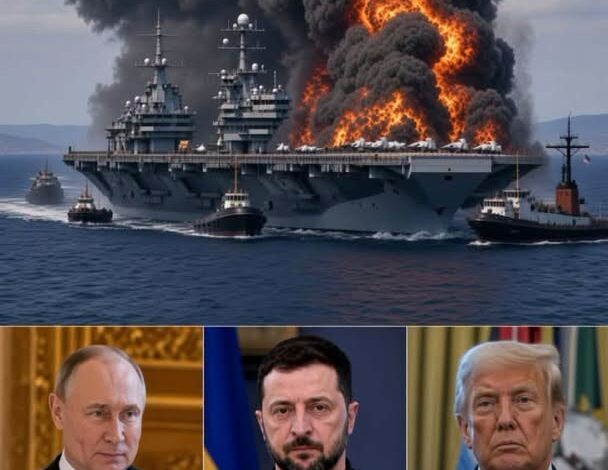
Military stories can spread rapidly online, especially when they feature advanced weapons, dramatic explosions, or claims of an extraordinary battlefield victory. Some reports repeat details from earlier posts without providing independent evidence, while simulated footage can be mistaken for genuine combat imagery.
The Su-57 carrier-attack claim illustrates why readers should look for confirmation from credible news organizations, official statements, independently verified imagery, and other evidence that can establish what happened.
The absence of confirmation does not prove every possible version of a claim false, but it is a strong reason not to present the story as established fact.
What Happens Next?
If credible evidence of an incident emerges, analysts would examine the available information to determine the location, the weapons involved, the extent of any damage, and the wider strategic implications.
Until then, claims of a successful Russian Su-57 strike against a U.S. aircraft carrier should be treated as unverified.
The broader questions surrounding stealth aircraft, naval defenses, and modern military competition are real and worth examining. But understanding those issues begins with separating established facts from dramatic claims that have yet to be substantiated.
In military reporting, accuracy is especially important when an unverified story could create unnecessary alarm or distort public understanding of a potential international crisis.
However, there is a critical distinction between a viral military claim and a verified event: the alleged carrier attack has not been independently confirmed. Repeated headlines and online posts do not establish that the incident actually occurred.