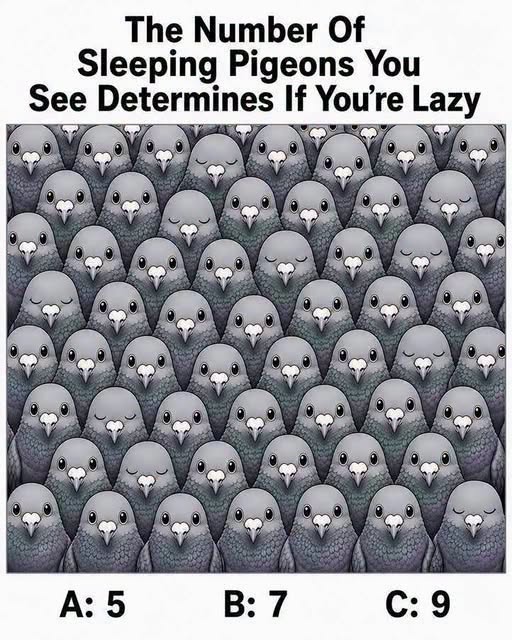
How the Pigeon Visual Test Works
Start by looking at the picture for a few seconds.
Ask yourself:
How many pigeons did you notice first?
Try to remember your first impression before carefully scanning the entire image.
You may notice one or two birds almost immediately, while someone else might focus on a larger group. After looking for a little longer, you may discover pigeons that you completely missed at first.
That difference is what makes the puzzle interesting.
Your first impression can be influenced by ordinary visual factors such as the size of the image, lighting, screen brightness, viewing distance, image quality, and how quickly you scan the scene.
Why Do We Notice Some Things Before Others?
When we look at a busy picture, our eyes do not necessarily examine every detail one by one. We tend to notice certain shapes, contrasts, positions, or objects that stand out to us.
This is part of normal visual attention.
For example, a pigeon that is larger, closer to the center of the image, or surrounded by more noticeable space may attract your attention before another bird that blends into the background.
Once you start deliberately searching for more pigeons, your attention may change. Details that seemed invisible at first can suddenly become obvious.
Try It Before Looking Again
If you are doing the puzzle with friends or family, try something simple.
Have everyone look at the image for just a few seconds and write down the number of pigeons they noticed first.
Then compare the answers.
You may find that people looking at exactly the same picture describe very different first impressions. That doesn’t mean one person has better vision or a particular personality type. It simply shows how easily our attention can be directed toward different parts of a visually busy scene.
Don’t Take the Result Too Seriously
You may come across online puzzles that claim a particular visual answer reveals whether someone is creative, analytical, observant, intelligent, or associated with another personality trait.
Those claims should be treated cautiously.
A quick pigeon-counting exercise does not provide enough information to determine someone’s personality, intelligence, mental abilities, or psychological characteristics. A person’s answer can change depending on the viewing conditions and even on whether they have seen the image before.
So there is no need to worry about getting the “right” number.
The real purpose is simply to pause, observe, and compare your first impression with what you notice after taking a closer look.
What Did You Notice First?
Now take another look at the image.
Did the same pigeons catch your attention, or did you discover several that you completely overlooked?
That’s the interesting part of the puzzle: sometimes the most noticeable detail isn’t the only detail worth seeing.
Use it as a lighthearted observation game, share it with someone else, and compare what each person notices first. You might be surprised by how differently two people can experience the very same picture.
Note: This visual exercise is intended for entertainment and observation. It is not a scientifically validated personality, intelligence, or psychological test.