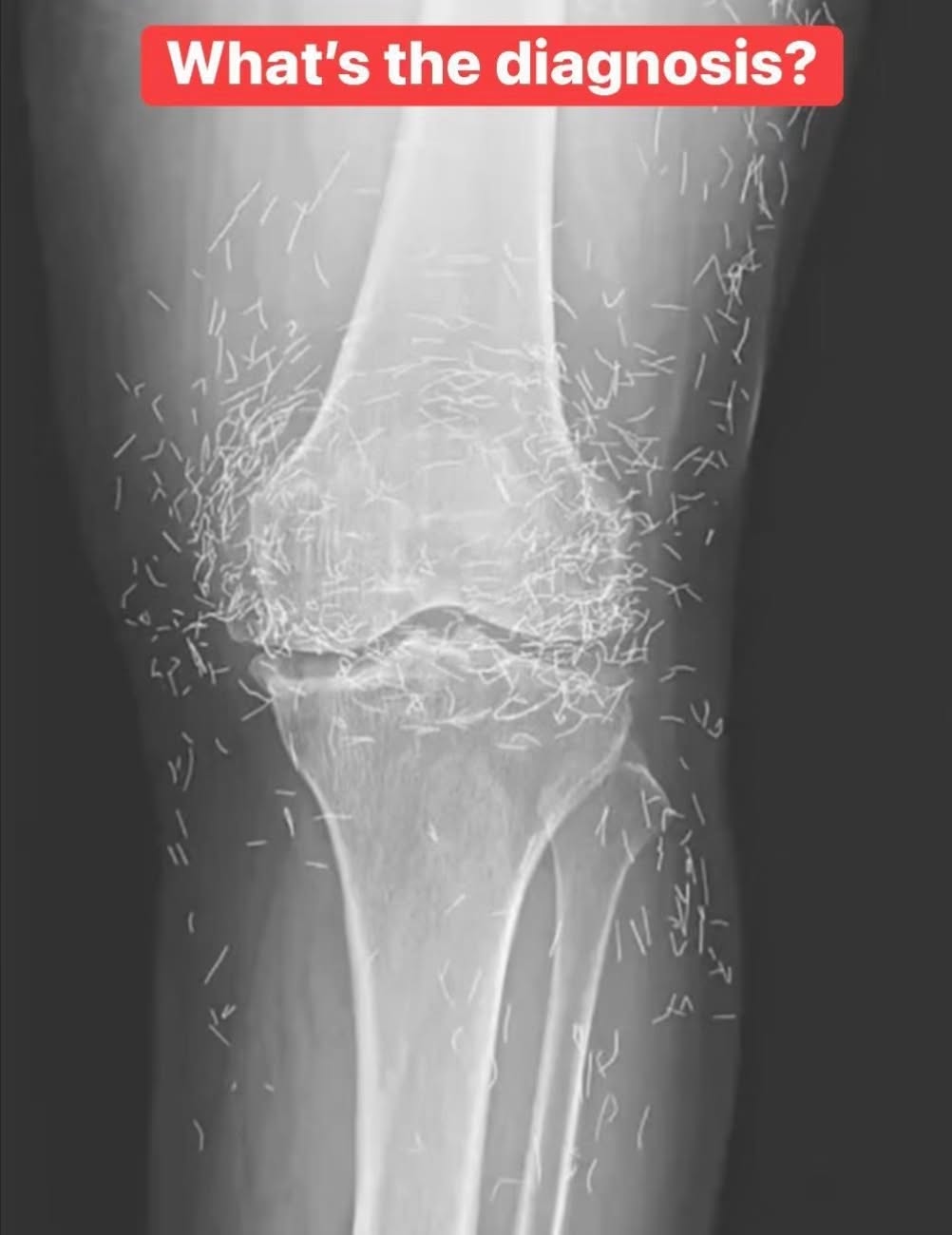
Osteoarthritis is one of the most common joint conditions affecting older adults. It develops as the protective cartilage within a joint gradually deteriorates, potentially causing pain, stiffness, swelling, and reduced mobility.
For people living with the condition, everyday activities can become increasingly difficult. Walking, climbing stairs, standing for extended periods, and bending the knees may all cause discomfort.
The South Korean woman had reportedly been experiencing persistent knee pain associated with osteoarthritis. According to the medical report, conventional pain medications and anti-inflammatory drugs had provided limited relief and caused unpleasant gastrointestinal side effects.
Looking for another way to manage her symptoms, she turned to acupuncture, a traditional treatment that has been practiced for centuries.
Why Doctors Found Gold Needles in Her Knees
Acupuncture typically involves inserting very thin needles into specific points on the body. Some traditional practices, however, use small pieces of gold thread or wire that are intentionally left beneath the skin.
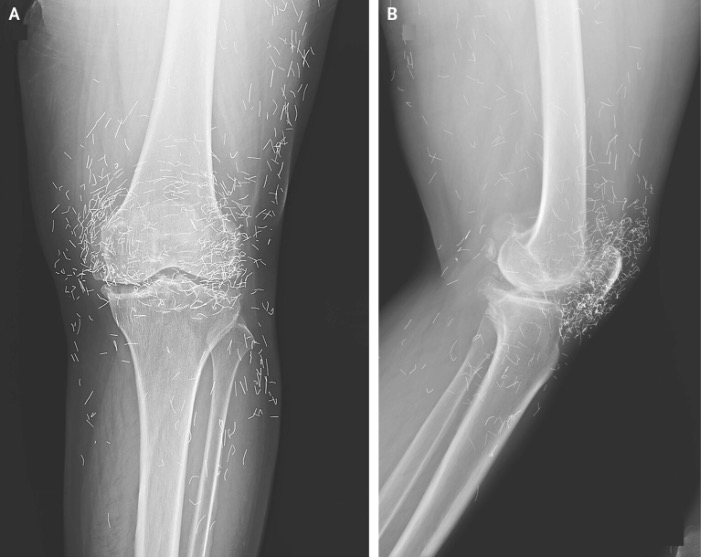
The woman had undergone this type of treatment, leaving numerous small gold needles around her knee joints.
When doctors examined her knees using medical imaging, the metallic objects became clearly visible.
The unusual finding was documented in the New England Journal of Medicine in a medical image report published in 2013.
Although the discovery was striking, it also highlighted an important medical concern: leaving foreign materials inside the body can sometimes lead to complications.
The Potential Health Risks of Embedded Needles
According to medical experts, foreign objects retained in body tissues may trigger an inflammatory response.
The body’s immune system recognizes unfamiliar material and may attempt to isolate it by forming fibrous tissue around the object. In certain circumstances, retained foreign materials can also contribute to infection, localized inflammation, or abscess formation.
Dr. Ali Guermazi, a professor of radiology at Boston University who was not involved in the woman’s treatment, discussed these concerns in connection with the case.
He also explained that numerous metallic objects can interfere with the interpretation of medical imaging. Depending on their location and composition, they may obscure important anatomical structures on X-rays and other imaging studies.
Another consideration is MRI safety. Certain metallic objects may pose risks during magnetic resonance imaging because of their interaction with the scanner’s magnetic field.
Whether an individual can safely undergo an MRI depends on the material, size, location, and magnetic properties of the retained objects. Patients should always inform their medical team about any implanted or retained metal before undergoing imaging.
Does Acupuncture Help With Osteoarthritis?
Acupuncture remains a popular complementary treatment for people experiencing chronic joint discomfort.
Some research suggests it may provide modest short-term relief for certain individuals, particularly when used alongside conventional care. However, scientific evidence varies, and acupuncture should not be considered a proven cure for osteoarthritis or a replacement for established medical treatment.
The practice also differs across countries and traditions. While conventional acupuncture generally uses temporary needles, some approaches involve leaving small metallic threads beneath the skin for longer periods.
These approaches should not be considered risk-free simply because they are based on traditional practices.
Anyone considering acupuncture for joint pain should discuss the available options with a qualified healthcare professional and ensure that appropriate hygiene and safety standards are followed.
An Unusual Medical Discovery With an Important Lesson
The discovery inside this woman’s knees remains a memorable example of how traditional treatments can sometimes intersect with unexpected medical complications.
For the patient, the gold needles represented an attempt to find relief from persistent osteoarthritis pain. For doctors, they provided an opportunity to examine the potential consequences of leaving metallic objects inside the body.
The case also serves as a reminder that complementary treatments deserve the same careful consideration as other healthcare decisions.
When managing chronic joint pain, understanding the potential benefits, limitations, and risks of any treatment is essential.
Sometimes, an unexpected discovery during a routine examination can offer a valuable lesson about the importance of informed healthcare choices.