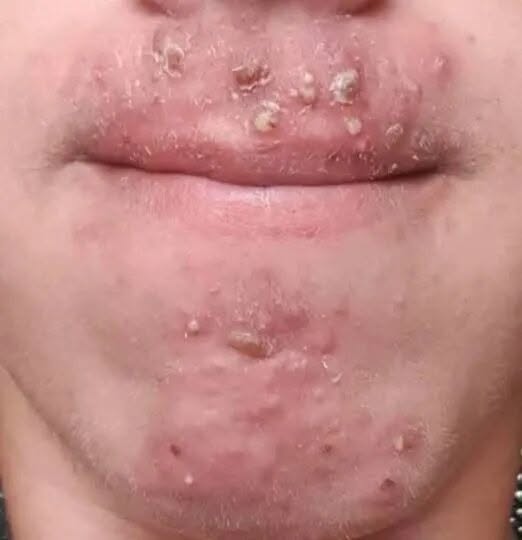
A clinician can examine the skin directly and ask follow-up questions that a social media post cannot answer.
Details that can make an appointment more useful
If someone is being evaluated for a rash around the mouth, the history of the rash matters. Helpful details include:
- When the change first appeared
- Where the earliest spots showed up
- Whether the rash has spread or changed
- Whether there is pain, fever, swelling or drainage
- Whether the rash has happened before
- Whether anything seemed to improve or worsen it
It can also help to mention any recent changes in skin or lip products, including face wash, shaving products, creams, lip balm or cosmetics. If the rash looked different over several days, bringing photos from each stage may help the clinician understand the progression, especially if the appearance has changed by the time of the visit.
Relevant close contact can be included in the history, but it should not be treated as proof that another person caused the problem.
Be cautious with self-treatment
The right approach depends on the cause. A product meant for dry skin may not be appropriate for a different condition. The American Academy of Dermatology notes that topical steroid creams can be involved in some cases of perioral dermatitis.
Anyone using a prescribed medication should check with the prescriber before stopping or changing it. While arranging an assessment, avoiding harsh scrubbing or picking at the area is a reasonable way to reduce further irritation. A clinician can also advise whether any precautions are needed with close contact or shared items.
When to seek care quickly
Prompt medical attention is appropriate if a rash spreads quickly, becomes painful, causes significant swelling or appears with fever. Emergency help is needed if there is trouble breathing or swelling of the lips or tongue.
Even if someone feels otherwise well, a persistent or recurring rash around the mouth is still worth discussing with a healthcare professional, especially if it appeared or changed after using a new product.
The main takeaway from the Facebook post
The question in the post asks what the rash is, but the available photograph leaves that unresolved. The most useful response is not to guess from the image, but to describe the symptoms clearly, track the timing and seek an appropriate evaluation.
A healthcare professional can assess the rash in context and discuss whether treatment or follow-up is needed.
Reference: American Academy of Dermatology, perioral dermatitis information: https://www.aad.org/public/diseases/a-z/perioral-dermatitis