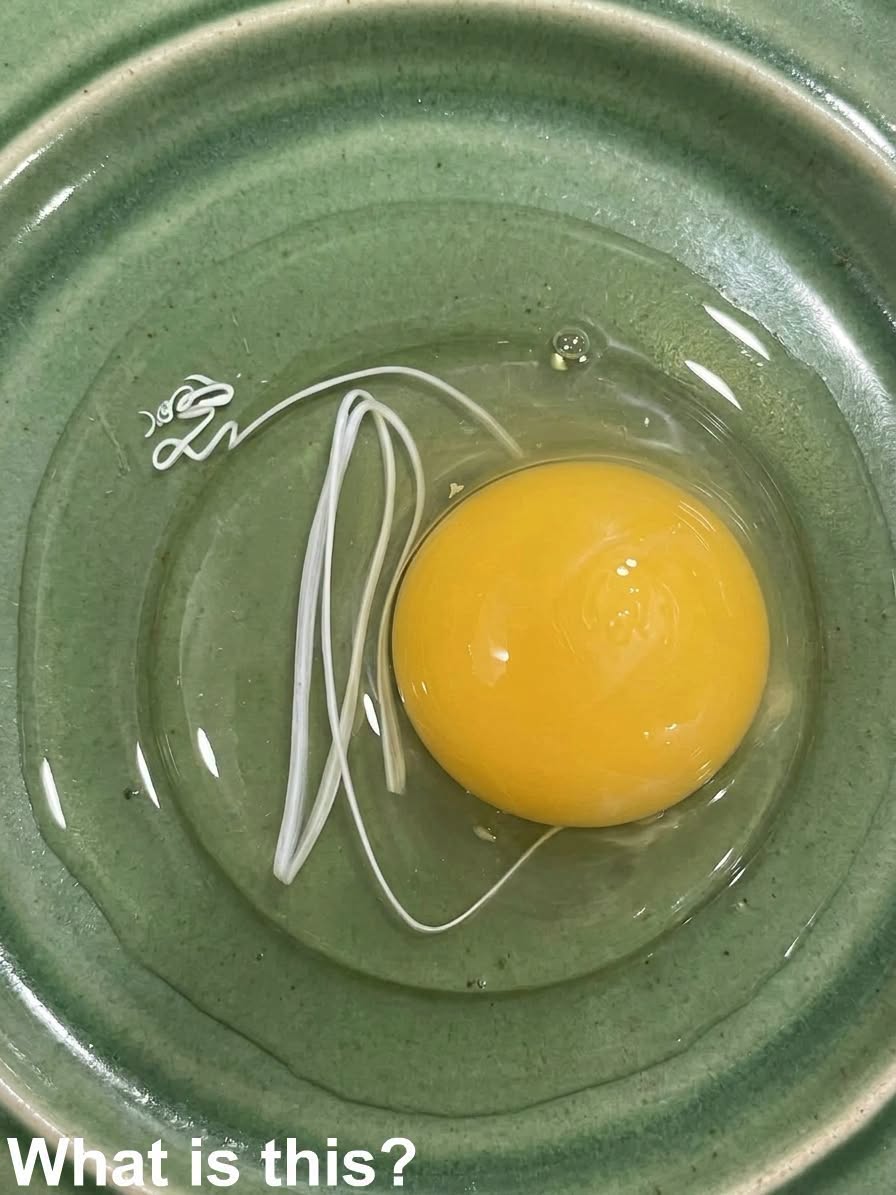
What Is the White String Inside an Egg?
The white, rope-like strand is called the chalaza. It is a natural part of an egg that helps keep the yolk positioned within the egg white.
Eggs have several structures that work together to protect and support the developing contents. The chalaza consists mainly of twisted strands of protein that help stabilize the yolk.
Although it may resemble a tiny string or thread, it is not a worm or parasite. Its appearance is a normal feature of many fresh eggs.
Does a Visible Chalaza Mean an Egg Is Fresh?
A clearly visible chalaza can be associated with a fresh egg, and it may become less noticeable as an egg ages. However, its appearance alone cannot establish an egg’s freshness or safety.
Other factors, including storage conditions, handling, and the condition of the shell, are important when deciding whether an egg should be used.
If you notice a white strand inside an otherwise normal egg, there is generally no reason to panic. The strand itself is a natural part of the egg rather than an indication that something is wrong.
Is It Safe to Eat an Egg With a White String?
The chalaza is edible and does not need to be removed before cooking. Some people prefer to take it out for aesthetic reasons, particularly when preparing recipes that require a very smooth egg mixture, but doing so is optional.
However, identifying the chalaza does not automatically mean the entire egg is safe to eat. Eggs can contain harmful bacteria even when they look and smell normal.
For safer preparation, choose eggs with clean, uncracked shells, store them according to local food safety guidance, and cook them thoroughly. If an egg has an unusual odor, unexpected discoloration, or other signs of spoilage, discard it.
Why Does the Strand Look So Strange?
The chalaza can appear more prominent in some eggs than in others. Its twisted shape and pale color can make it look unfamiliar, especially when the egg is cracked onto a dark frying pan.
Because many people rarely examine the inside of an uncooked egg closely, discovering this structure for the first time can be surprising.
In reality, the chalaza is simply part of the egg’s natural structure. It helps hold the yolk in position rather than indicating contamination.
Should You Remove It Before Cooking?
For everyday cooking, there is usually no need to remove the chalaza. It can remain in the egg when making fried eggs, scrambled eggs, omelets, and many baked dishes.
If you prefer a smoother texture in custards, sauces, or delicate desserts, you can remove the strand with a clean utensil before mixing the ingredients.
Otherwise, you can leave it exactly where it is.
The Takeaway
Finding a thin, white string inside an egg can be unexpected, but it is usually a normal feature called the chalaza. It helps stabilize the yolk, is edible, and does not need to be removed before cooking.
The important distinction is that a normal-looking chalaza is not a warning sign by itself, but neither is it a guarantee that an egg is safe. Proper storage, careful handling, and thorough cooking remain the best ways to reduce food safety risks.
Sometimes, what looks unusual in the kitchen has a simple scientific explanation—and learning about it can make everyday cooking a little less mysterious.