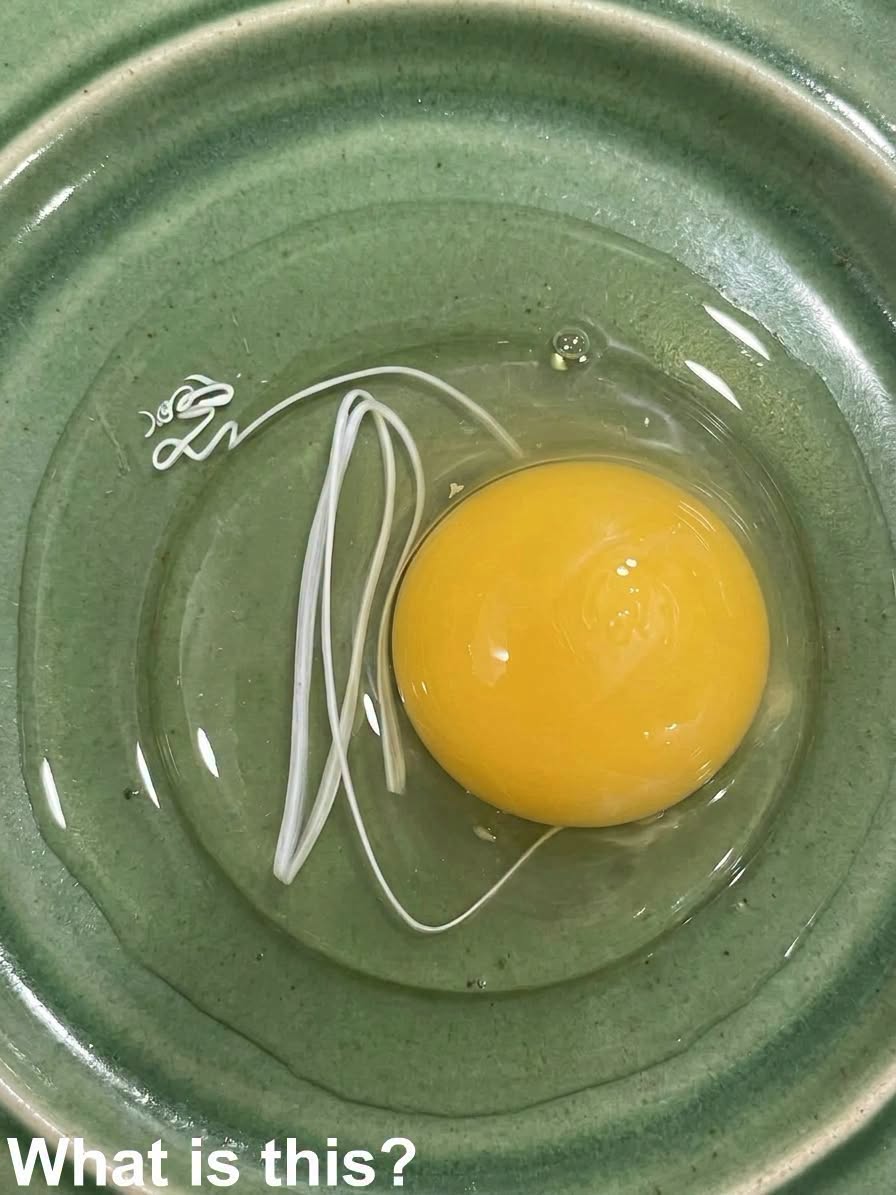
What Was the White Strand?
The small, white, string-like structure found inside many eggs is called the chalaza.
The chalaza is a natural part of an egg. It consists of twisted strands of protein that help keep the yolk positioned near the center of the egg.
Depending on the egg and the angle from which it is viewed, the chalaza may be more or less noticeable. Some eggs have a more visible chalaza than others.
Is It Safe to Eat?
In general, the presence of a chalaza is normal and does not mean that an egg is spoiled.
If an egg has been stored and handled properly and does not show signs of spoilage, the chalaza itself is simply a natural component of the egg. It can be cooked and eaten along with the rest of the egg.
As with any food, it is important to follow appropriate food-safety practices when preparing eggs. Check the egg’s appearance and smell, follow storage recommendations, and cook eggs appropriately.
A Small Detail With an Important Purpose
Although it may look unusual, the chalaza plays an important role in the structure of the egg.
Its twisted, cord-like shape helps stabilize the yolk within the egg. When an egg is cracked open, these strands can sometimes become clearly visible against the transparent egg white.
Because many people rarely look closely at the inside of an egg, discovering a chalaza for the first time can be surprising.
When Should You Avoid Eating an Egg?
A visible chalaza alone is not generally a sign that an egg has gone bad. However, other changes may indicate that an egg should be discarded.
Signs that may warrant caution include:
- An unusual or unpleasant odor
- Significant discoloration
- Mold or other visible contamination
- An egg that has been improperly stored or handled
When in doubt about whether a food is safe to eat, it is best to avoid consuming it.
The Simple Explanation
What initially looked strange turned out to be a completely natural part of the egg.
The next time you crack an egg and notice a small white strand attached to the yolk, there’s no need to be alarmed. You’re most likely seeing the chalaza, a natural structure that helps keep the yolk in place.
Sometimes, even an ordinary breakfast can offer a reminder that familiar foods contain details we don’t always notice.
Note: This article is intended for general informational purposes and is not a substitute for professional food-safety guidance.