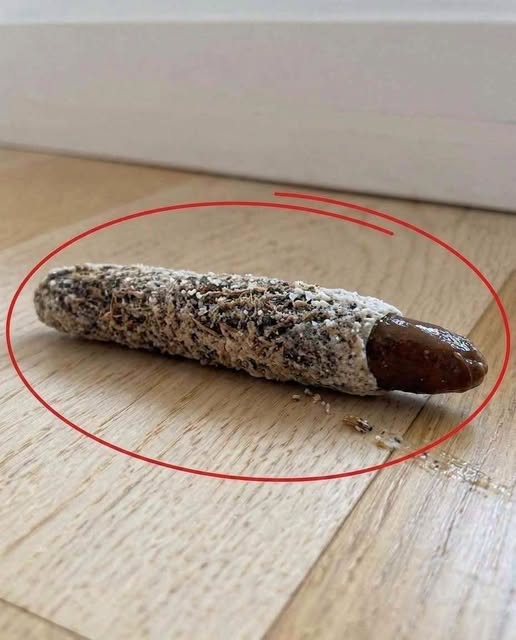
What Is This Tiny Tube?
Some moth larvae create small, elongated cases that serve as both shelter and camouflage.
The case may contain silk mixed with dust, hair, fibers, and other tiny particles. Depending on the species and the materials available, it can appear gray, brown, or unevenly textured.
Household casebearers are known for producing narrow, spindle-shaped coverings that are open at both ends. The larva can extend part of its body through an opening to move around, then retreat inside when disturbed.
Because the outer surface resembles ordinary debris, these cases can easily go unnoticed until someone spots one on a floor, wall, or near a piece of furniture.
Why Would an Insect Carry Its Own Shelter?
The case is more than a random collection of dust.
For a case-bearing larva, it provides a mobile hiding place while the insect develops. Rather than remaining inside a fixed nest, the larva can move around while carrying its protective covering.
The materials on the outside can also help the case blend into its surroundings.
This is a useful example of how small insects adapt to their environments. Something that looks like a scrap of dirt to a person may serve as a shelter for a tiny living creature.
Where Might You Find These Cases?
If the object is a household casebearer case, it may turn up in places where dust, hair, fibers, and spider webs accumulate.
Common places to inspect include:
- Along baseboards and in floor corners
- Beneath beds, sofas, and other furniture
- In closets and storage areas
- Near curtains, carpets, and upholstered furniture
- Around undisturbed corners or old spider webs
Finding one case does not automatically mean that your home has a significant pest problem. However, discovering several similar objects over time is a reason to inspect the surrounding area more carefully.
Can These Insects Damage Clothing?
Some case-bearing moth larvae and related clothes moth species can damage natural animal-based materials, including wool, fur, feathers, and certain silk items.
The amount of damage depends on the species and its feeding habits. Not every small case found indoors belongs to a fabric-damaging insect, so identification matters.
If you discover repeated cases near clothing or carpets, look for additional clues such as small holes in wool garments, damaged fibers, shed skins, or further insect activity in dark storage spaces.
Avoid assuming that a single object means your clothes or furniture are infested. Look for a pattern of evidence before deciding how serious the problem might be.
What Should You Do If You Find One?
In many cases, basic cleaning is a sensible first step.
1. Remove the object. Use a tissue or vacuum cleaner to collect the case. If you use a vacuum, empty it appropriately afterward.
2. Clean nearby areas. Vacuum along baseboards, beneath furniture, and around corners where dust, hair, and fibers can collect.
3. Inspect natural-fiber items. Check wool clothing, rugs, blankets, and stored fabrics if you continue finding similar cases.
4. Reduce places where debris accumulates. Regularly remove dust and old spider webs from neglected corners and storage areas.
5. Seek help if the problem persists. If you repeatedly find cases or notice damage to fabrics, a pest-control professional can help identify the insect and recommend suitable treatment. These practical steps are consistent with guidance from university extension specialists.
There is generally no reason to apply insecticides simply because you discover one unidentified object. Confirming what you are dealing with first can help you avoid unnecessary treatment.
Can You Identify It From Appearance Alone?
Not reliably.
Several insects can create cases or coverings that resemble small tubes, and a photograph may not show enough detail to distinguish them. The object’s size, shape, texture, location, and whether anything is moving inside can all provide useful clues.
If you want a more confident identification, take a clear photograph before removing it. Include a coin or ruler nearby to show its approximate size, but avoid handling the object unnecessarily.
A local university extension service or pest-control professional may be able to help identify it from a photograph or specimen.
A Tiny Discovery With a Surprisingly Interesting Explanation
Finding a strange object on your floor can prompt an understandable question: Is it just debris, or is something living inside?
A case-bearing moth larva is one possible explanation for a small, rough tube made from silk and collected particles. Its portable shelter offers a fascinating glimpse into insect behavior, even if the discovery itself is less welcome.
The important thing is not to jump to conclusions. Remove the object, clean the surrounding area, and look for additional evidence if similar cases keep appearing.
Sometimes, a tiny mystery in an ordinary corner of the home is a reminder of just how much activity can go unnoticed in the world around us.