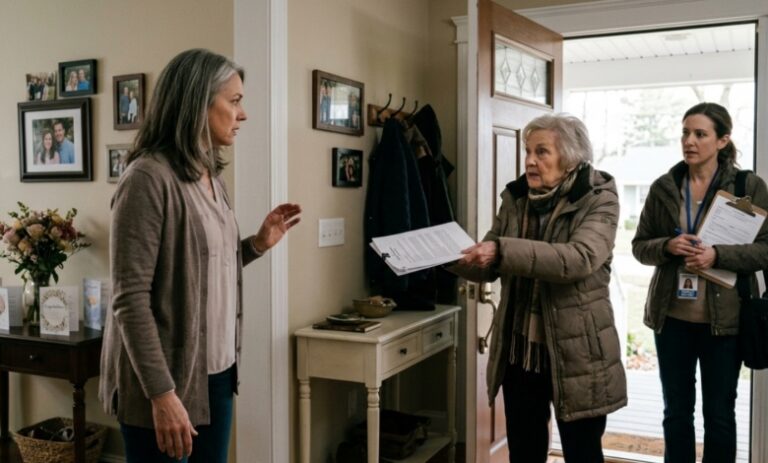
At three in the morning, I gave up trying to sleep.
I went downstairs, made a cup of tea, and opened the desk drawer where I kept the records associated with my grandfather’s estate.
Inside were copies of the deeds, property management statements, tax records, and a letter he had written shortly before his death.
I had read it many times.
That night, the words felt different.
Valerie, never allow anyone to make you feel guilty for protecting what you have worked to preserve. Money can help you live, but it can also reveal the people who have come into your life for the wrong reasons. Be generous when you can, but never confuse generosity with surrender.
My grandfather had been a quiet man who rarely offered advice unless he believed it mattered.
I sat with that letter until the sky began to lighten.
Then I remembered something that gave me a measure of comfort.
The cottages were not owned in my personal name alone. Years earlier, after consulting an attorney and an accountant, I had placed them under a limited liability company created to manage the properties.
I owned the company and controlled its membership interests.
My marriage did not automatically give Russell the right to take control of it. The precise legal protections depended on the ownership records and applicable law, but no one could simply declare themselves my representative and assume authority over my assets.
I had protected the cottages long before Russell entered my life.
Now I needed to find out why he and his mother were suddenly interested in them.
My Attorney Asked One Important Question
At eight the next morning, I called Elaine Foster, an attorney who had previously helped me review the property company’s structure.
She listened without interrupting as I described Marjorie’s visit, the documents, and the message on Russell’s phone.
Then she asked me to send copies of whatever paperwork I had.
“I don’t have copies,” I admitted. “Marjorie took the folder when she left.”
“Did you sign anything?”
“No.”
“Did you give either of them your banking information, account passwords, or copies of your deeds?”
“No.”
“Good. For now, don’t sign anything, agree to transfer assets, or let anyone rush you into a financial decision. I also want to review your estate documents and the company’s ownership records.”
I hesitated before asking the question that had kept me awake.
“Do you think they’re trying to steal my money?”
Elaine paused.
“I think the circumstances justify caution. I won’t accuse anyone without evidence. But a spouse’s parent arriving with power-of-attorney and trust documents without your prior agreement is not something I’d dismiss.”
For the first time since the wedding, I felt someone was taking my concerns seriously.
Then Elaine asked another question.
“Does Russell know the actual value of your assets?”
“No. He knows I have savings. He doesn’t know about the cottages.”
“Then don’t disclose anything further until we’ve reviewed the situation.”
After we hung up, I gathered every record I could find.
The six cottages had appreciated substantially over the years. Their rental income was steady, and the property company had no outstanding mortgage. I also had retirement savings and the house where Russell and I now lived.
The house had belonged to me before the marriage.
Russell had moved in after the wedding with two suitcases, several boxes of books, and a framed photograph of himself with his mother.
He had contributed nothing toward its purchase.
I had never considered that a problem. I believed marriage was about building a shared life, not keeping score.
But I was beginning to understand that sharing a life and surrendering control of your property were two very different things.
Russell Finally Told Me What He Feared
That afternoon, I asked Russell to sit with me at the kitchen table.
“I spoke with an attorney,” I said.
He stared at me.
“You actually did that?”
“Yes.”
“Without telling me?”
I held his gaze.
“You brought your mother and a mobile notary into my home without telling me.”
“That’s different.”
“Explain how.”
He looked away.
“Valerie, I know Mom handled things badly. I told her she shouldn’t have come over like that.”
“Did you tell her not to bring the documents?”
He hesitated.
“I told her it wasn’t the right time.”
“That isn’t what I asked.”
His jaw tightened.
“Why are you interrogating me?”
“Because I married you, and I need to know whether I can trust you.”
For a moment, I saw something resembling shame in his expression. Then it disappeared.
“You’re letting money come between us.”
“We haven’t even discussed the amount of money involved. You don’t know what I own, and you don’t know what I’d be willing to share. Yet your mother is already asking me to transfer assets.”
“She’s trying to protect our marriage.”
“From what?”
“Uncertainty!”
He struck the table with his palm, startling both of us. Then he stood and began pacing.
“My divorce cost me a great deal,” he said. “I spent years rebuilding my finances. I don’t want to end up with nothing again.”
There it was: the first explanation that sounded genuinely personal.
Russell had told me that his previous divorce had been difficult. He had described a settlement that left him struggling financially, and I had felt sympathy for him.
I had admired the way he said he rebuilt his life.
But I had never promised to compensate him for what his first marriage had cost.
“Russell,” I said quietly, “I’m not your former wife.”
“I know that.”
“Then why are you treating me as though I might take something from you?”
He stopped pacing.
“I just want security.”
“So do I.”
“Then why can’t we put everything into a trust?”
“Because I haven’t had independent legal advice about the documents your mother brought.”
“We can get advice together.”
“No. I’ll get my own advice first.”
He stared at me before grabbing his keys.
“I need some air.”
He left without saying goodbye.
I sat alone for nearly an hour. Then I made a decision.
I was going to Florida.
Not at Christmas. Not as a surprise for Russell. I would go immediately, meet the property manager, review the company records, and make sure everything was in order.
I booked a flight for the following morning.
When Russell returned that evening, I told him I would be traveling for a few days.
“Where?”
“Florida.”
His expression changed so quickly that I felt a chill.
“Florida? What for?”
“Some business matters.”
“What business matters?”
I folded my hands in my lap.
“Matters I should have discussed with you earlier.”
For the first time since I had known him, Russell looked genuinely frightened.
“What exactly do you own down there?” he whispered.
I didn’t answer.
Because suddenly, I understood something important: he wasn’t simply surprised to learn that I might have property in Florida.
He was afraid of what I might discover there.
The Call That Changed Everything
The next morning, I arrived at the airport shortly after sunrise.
I had packed one suitcase, my legal documents, and my grandfather’s letter.
Before boarding, I called Denise Harper, the woman who had managed my cottages for nearly twelve years.
She answered immediately.
“Valerie! I was just about to call you.”
My stomach tightened.
“Is something wrong?”
There was a pause.
“I wasn’t sure whether I should bring this up over the phone.”
“Please do.”
Denise lowered her voice.
“Someone called our office last week asking for information about your properties. He said he was your financial representative.”
“Who?”
“He gave the name Russell Pierce.”
I gripped the phone.
“What did he ask for?”
“Rental income statements, ownership records, and information about how the company distributes its profits. He also wanted to know whether you’d discussed adding another member to the company.”
“What did you tell him?”
“That I couldn’t release private company information without your authorization. He became rather insistent, but I refused.”
I closed my eyes.
Denise continued.
“A woman called the following day. She said she was helping with your estate planning and needed to verify the property values.”
“Was her name Marjorie?”
“Yes. She said you and your husband were consolidating your assets for retirement and that everything had already been approved.”
I looked toward the departure gate.
My husband and his mother had both contacted my property manager. Both had requested confidential information about assets I had never disclosed to them. Both had presented themselves as authorized representatives.
“Denise, please send me a written record of every call, including dates, times, phone numbers, and exactly what they requested.”
“I’ll do that immediately.”
“And don’t release any information unless I authorize it directly in writing.”
“Of course.”
I ended the call and stood motionless in the crowded terminal.
Families embraced around me. Children dragged suitcases across the floor. A businessman complained about a delayed flight.
Life continued as usual for everyone else.
Mine was beginning to unravel.
I had spent two years believing I was building a future with a good man. Now I was discovering that he had been investigating my past.
My phone vibrated.
A message from Russell appeared.
We need to talk before you do something you’ll regret. Please don’t involve lawyers in our marriage.
Another message followed.
Mom says you’ve misunderstood everything. She only wants to make sure we’re both protected.
I read them carefully before replying.
Then you should have nothing to fear from an independent review.
He didn’t respond.
During the flight, I tried to remember the man I had married.
The man who brought me lemon pie because he remembered what I liked. The man who sat beside me at Peter’s memorial bench and told me that loving someone again did not mean betraying the person I had lost.
Had those moments been real?
Perhaps some of them had been. That was what made the situation so painful. Betrayal is rarely as simple as discovering that every memory was false. Sometimes, the good moments existed alongside intentions you never imagined.
When I landed in Florida, the warm air wrapped around me like an old friend.
I drove to Cedar Key, watching the palm trees sway along the highway.
The cottages stood on a quiet street lined with live oaks. Their pastel walls glowed in the afternoon sunlight, and the salty air carried the familiar scent of the Gulf.
For years, these cottages had represented freedom.
My grandfather had left me more than buildings. He had left me choices.
When Peter was ill, their income allowed me to reduce my working hours so I could care for him. After he died, the rental revenue gave me time to grieve without worrying about every bill. It helped me support a struggling niece, repair my home, and volunteer at the local museum.
I had never viewed the cottages as a source of power.
They were simply part of my life.
And I had wanted to share that life with Russell.
The Records Revealed Something More Disturbing
Denise met me at the management office and led me into a small conference room.
A folder waited on the table.
Inside were printed emails, notes from phone calls, and copies of the company’s latest financial statements.
I began reading.
The first call from Russell had been made three weeks before our wedding.
Three weeks.
He had asked for an estimate of the company’s value and whether its ownership could be transferred into a trust.
Marjorie’s call had followed five days before the wedding. She had asked whether marriage automatically gave a spouse rights to inherited property.
Denise had declined to offer legal advice.
After the wedding, Russell called again, requesting a detailed income statement and information about the company’s ownership structure. When Denise refused to release confidential information without my written authorization, he reportedly insisted that being my husband gave him a right to know.
I sat back in my chair.
Three weeks before our wedding, he had already been asking questions about my assets.
I looked at Denise.
“Did he ever explain how he knew about the cottages?”
“No. He only said he believed you had inherited property.”
“Did he mention anyone else?”
She hesitated.
“During the last call, he said his mother had experience with family trusts.”
Then I reached the final page.
It was a note Denise had written after Marjorie’s call.
Caller stated that the marriage would provide an opportunity to simplify ownership before year-end.
I read the sentence again.
Then a third time.
A strange calm settled over me.
I no longer needed to wonder whether I had imagined the warning signs. The notes had dates attached. The requests had been documented.
My husband and his mother had been discussing my assets before the wedding. They had tried to obtain confidential records. They had arrived at my home with documents I had never requested.
And they had expected me to sign.
But one question remained.
Why were they in such a hurry?
I called Elaine and explained what I had found.
“Preserve every document,” she told me. “Don’t confront them with anything else until we’ve reviewed the legal implications. We also need to determine whether anyone has prepared documents using your name without your authorization.”
“Could they transfer my properties without my signature?”
“Based on what you’ve described, they should not be able to transfer ownership simply by claiming to represent you. But we need to examine the records and the exact documents involved.”
She paused.
“Did the proposed trust name Russell as co-trustee and primary beneficiary?”
“Yes.”
“Then I want to see that document. We need to understand precisely what powers it grants and what assets it covers.”
“I don’t have a copy.”
“Then let’s find out who prepared it.”
I thought of Curtis Bell, the mobile notary who had accompanied Marjorie. He had left his business card at my house.
I called him that afternoon.
When I identified myself, his tone became serious.
“Mrs. Pierce. I wondered whether you might contact me.”
“Did you keep a record of the appointment?”
“Yes. I maintain records of my notarizations and appointments in accordance with the requirements that apply to my work.”
“Who hired you?”
“Your mother-in-law contacted me through a mobile notary service. She said the documents had been prepared by a family attorney and that everyone was expecting to sign.”
“Did you verify who drafted the documents?”
“No. That wasn’t part of my assignment.”
“Can you review your records and tell me whose name appeared on the paperwork?”
“I can review what I have and tell you what the records show.”
Before we ended the call, Curtis added something unexpected.
“I want you to know that I was uncomfortable with the circumstances. When you asked why the papers hadn’t been discussed with you beforehand, your mother-in-law said you had already agreed verbally.”
“I never agreed.”
“I understand. That’s why I stopped when you declined to sign.”
I thanked him and ended the call.
Then I sat on the porch of the largest cottage and watched the late-afternoon sunlight turn the Gulf a soft shade of gold.
I thought of my grandfather and the advice he had given me when I was a child.
“Never buy something because someone promises it will make you rich,” he had said. “Understand what you own, understand what you owe, and never let another person’s confidence replace your own judgment.”
I wished he were alive—not because I needed him to solve my problem, but because I wanted to tell him that I finally understood one of his oldest lessons.
Sometimes, the most dangerous person in your life is not someone who openly demands what you own.
Sometimes, it’s someone who convinces you that giving it away is proof of love.
The Attorney Who Had Refused to Help Russell
That evening, an unfamiliar number appeared on my phone.
“Mrs. Pierce? My name is Daniel Brooks. I’m an attorney in Clearwater. Your husband contacted my office a few weeks ago about estate planning.”
I straightened in my chair.
“What did he ask you to do?”
“He initially asked about preparing a marital trust for someone who owned several rental properties. He said the client was his fiancée and that she wanted to consolidate her assets after the wedding.”
My mouth went dry.
“Did he give you my name?”
“Yes. But when I explained that I would need to speak directly with you, verify your intentions, and ensure you had independent legal advice, he stopped responding.”
“Did you prepare any documents?”
“No. I never opened a formal engagement for you, and I didn’t draft the papers your mother-in-law presented.”
“Did you keep the emails?”
“Yes. With appropriate authorization, I can provide them to your attorney.”
I thanked him and gave him Elaine’s contact information.
When the call ended, I remained perfectly still.
Russell had contacted an attorney before our wedding. He had described me as someone who wanted to consolidate my assets. He had explored arranging a trust without speaking to me directly.
And when the attorney insisted on hearing from me, Russell disappeared.
I felt sick.
Yet beneath the hurt, something else was growing.
Clarity.
I still didn’t know whether Russell’s intentions were entirely financial, whether his mother had pressured him, or whether some other problem explained their urgency. But I knew that I would not sign anything until I understood the full situation.
And I knew I could not return home and pretend nothing had happened.
The next morning, Elaine called.
“I’ve spoken with Mr. Brooks,” she said. “He’s willing to provide the correspondence. He also mentioned something else.”
“What?”
“Russell asked whether someone could be added as a trust beneficiary without the property owner’s direct involvement, on the basis of verbal consent.”
“Did the attorney tell him that was possible?”
“No. He explained that proper authorization would be necessary and that the answer depended on the documents and applicable law.”
“What do we do now?”
“I want you to send me every ownership record you have. We’ll review the company structure, confirm that the registered information is current, and check whether any unauthorized filings have been made. In the meantime, don’t sign anything or grant anyone access to your accounts.”
After the call, Denise helped me assemble the company statements, insurance documents, and property tax records.
Everything appeared to be in order.
But then I noticed a note from the company’s accountant concerning a valuation request.
It had been submitted under Russell’s name.
The accountant had refused to release confidential financial information without my written permission.
I showed the note to Denise.
She frowned.
“Valerie, there’s something else I haven’t told you.”
I turned toward her.
“What is it?”
“Two days before your wedding, a man came into the office asking about the cottages. He said he was a property consultant working with your husband.”
My heart began pounding.
“Did he leave a business card?”
“Yes. I kept it because his questions seemed unusual.”
She opened a drawer and handed me a white card.
The company name meant nothing to me.
But the surname printed beneath it did.
Pierce.
For several seconds, I couldn’t speak.
Russell’s family hadn’t simply become interested in my assets after the wedding. Someone had been making inquiries before I became his wife.
I turned the card over.
On the back, someone had written a telephone number and a short note in blue ink.
Urgent valuation required before December 15.
December 15 was less than three weeks away.
Suddenly, the urgency seemed much larger than a family trust.
The Valuation Request
I photographed the card and sent it to Elaine.
Then I called the property advisory company.
A woman answered.
“Pierce Property Advisory. How may I help you?”
I introduced myself.
There was a pause.
“Mrs. Pierce,” she said carefully, “I wasn’t expecting your call.”
“Someone from your company visited my property manager and requested a valuation of my cottages. I want to know why.”
Another pause.
“That request came from Mr. Russell Pierce.”
“I understand. What did he tell you?”
“I’m afraid I can’t discuss a client’s instructions without authorization.”
“Then let me ask something else. Did your company complete the valuation?”
“No.”
“Why not?”
“We were unable to verify that the property owner had authorized the request.”
I exhaled slowly.
“Did Russell explain what the valuation was for?”
The woman hesitated.
“He mentioned a potential transaction.”
“What transaction?”
“I can’t provide details without reviewing our file.”
“Please do that. My attorney will contact you.”
I ended the call and immediately sent the company’s information to Elaine.
For the rest of the afternoon, I waited for a response. I tried reading, but the words blurred together. I walked along the waterfront, but even the sound of the waves couldn’t quiet my thoughts.
At six o’clock, my phone rang.
It was Russell.
“Where are you?” he demanded.
“In Florida.”
“I know that. Which property?”
“Why?”
“Because I need to talk to you in person.”
“About what?”
He lowered his voice.
“Valerie, please. This has gone too far.”
I looked toward the cottages across the street.
“No, Russell. It went too far when you began making inquiries about my property before we were married.”
He fell silent.
Then he said something I would never forget.
“I didn’t know it would become this complicated.”
I closed my eyes.
“What did you think would happen?”
“I thought we could arrange everything properly.”
“Arrange what?”
“Your properties. The trust. The estate planning.”
“Without speaking to me?”
“I thought you’d agree once you understood the benefits.”
“What benefits, Russell?”
He didn’t answer.
“Why December 15?” I asked.
His breathing changed.
“What?”
“Your property consultant wrote that a valuation was urgently required before December 15. Why that date?”
He was silent for so long that I wondered whether the call had disconnected.
Finally, he spoke.
“Mom can explain that.”
“No. You can.”
“Valerie, I can’t do this over the phone.”
“Then you should have thought about that before you started doing business with my property.”
He raised his voice.
“I wasn’t trying to steal anything from you!”
I held the phone away from my ear for a moment. When I brought it back, I spoke as calmly as I could.
“Then tell me what you were trying to do.”
He said nothing.
Finally, he whispered, “I made a mistake.”
It was the first honest sentence I had heard from him in days.
But it wasn’t an explanation.
“Come to Florida tomorrow,” I said. “Bring every document you have concerning my properties, the trust, and any proposed transaction. My attorney will be present.”
“Your attorney?”
“Yes.”
“Valerie, please. We can work this out ourselves.”
“No, Russell. We cannot.”
I ended the call.
For the first time, I understood that the question was no longer simply whether Russell loved me.
Perhaps he did, in whatever complicated way he understood love. Perhaps he had convinced himself that his actions were reasonable. Perhaps his mother had assured him that everything would be legal, proper, and harmless.
But none of those possibilities changed what he had done.
He had treated my trust as an opportunity.
Now I needed to discover what he had planned to do with it.
What Was Waiting on December 15?
At eight the next morning, Elaine called me back.
“I’ve reviewed the information you sent and contacted the property advisory company,” she said. “I think we need to prepare for a difficult conversation.”
My stomach tightened.
“Why?”
“The company has provided preliminary information about the proposed transaction. They haven’t completed their review, so we need the underlying documents before drawing conclusions. But the valuation request appears to have been connected to a potential financing arrangement.”
“Financing?”
“Yes. Someone wanted to determine whether the Florida properties could support a loan or another financial transaction.”
I stared out the window.
“Who wanted the loan?”
“That’s what we’re trying to establish.”
A chill moved through me.
Russell had asked about my company. His mother had asked about my assets. A property consultant had requested a valuation.
Now my attorney was telling me that my cottages might have been considered as financial backing for something I had never approved.
Elaine continued.
“There’s one more issue. The company mentioned a deadline of December 15. We don’t yet know what was supposed to happen on that date, but it appears to be connected to the proposed financing.”
I thought about Russell’s face when I told him I was going to Florida.
I thought about the messages insisting that everything be settled before Christmas.
And I remembered the fear in his eyes when he asked what I owned.
I had believed Christmas would be the moment I finally revealed my secret.
Instead, it seemed someone had been waiting for Christmas for an entirely different reason.
I looked out at the six cottages beyond the window.
For the first time in my life, I felt afraid of what my inheritance might reveal.
Not because I feared losing the money.
Because I feared discovering how far the man I had married was willing to go to obtain it.
And I had a terrible feeling that December 15 would answer that question.