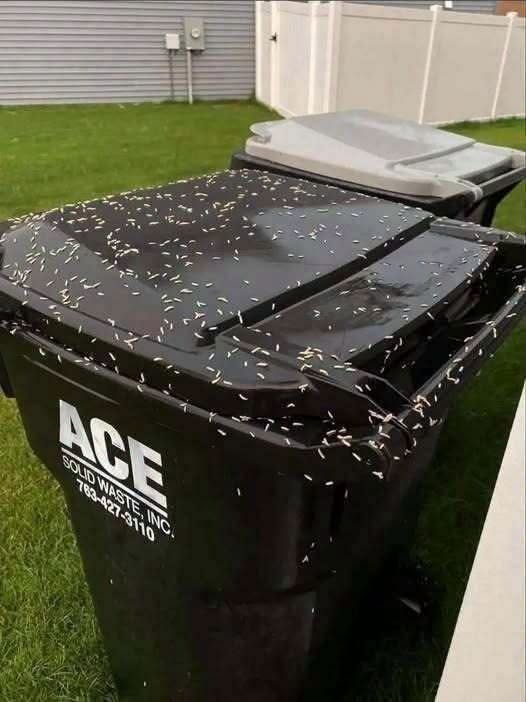
But there is another detail that surprises many homeowners: the larvae may not have hatched where you see them.
As maggots develop, they feed on decaying organic material. When they are ready to move to the next stage of their life cycle, some crawl away from the moist food source and search for a drier, more sheltered place to pupate.
That means larvae found on the lid or sides of a bin may have crawled there from the garbage below.
What looks like a mysterious invasion can actually be part of the fly’s normal life cycle.
Fortunately, there are practical ways to reduce the chances of seeing this happen again.
Start by emptying the garbage can and cleaning away any food residue. Wash the lid, sides, and bottom with soap and water, then allow the container to dry thoroughly. If necessary, follow the manufacturer’s cleaning guidance and local waste-management recommendations.
It also helps to seal food waste in sturdy bags, avoid leaving scraps exposed, and keep the lid firmly closed. During hot weather, taking out food waste more frequently can make the bin less attractive to flies.
If larvae keep returning despite regular cleaning, check for damaged lids, cracks, spilled liquids, or waste trapped beneath the liner.
Although the discovery may be unpleasant, maggots around garbage are usually a sign that flies have found accessible organic waste—not evidence of an unusual parasite.
A little maintenance can make a big difference in keeping your outdoor bins cleaner and less attractive to pests.
Have you ever discovered these tiny moving specks around your garbage can? Share your experience and tips in the comments!