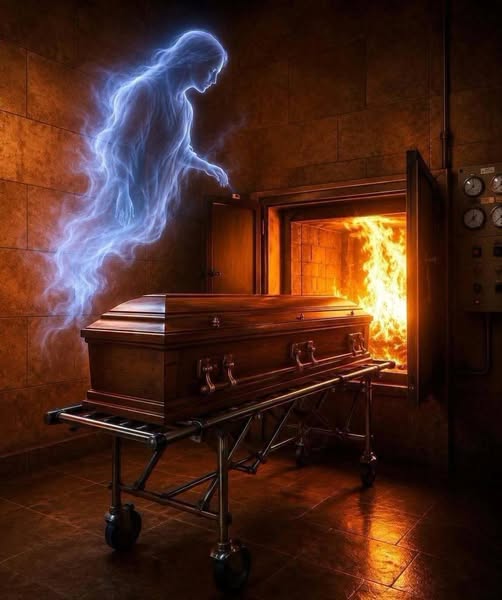
The burial of Jesus is especially important to Christian faith. According to the Gospels, Jesus’ body was placed in a tomb after his crucifixion, and the tomb was later found empty.
For Christians, this account connects burial with the central promise of resurrection.
The New Testament also uses burial as a spiritual image. In Romans 6:4, Paul describes believers as being buried with Christ through baptism so that they may walk in newness of life.
These passages help explain why burial became such a powerful symbol in Christian tradition. They do not, however, establish an explicit rule that every Christian must be buried rather than cremated.
The distinction between a biblical pattern and a direct command is important when considering whether a particular practice is sinful.
Does the Bible Describe People Being Burned After Death?
Yes. Several biblical accounts mention the burning of human bodies, but they occur in specific circumstances and should not automatically be treated as instructions about modern cremation.
In Joshua 7, Achan and his household face judgment after Achan’s disobedience. The account includes burning as part of the punishment described in the passage.
A different example appears in 1 Samuel 31. After Saul and his sons die in battle, the Philistines mistreat their bodies. The men of Jabesh-gilead recover the bodies, burn them, and bury their bones.
Their actions take place in the aftermath of war and the dishonoring of the dead. The passage does not present a general command that all bodies should be burned, nor does it establish that every form of cremation has the same spiritual meaning.
The Bible’s references to burning must therefore be understood in their historical and literary contexts.
Why Did Early Christians Prefer Burial?
Early Christians inherited important burial customs from Jewish tradition, which emphasized respectful treatment of the dead.
Burial also became closely associated with Christian hope in the resurrection. Jesus had been laid in a tomb, and Christians saw the body as part of God’s creation rather than something without value after death.
In the Roman world, burial could also distinguish Christian communities from certain pagan funerary practices, although customs varied across time and place.
As Christianity developed, burial became the customary practice in many Christian communities. Churches preserved the tradition through funeral liturgies, cemetery practices, prayers for the dead, and teachings about the dignity of the human body.
This historical preference remains important today. For many Christians, burial is not simply a practical choice; it is a visible expression of faith, reverence, and hope.
However, a longstanding tradition is not necessarily identical to a universal biblical prohibition against every alternative.
Can God Raise Someone Who Has Been Cremated?
One of the most common concerns about cremation is whether it could prevent a person from being resurrected.
Christian teaching about resurrection generally rests on God’s power rather than the preservation of a person’s physical remains.
Bodies naturally change after death. They decompose, return to the elements, and may be affected by fire, water, accidents, or other circumstances. Throughout history, many people have died in situations where their remains could not be recovered or preserved.
If resurrection depended on every physical particle remaining intact, these circumstances would raise serious theological difficulties.
The Apostle Paul addresses the nature of resurrection in 1 Corinthians 15, using the image of a seed being sown and transformed. His discussion emphasizes that resurrection involves God’s action and a transformation of the body.
Many Christian theologians have therefore argued that cremation cannot, by itself, prevent God from raising the dead.
Augustine of Hippo also addressed concerns about bodies destroyed or consumed after death, maintaining that such circumstances do not place resurrection beyond God’s power.
For Christians who believe in the resurrection, the essential question is not whether every physical remnant survives, but whether God can fulfill the promise of new life.
Does the Reason for Choosing Cremation Matter?
For many Christians, the motive behind a decision deserves consideration.
A family might choose cremation because burial is unaffordable, cemetery space is limited, relatives live in different countries, or the deceased expressed a clear preference. Environmental concerns and cultural customs may also influence the decision.
These practical reasons are different from deliberately choosing cremation to express contempt for the body or to reject a central belief of one’s faith.
Even so, Christians and churches may differ over how much weight to give motive, tradition, and personal conscience.
It is also important not to assume that someone who chooses cremation necessarily rejects the resurrection. Many believers who affirm traditional Christian teachings choose cremation for practical or personal reasons.
Funeral decisions are often made during a period of intense grief. A compassionate pastoral conversation can help families understand their beliefs without adding unnecessary guilt or fear.
What Do Different Christian Churches Teach About Cremation?
Christian denominations do not all approach cremation in the same way.
Catholic Church
The Catholic Church permits cremation, provided it is not chosen for reasons contrary to Christian teaching. It continues to express a preference for burial, reflecting the dignity of the human body and the example of Christ.
The Church also instructs that cremated remains should be treated reverently. Under its general discipline, ashes are to be kept in a sacred place, such as a cemetery or church-approved columbarium, rather than scattered or kept casually at home. Specific pastoral questions should be discussed with a priest.
Eastern Orthodox Churches
Many Eastern Orthodox churches maintain a strong preference for burial and may not permit or endorse cremation except under particular circumstances. Policies and pastoral responses can vary, so families should consult their own priest or bishop before making arrangements.
Protestant Churches
Many Protestant communities leave the choice between burial and cremation to the individual or family conscience. Some strongly prefer burial for theological or traditional reasons, while others consider cremation acceptable when accompanied by a respectful Christian funeral.
Because Protestantism includes many denominations, there is no single position that accurately represents every Protestant church.
For anyone concerned about church requirements, the most useful step is to consult the relevant clergy before finalizing arrangements.
Is Cremation Disrespectful to the Body?
The answer depends partly on a person’s beliefs and the way the deceased is treated.
Christianity traditionally teaches that the human body has dignity. The body is not merely an object to discard after death; it belongs to the story of a person’s life and is associated with Christian hope in resurrection.
That principle can be expressed through either burial or cremation, although churches differ on which practice best reflects it.
A respectful funeral, thoughtful remembrance, prayer, and compassionate care for grieving relatives can all honor the deceased.
Cremation should not automatically be equated with disrespect, just as burial should not automatically be taken as proof of deeper faith. The meaning of the decision depends on the beliefs, intentions, and practices involved.
Families can honor a loved one without turning the funeral into a competition over which option appears more religious.
What Should Christian Families Consider Before Deciding?
When planning a funeral, families may find it helpful to discuss several questions in advance.
- Church guidance: Does the deceased belong to a denomination with specific requirements or preferences?
- Personal wishes: Did the person express a preference for burial or cremation?
- Financial circumstances: What arrangements are affordable without placing an unnecessary burden on relatives?
- Practical arrangements: Are cemetery plots, burial spaces, or approved locations for cremated remains available?
- Family communication: Can relatives discuss their concerns respectfully before grief and urgency make disagreement more difficult?
- Local regulations: What legal requirements apply to burial, cremation, transportation, or the placement of ashes?
Planning ahead can prevent misunderstandings during an already painful time. Recording funeral preferences and explaining the reasons behind them can also help relatives make decisions with greater confidence.
Choosing an affordable arrangement does not automatically make a funeral less reverent. What matters is that the deceased is treated with dignity and that the family understands the religious and practical implications of its choice.
The Bottom Line: Is Cremation a Sin in Christianity?
The Bible does not explicitly identify cremation as a universal sin or declare that burial is the only acceptable way for a Christian’s body to be laid to rest.
Burial remains the historic preference of many Christian traditions and carries profound symbolism connected to the burial of Jesus and the hope of resurrection. At the same time, many Christians believe that cremation does not prevent God from raising the dead.
Church teachings differ, particularly regarding the handling and placement of cremated remains. For that reason, anyone concerned about religious obligations should seek guidance from their own clergy.
Ultimately, the Christian hope of resurrection rests on God’s promise and power, not on the ability of human beings to preserve a body indefinitely.
For families facing this decision, the wisest approach is to consider Scripture, church teaching, personal conscience, the wishes of the deceased, and practical circumstances together.
Burial and cremation may carry different meanings within Christian traditions, but a funeral should never become an occasion to shame grieving relatives or make unsupported judgments about someone’s salvation. Faith, dignity, compassion, and hope deserve to remain at the center of the conversation.