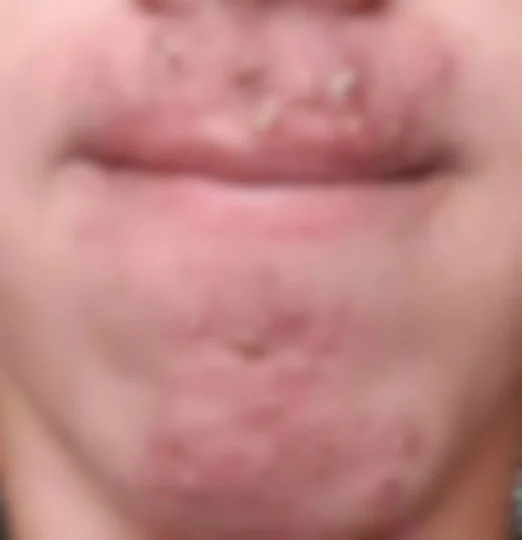
The infection is caused by certain bacteria, including Staphylococcus aureus and Streptococcus pyogenes.
Although impetigo is particularly common in children, adults can also develop it.
The infection can spread through direct contact with affected skin or contaminated personal items.
Sharing towels, washcloths, or razors may increase the risk of transmission.
Healthcare professionals generally treat impetigo with topical or oral antibiotics, depending on the extent of the infection.
Early assessment can help limit its spread and reduce discomfort.
3. Cold Sores: Another Possible Explanation
Cold sores are another condition that can affect the area around the mouth.
They are caused by the herpes simplex virus, most commonly HSV-1.
Cold sores often begin with tingling, itching, or burning before small fluid-filled blisters appear.
These blisters may eventually break and form a crust as they heal.
Unlike simple skin irritation, cold sores are contagious.
The virus can spread through close contact, including kissing, particularly when symptoms are present.
People with an active cold sore should avoid kissing and sharing items that come into contact with the affected area.
Antiviral treatments may help manage outbreaks, especially when used early.
4. Contact Dermatitis: When Everyday Products Irritate Your Skin
Not every rash indicates an infection.
Contact dermatitis can develop when the skin reacts to an irritating substance or an allergen.
Products that may contribute to irritation include toothpaste, lip cosmetics, facial cleansers, fragrances, and certain skincare treatments.
Symptoms may include redness, itching, dryness, peeling, or a burning sensation.
Unlike impetigo and cold sores, contact dermatitis itself is not contagious.
Identifying and avoiding the responsible product can help the skin recover.
However, persistent symptoms may require a healthcare professional to identify the cause and recommend suitable treatment.
Warning Signs That Deserve Medical Attention
A mild rash may improve with appropriate skin care, but certain symptoms should not be overlooked.
Consider seeking medical advice if you notice:
- Redness that continues spreading or becoming more painful
- Yellow crusts, pus, or fluid draining from the affected area
- Persistent burning, itching, or tenderness
- Blisters or sores that do not heal as expected
- Swelling, warmth, or worsening inflammation
- Fever or feeling generally unwell along with skin symptoms
Seek urgent medical care if symptoms include rapidly spreading redness, significant facial swelling, eye involvement, or severe illness. Breathing difficulties or swelling of the tongue or throat require emergency care.
These signs do not automatically indicate a dangerous infection, but they can help identify situations where prompt assessment is important.
Can a Mouth Rash Spread Through Kissing or Sharing Towels?
The answer depends entirely on the underlying condition.
Impetigo and cold sores can spread between people through certain forms of close contact.
Perioral dermatitis and contact dermatitis, however, are not contagious.
This distinction is especially important because the appearance of a rash alone cannot reliably establish whether someone has an infectious condition.
A person who develops redness around the mouth after a recent social or intimate encounter should not automatically assume the other person caused it.
Timing may provide useful information, but it does not establish the diagnosis.
If an infectious condition is suspected, avoiding direct contact with affected sores until receiving appropriate advice can help reduce potential transmission.
Common Skincare Mistakes That Can Make a Rash Worse
When facial irritation develops, people often attempt to solve the problem by applying several products at once.
Unfortunately, this can sometimes make symptoms worse.
Harsh facial scrubs, excessive washing, fragranced products, and repeated application of acne treatments may further irritate sensitive skin.
Using steroid creams without an appropriate diagnosis can also be problematic.
In particular, corticosteroid products can worsen or prolong perioral dermatitis in some people.
Anyone using a prescribed steroid medication should speak with their clinician before changing or stopping treatment.
A simpler skincare routine may reduce additional irritation while the cause is being assessed.
How to Care for Irritated Skin Around the Mouth
If you develop unexplained redness or irritation, gentle care is generally a reasonable starting point while arranging appropriate advice.
Wash the area gently with lukewarm water and a mild, fragrance-free cleanser when tolerated.
Avoid scratching, picking, or repeatedly rubbing the affected skin.
Temporarily avoid introducing new cosmetics, exfoliating products, or other potentially irritating treatments.
Do not share personal hygiene items if an infection may be present.
If the rash is persistent, painful, spreading, or producing discharge, a healthcare professional can determine whether medication or additional testing is necessary.
How Dermatologists Identify the Cause
A medical evaluation usually begins with questions about symptoms and recent exposures.
A clinician may ask when the rash first appeared, whether it burns or itches, which skincare products have been used, and whether blisters or crusts have developed.
They will also examine the distribution and appearance of the affected skin.
In many cases, the diagnosis can be made through clinical examination.
Occasionally, additional testing may be necessary if the cause remains unclear or the symptoms are unusual.
The treatment plan depends on the diagnosis rather than the appearance of redness alone.
The Bottom Line: Don’t Ignore Persistent Changes Around Your Mouth
A red rash around the mouth can have several explanations, ranging from temporary irritation to conditions that benefit from professional treatment.
Some, including perioral dermatitis, are inflammatory and cannot spread between people.
Others, such as impetigo and cold sores, involve infections that may be contagious.
The most important step is identifying the underlying cause instead of relying on photographs, online comments, or unfamiliar skincare remedies.
If redness, crusting, blisters, or irritation continues or gets worse, seeking medical advice can help you receive the right treatment and avoid unnecessary complications.