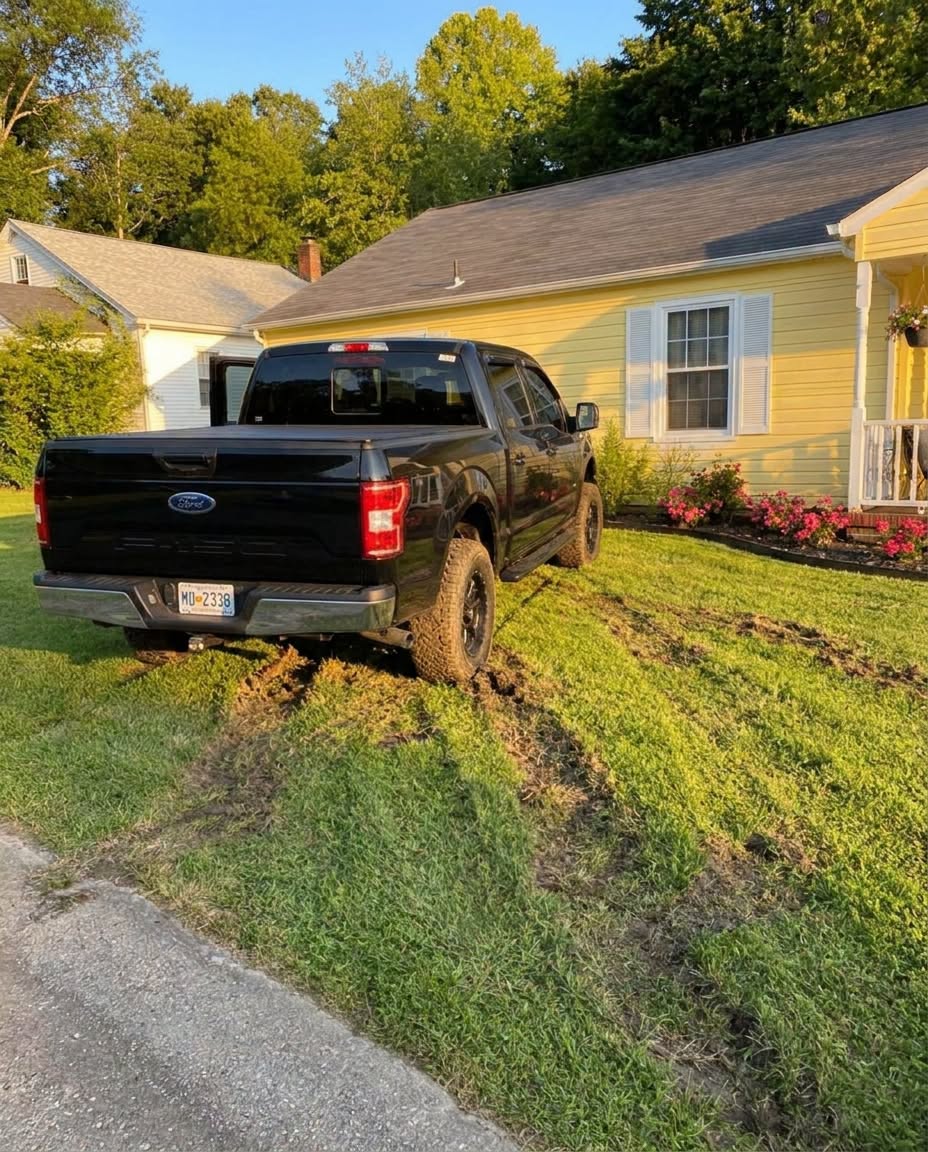
They Kept Parking on the Elderly Widow’s Lawn—Until She Quietly Made Sure It Never Happened Again
Edna Whitaker stood at her front window, watching her tea grow cold as the large black pickup climbed over the curb and rolled onto her lawn once again.
The tires sank into the damp morning grass, leaving deep tracks across the carefully maintained strip of green her late husband, Harold, had looked after every Saturday for nearly fifty years.
For Edna, it wasn’t simply a lawn.
It was part of the home they had built together.
She had already asked her new neighbors to stop parking there. First politely. Then more firmly. But her requests had been ignored.
This time, Edna decided she wouldn’t ask again.
“You Don’t Even Have a Car”
Edna had lived in the same house for more than half a century.
She knew every creaking floorboard, every tree Harold had planted and every corner where memories of their family remained.
Their children had grown up there. Birthdays had been celebrated in the kitchen, bicycles had been learned on the sidewalk, and Harold had spent countless weekends keeping the yard in perfect condition.
After his death, maintaining the property became one of the ways Edna still felt connected to him.
Then the new neighbors moved in.
They had several vehicles, and before long, one of them began using part of Edna’s lawn as an extra parking space.
When she confronted them, the response surprised her.
“You don’t even have a car. What’s the harm?” the neighbor reportedly told her.
Her husband was even more dismissive, arguing that the lawn shouldn’t matter because Edna lived alone.
Those words stayed with her.
Because she was alone.
They seemed to believe that being elderly meant she would eventually give up.
They were wrong.
Edna Decided to Handle It Differently
Edna knew she could call her son Tom.
He visited regularly to mow the lawn, clean the gutters and take care of jobs that had become difficult for her.
But she also knew exactly how angry he would become if he saw what was happening.
Instead, Edna chose a quieter approach.
She went into the garage and pulled out an old metal filing box Harold had carefully maintained for decades.
Inside were property surveys, insurance documents, photographs, receipts and records showing exactly where their property began and ended.
Then Edna started making phone calls.
She contacted the local code office.
She called the police non-emergency line.
She spoke with her homeowner’s insurance company.
And finally, she contacted a fencing contractor.
By that evening, a camera was positioned to record the front yard, while small survey markers clearly showed the legal property boundary.
Edna didn’t need another argument.
She needed evidence.
The Truck Returned the Next Morning
Before breakfast the following day, the pickup appeared again.
It rolled directly across the marked boundary and onto Edna’s lawn, crushing the small survey flags beneath its tires.
This time, Edna remained calm.
She waited until the driver stepped out before opening her front door.
Then she told him the police were already on their way.
At first, he laughed.
He stopped laughing when an officer arrived.
Continue on the next page…