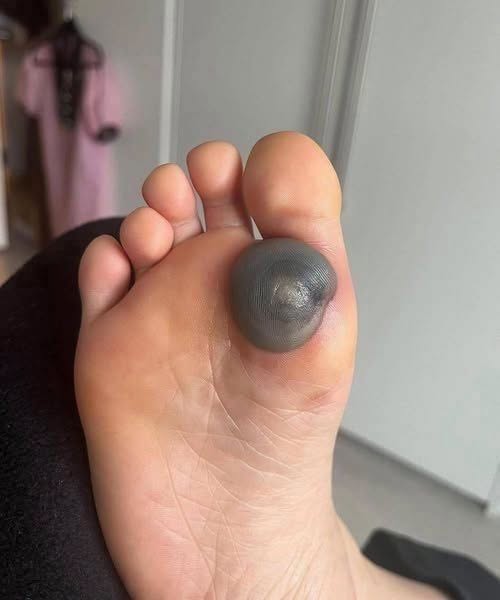
It may be tempting to drain a large blister, particularly if it looks uncomfortable. However, puncturing it at home can expose the underlying skin to bacteria and increase the risk of infection.
The outer layer acts as a natural protective covering while healing takes place. Keeping it intact is generally the safest approach for an uncomplicated blister.
Instead, gently clean the surrounding area, avoid unnecessary friction, and protect the blister with a loose, clean dressing if clothing or footwear might rub against it. A cool compress wrapped in a soft cloth may help ease discomfort and swelling. Never place ice directly against a child’s skin.
When Should Parents Seek Medical Advice?
Most small blood blisters caused by a clear minor injury can be monitored at home. Nevertheless, certain symptoms deserve prompt medical assessment.
Watch for spreading redness, increasing warmth, pus, worsening swelling, fever, or severe pain. A blister that grows, fails to improve, appears repeatedly, or develops without an obvious injury should also be evaluated by a healthcare professional.
Seek urgent care if the injury appears serious, the child cannot use the affected finger or foot normally, or there are signs of significant damage.
Calm Care Makes a Difference
Seeing an unusual blister can frighten both children and parents. Reassurance, gentle protection, and careful observation can make the experience easier while the skin heals.
If you are uncertain about a blister’s cause or appearance, contact your child’s healthcare provider rather than attempting to treat it yourself. Have you ever dealt with a blood blister at home? Share your experience and helpful tips in the comments to support other parents.