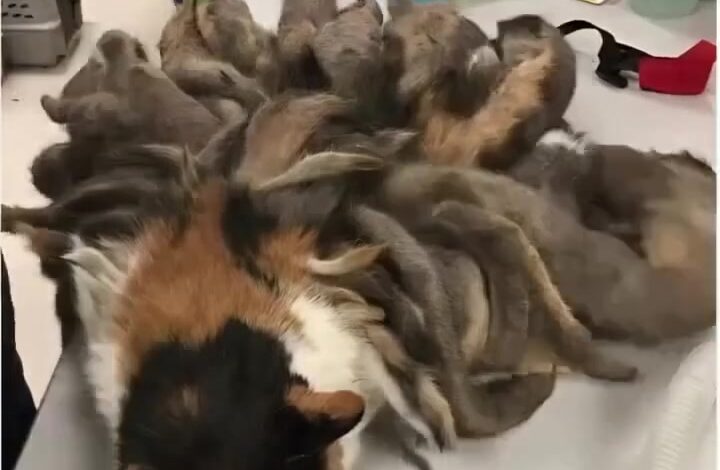
An Anonymous Report Brought Attention to the Property
The situation reportedly began when a resident in Greenhaven noticed unusual movement behind an empty residential building.
The property appeared to have been unoccupied for some time, and the animal was staying in a secluded area away from the street.
From a distance, the observer could not determine exactly what kind of animal it was or how long it had been there. However, something about its appearance suggested that it might need assistance.
Rather than attempting to capture it personally, the resident contacted the appropriate authorities.
This was a sensible decision because unfamiliar animals can behave unpredictably, particularly when they are frightened, injured, or under stress.
A report also allows trained personnel to assess the situation without placing the animal or members of the public at unnecessary risk.
Officers Located the Animal Behind the Building
After arriving at the property, responding officers began examining the surrounding area.
The rear of an abandoned building can present several challenges. Damaged structures, discarded materials, overgrown vegetation, and other obstacles may make it difficult to reach an animal safely.
The officers also needed to consider how the animal might react to unfamiliar people.
An animal that has been living outdoors or hiding in an unfamiliar environment may become frightened when approached. Even a normally friendly domestic animal can respond defensively when it feels threatened.
For that reason, a calm and careful approach is often preferable to sudden movements or attempts to make immediate physical contact.
The animal was eventually located in a sheltered area behind the property.
Its condition raised concerns, and officers recognized that additional assistance might be necessary.
Why the Animal’s Condition Required Attention
An animal found hiding near an apparently abandoned property may be experiencing several different circumstances.
It could be a lost pet searching for shelter, an animal that has been separated from its owner, or one that requires medical attention.
Without a professional examination, it is difficult to determine exactly what has happened.
Visible signs such as unusual weakness, difficulty moving, injuries, or an extremely poor physical condition may indicate that veterinary assessment is needed.
However, appearance alone cannot establish whether an animal has been deliberately abandoned or neglected.
A lost pet, for example, may become dirty, frightened, or underweight after spending time outside.
This is why animal welfare professionals generally need to assess the animal’s physical condition and investigate any available background information before reaching conclusions.
Why Officers Avoided Approaching Too Quickly
One important consideration when responding to an unfamiliar animal is understanding how fear can influence its behavior.
Animals experiencing stress may hide, retreat, or attempt to defend themselves when approached.
Even an animal that previously lived in a household may become difficult to handle if it is injured or frightened.
Sudden movements and attempts to grab an animal can also cause it to run into traffic, become trapped, or injure itself further.
A safer approach involves maintaining an appropriate distance, observing the animal’s behavior, and allowing trained personnel to determine the best method of assistance.
Depending on the circumstances, animal welfare responders may use specialized equipment or request veterinary support.
The priority should always be to minimize stress and protect everyone involved.
Animal Welfare Professionals Were Contacted
After locating the animal, officers contacted animal welfare professionals to help assess the situation.
Their role may include examining the animal for visible injuries, identifying possible medical concerns, and determining whether veterinary treatment is necessary.
They may also investigate whether the animal has an identifiable owner or has previously been reported missing.
In cases involving suspected abandonment or neglect, professionals may need to gather additional information before determining whether further action is appropriate.
These investigations are important because an animal’s circumstances are not always immediately obvious.
A careful assessment helps ensure that decisions are based on evidence rather than assumptions.
What Happened to the Animal?
One important detail remains unclear: the animal’s eventual outcome.
The available account does not identify the animal’s species, provide a veterinary diagnosis, or explain whether it was reunited with an owner, transferred to a shelter, or placed into another form of care.
It also does not establish how long the animal had been behind the property.
Without verified information, it would be misleading to claim that the animal was successfully rescued, that an owner was identified, or that a specific person was responsible for its condition.
What can be taken from the reported incident is that officers responded to a welfare concern and sought assistance from appropriate professionals.
Why Animals Sometimes Hide in Abandoned Buildings
Abandoned houses, empty garages, sheds, and neglected outdoor spaces can provide temporary shelter for animals.
These locations may offer protection from rain, wind, direct sunlight, and disturbances caused by people or other animals.
However, they can also contain serious hazards.
Broken glass, exposed nails, unstable materials, discarded chemicals, and other debris may create dangerous conditions.
Access to clean water and suitable food may also be limited.
An animal staying in such an environment could face additional difficulties if it is injured, ill, or unable to find a safe place to rest.
Animals may also choose secluded areas because they feel frightened or vulnerable.
Hiding does not necessarily mean an animal is aggressive. It may simply be trying to avoid a situation that feels threatening.
Understanding this behavior can help people respond more responsibly when they encounter an animal in an unusual location.
Signs That an Animal May Need Help
Not every animal seen outdoors is abandoned or in danger. Some pets are allowed outside under appropriate supervision, while certain wildlife naturally avoids human contact.
Nevertheless, there are situations in which contacting animal welfare professionals is appropriate.
Some warning signs include:
- Visible injuries or difficulty walking.
- Extreme weakness or unusual lethargy.
- Difficulty breathing or an inability to stand.
- Signs of severe dehydration or poor physical condition.
- An animal trapped in a dangerous location.
- Apparent exposure to extreme weather without suitable shelter.
- Repeated observations of an animal in circumstances suggesting that its basic needs are not being met.
These observations do not automatically prove neglect, but they may justify requesting a professional assessment.
When an animal appears seriously injured or in immediate danger, contacting an appropriate emergency or animal welfare service should take priority.
What to Do When You Find an Animal in Distress
Finding an unfamiliar animal that appears frightened or injured can be upsetting.
Although many people instinctively want to approach and help, the safest response is often to give the animal space and contact trained professionals.
A few practical steps can make a difference:
1. Keep a safe distance. Avoid cornering, chasing, or attempting to pick up an unfamiliar animal.
2. Observe its condition. Note visible injuries, unusual behavior, and whether the animal appears trapped or exposed to immediate danger.
3. Record its location. Provide a clear description of the surrounding area so responders can find it easily.
4. Contact appropriate services. Depending on your location, this may include animal control, a local animal welfare organization, a veterinarian, or an emergency service.
5. Provide accurate information. Explain what you actually observed rather than making assumptions about the animal’s history or ownership.
6. Follow professional guidance. Do not enter abandoned or private property without authorization, and avoid handling unfamiliar animals unless instructed by qualified personnel.
Photographs taken from a safe distance may also help responders understand the situation.
The Importance of Reporting Possible Animal Neglect
Some people hesitate to report animal welfare concerns because they are unsure whether the situation is serious enough.
They may worry about making an incorrect assumption or involving authorities unnecessarily.
However, reporting a reasonable concern does not mean accusing someone of wrongdoing.
It simply allows trained professionals to investigate and determine whether assistance is needed.
An animal may be lost rather than abandoned. It may have an owner who is actively searching for it, or it may require urgent veterinary attention.
Each situation deserves an appropriate response.
Providing accurate information and allowing professionals to assess the circumstances can help protect animals while avoiding unfair conclusions about people who may be involved.
How Communities Can Help Protect Animals
Animal welfare is a shared responsibility.
Veterinarians, shelters, animal control services, local authorities, and community organizations all play important roles in protecting animals.
Residents can contribute by paying attention to their surroundings, reporting reasonable concerns, and supporting responsible animal care initiatives.
Communities can also benefit from education about pet identification, responsible ownership, vaccination, access to veterinary services, and the importance of providing suitable shelter.
Simple measures, such as keeping identification information updated and ensuring pets have access to food, water, and appropriate medical care, can help prevent many avoidable problems.
Public awareness is particularly valuable because animals in secluded locations may remain unnoticed for extended periods.
A Small Act of Concern Can Make a Difference
The reported incident in Greenhaven began with an ordinary observation.
Someone noticed an animal hiding behind an apparently abandoned house and decided not to ignore the situation.
That decision brought officers to the property and led to animal welfare professionals being contacted.
Although the animal’s background and final outcome have not been established, the response highlights the importance of acting responsibly when an animal may be in distress.
Compassion does not always require dramatic intervention. Sometimes, it begins with noticing something unusual, keeping a safe distance, and contacting people who have the training and resources to help.
For animals that cannot explain their circumstances, responsible reporting can provide an important opportunity for protection and care.
The most important lesson is simple: when an animal appears to need help, paying attention and contacting the right professionals can be the first step toward making a difference.