A Childhood Built Around Basketball
Kobe Bean Bryant was born on August 23, 1978, in Philadelphia, Pennsylvania. Basketball became part of his life at an early age. His father, Joe “Jellybean” Bryant, played professional basketball, and the family eventually moved to Italy, where Joe continued his career overseas.
Growing up in Europe exposed Kobe to different cultures and languages while allowing him to develop his love for the game. He learned Italian and spent much of his childhood playing basketball, studying the sport, and developing the competitive instincts that would later define his career.
When the family returned to the United States, Bryant’s ambitions were already clear.
At Lower Merion High School in Pennsylvania, he quickly emerged as one of the country’s most talented young basketball players. His performances attracted national attention, and his success made him a highly sought-after prospect.
Rather than attend college, Bryant made the bold decision to enter the NBA directly after high school. In 1996, the Charlotte Hornets selected him with the 13th overall pick before trading him to the Los Angeles Lakers.
He was just 18 years old when he began his professional journey.
Becoming a Los Angeles Lakers Legend
Bryant’s early NBA years were a period of learning and adjustment. Despite his immense talent, he was a teenager competing against experienced professionals. He showed flashes of brilliance, but he also faced mistakes, inconsistent performances, and the challenges of adapting to the demands of the league.
He responded by working harder.
Bryant became famous for his intense training habits and his willingness to devote countless hours to improving his game. He studied footwork, shooting mechanics, conditioning, and the small details that could create an advantage during competition.
His approach helped transform him from a promising young player into one of the NBA’s most formidable stars.
In 1998, at just 19, Bryant became an NBA All-Star. His rise continued as he formed a powerful partnership with center Shaquille O’Neal under head coach Phil Jackson.
Together, they helped lead the Lakers into one of the most successful periods in franchise history.
Three Consecutive Championships
Between 2000 and 2002, the Lakers won three consecutive NBA championships. Bryant played a crucial role in the team’s success, establishing himself as one of basketball’s brightest young stars.
The championships brought fame and recognition, but they also intensified expectations. Bryant and O’Neal were two dominant personalities with different approaches to leadership and competition. Their relationship became a frequent subject of public discussion, and their partnership eventually ended when O’Neal was traded to the Miami Heat in 2004.
With O’Neal gone, Bryant faced a new challenge: leading the Lakers as their central star.
The pressure was immense, but he continued to produce performances that demonstrated his extraordinary scoring ability and competitive drive.
The Night Kobe Bryant Scored 81 Points
One of the most unforgettable moments of Bryant’s career came on January 22, 2006, when the Lakers faced the Toronto Raptors.
Bryant scored 81 points in a single game, the second-highest individual scoring total in NBA history, behind Wilt Chamberlain’s 100-point performance in 1962.
The achievement showcased Bryant’s remarkable offensive versatility. He scored through jump shots, drives, free throws, and an array of difficult attempts that few players could consistently make.
More than a statistical milestone, the performance became a defining example of his ability to take over a game.
Bryant combined technical skill with confidence, concentration, and a willingness to accept responsibility in crucial moments. His approach could be polarizing, but his determination to compete at the highest level became central to his public identity.
The 81-point game remains one of the most celebrated individual performances in basketball history.
From Superstar to Champion Again
In 2008, Bryant reached another major milestone when he won the NBA Most Valuable Player award. The recognition confirmed his position among the league’s elite players.
That same year, the Lakers reached the NBA Finals but lost to the Boston Celtics. For Bryant, the defeat was a painful setback after a season of individual excellence.
The Lakers responded by returning to the Finals in 2009, defeating the Orlando Magic to capture the championship. Bryant earned Finals MVP honors, securing his place as the leader of a championship team.
In 2010, the Lakers faced the Celtics again in a dramatic seven-game Finals series. This time, Los Angeles prevailed.
The victory delivered Bryant his fifth NBA championship and offered a defining moment in his career. The team had overcome a difficult opponent, and Bryant had added another major achievement to an already remarkable résumé.
By then, he had established himself as one of the defining players of his era.
The Meaning of Mamba Mentality
Bryant’s influence extended beyond his statistics and championships through a philosophy he called Mamba Mentality.
The concept centered on preparation, discipline, self-awareness, persistence, and the willingness to confront weaknesses rather than avoid them.
For Bryant, improvement was not something that happened by accident. It required deliberate effort, honest self-assessment, and a commitment to working on the details others might overlook.
Mamba Mentality was not simply about winning. It was about approaching a challenge with focus, learning from setbacks, and striving to become better than you were before.
That message resonated with people far beyond professional basketball.
Athletes in other sports drew inspiration from Bryant’s approach to training. Students applied the idea to their studies, while entrepreneurs and professionals adopted it as a reminder to remain disciplined while pursuing demanding goals.
The philosophy became one of the most recognizable parts of Bryant’s legacy because it offered a practical idea that people could apply to their own lives: excellence requires consistent effort, not just natural talent.
Injuries, Resilience, and His Final NBA Season
Bryant’s career was not without physical setbacks. After years of intense competition, his body endured the toll of professional basketball.
In April 2013, he suffered a torn Achilles tendon, a devastating injury that threatened to end his season and raised questions about his future.
Bryant worked through rehabilitation and returned to the court. Although injuries continued to affect his later years, his determination to compete remained a defining feature of his career.
His final NBA season came in 2015–16. On April 13, 2016, Bryant played his last professional game for the Lakers against the Utah Jazz.
At 37, he scored 60 points, delivering a memorable farewell to the fans who had followed him throughout his 20-season career.
The performance was a fitting ending to a remarkable basketball journey. Bryant had spent his entire NBA career with the Lakers, becoming inseparable from the franchise and the city of Los Angeles.
After the game, he thanked the fans and expressed his love for basketball. He left the court as one of the most accomplished players of his generation.
Life Beyond Basketball
Retirement marked the beginning of a new chapter rather than the end of Bryant’s ambitions.
He turned his attention to storytelling, business, youth sports, and creative projects. Through Granity Studios, he pursued stories that combined sports, education, and personal development.
Bryant also achieved success in filmmaking. His animated short film Dear Basketball, inspired by a poem he wrote announcing his retirement, won the Academy Award for Best Animated Short Film in 2018.
The award demonstrated that his creative ambitions extended well beyond the sport that had made him famous.
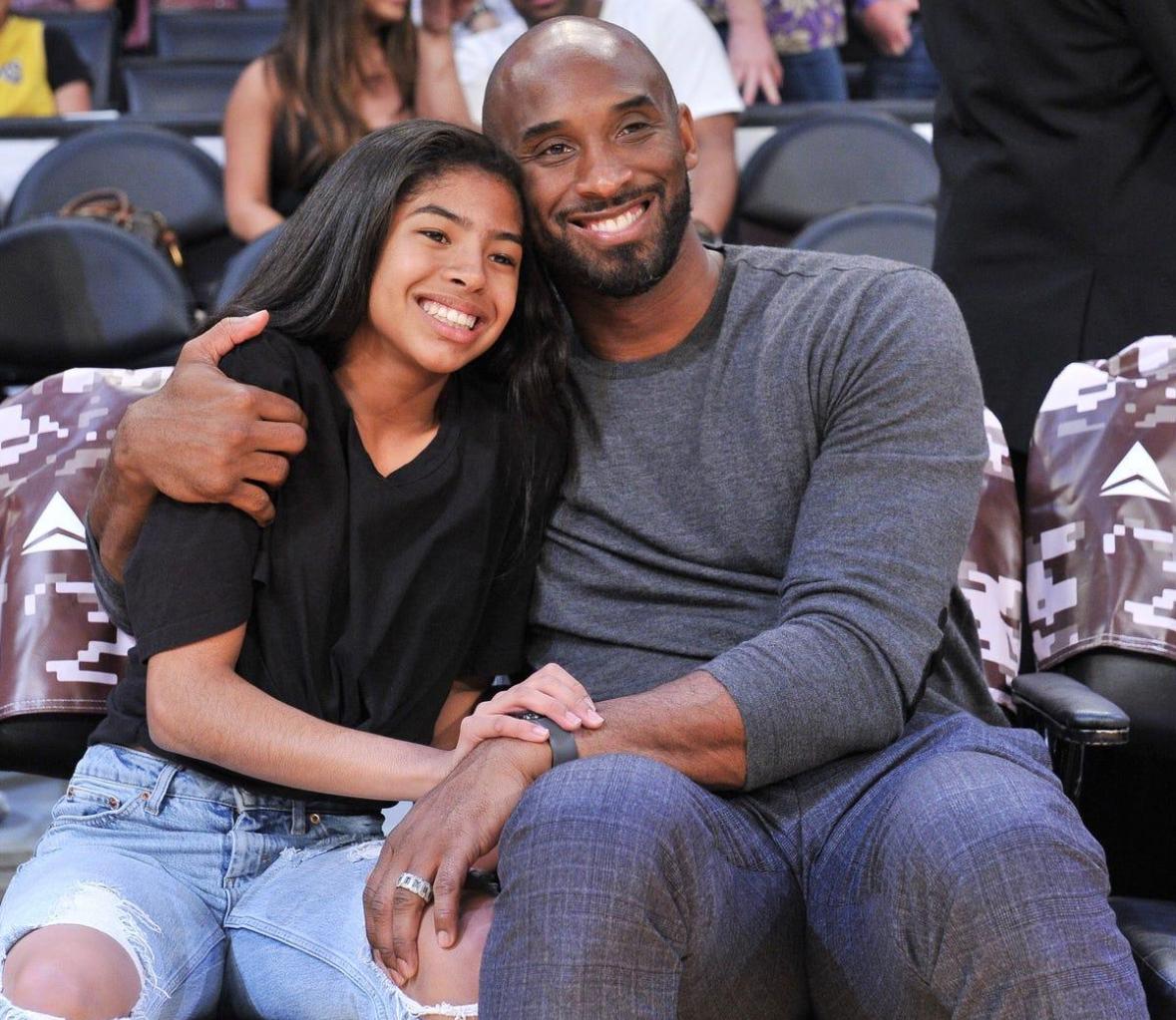
He also invested time in youth basketball and supported the development of his daughter Gianna, who shared his passion for the game. Their relationship became a meaningful part of his life after retirement, and Bryant frequently spoke about her growing interest in basketball.
For many fans, this period revealed another side of the former superstar: a father exploring new interests while encouraging the next generation.
January 26, 2020: A Tragedy That Shook the World
On January 26, 2020, Bryant was traveling by helicopter in California when the aircraft crashed in Calabasas. All nine people aboard were killed, including Bryant and his daughter Gianna.
Bryant was 41 years old. Gianna was 13.
The news stunned the sporting world and prompted an extraordinary outpouring of grief. Players, coaches, celebrities, public figures, and fans shared memories of Bryant and reflected on the impact he had made throughout his career.
For the Lakers organization and its supporters, the loss was especially profound. Bryant had spent two decades wearing the team’s uniform and had become one of the most important figures in its history.
The tragedy was difficult for many people to comprehend. Bryant had retired from professional basketball, but he was still building a life filled with new projects, family commitments, and opportunities to mentor young athletes.
His future seemed full of possibilities.
That future ended far too soon.
Remembering the Person Beyond the Player
In the years since his death, Bryant’s legacy has continued to inspire admiration and reflection.
Fans remember the championships, the 81-point game, the fadeaway jump shots, the footwork, the celebrations, and the famous No. 24 jersey. They remember the intensity with which he approached competition and the performances that helped define an era of basketball.
But his story also extended beyond the court.
Bryant was a husband, father, filmmaker, entrepreneur, and mentor. His family and creative pursuits became increasingly important during his post-basketball years.
His relationship with Gianna was particularly meaningful to many fans. Their shared enthusiasm for basketball offered a glimpse into his life as a parent and his interest in helping young players develop their abilities.
Their deaths together made the tragedy even more painful for people around the world.
Remembering Bryant fully means recognizing both his extraordinary achievements and the human dimensions of his life.
A Legacy Written in Numbers—and Beyond Them
Bryant’s career statistics reflect his remarkable consistency and success.
- Five NBA championships
- Two Olympic gold medals
- One NBA regular-season MVP award
- Two NBA Finals MVP awards
- 18 NBA All-Star selections
- 20 NBA seasons, all with the Los Angeles Lakers
- 33,643 regular-season points, placing him among the leading scorers in NBA history
These accomplishments secured his place among basketball’s greats. Yet statistics alone cannot fully explain why his influence remains so strong.
His impact can also be seen in the players who study his footwork, the athletes who draw motivation from his training habits, and the people who use Mamba Mentality as a framework for pursuing their own goals.
Bryant’s career included controversy, criticism, mistakes, and difficult periods, as any honest account of a public figure’s life must acknowledge. Recognizing that complexity does not erase his achievements; it provides a fuller picture of the person behind the legend.
His legacy is not just a collection of highlights. It is a story of ambition, intense competition, reinvention, and influence.
Forever Part of Los Angeles
Los Angeles became inseparable from Bryant’s identity.
For two decades, he wore the purple and gold of the Lakers, playing before generations of fans and helping create some of the franchise’s most memorable moments.
His connection with the city extended beyond basketball. He became a defining sports figure whose influence reached into the wider culture of Los Angeles.
After his retirement, younger players continued to imitate his moves, study his technique, and draw inspiration from his approach to preparation. His signature footwork became a subject of analysis for aspiring basketball players, while his competitive philosophy continued to circulate throughout the sport.
Bryant’s presence remained visible even after he stopped playing.
His legacy had become part of the Lakers’ identity and part of basketball’s broader history.
Remembering His Life, Not Speculating About His Final Moments
Searches for “Kobe Bryant’s final moments” can lead to speculation and sensational accounts. But unverified descriptions of the crash do not offer a meaningful way to understand his life, and graphic details are not necessary to appreciate the scale of the loss.
A more lasting tribute comes from remembering the experiences that shaped his journey.
The hours spent practicing as a young player.
The championship celebrations.
The difficult defeats.
The recovery from injury.
The extraordinary 81-point performance.
The final 60-point game.
The stories he created after retirement.
The time he devoted to his family and youth basketball.
These moments form a far more complete portrait of Bryant than speculation about the circumstances of his death ever could.
His final chapter was heartbreaking, but it was only one part of a much larger life.
How Mamba Mentality Continues to Inspire
The enduring appeal of Mamba Mentality lies in its relevance beyond sports.
A student can apply it while preparing for an important examination. An athlete can use it to approach training with greater focus. An entrepreneur can draw on it while building a business, and a person facing a difficult setback can use the same principle to keep moving forward.
The message is not that every goal can be achieved through effort alone. Circumstances, opportunities, health, support, and luck also matter. Rather, the philosophy encourages people to take responsibility for the things they can control: preparation, persistence, learning, and how they respond to challenges.
That idea helps explain why Bryant remains influential years after his retirement and death.
His career ended, but the lessons people draw from it continue to evolve.
His legacy lives in athletes who study his technique, young players who dream of competing at the highest level, and people who find motivation in his commitment to improvement.
It also lives in the storytellers who recognize that an athlete’s influence can extend beyond the game itself.
The Final Chapter Is Not the Whole Story
Kobe Bryant’s death was a devastating loss for his family, the basketball community, and millions of admirers around the world. But the significance of his life cannot be measured by the tragedy of its ending.
His story began with a young boy who loved basketball, grew through two decades of professional competition, and continued into filmmaking, business, and family life after retirement.
Along the way, he won championships, broke records, overcame setbacks, and inspired people to think differently about preparation and personal growth.
The most enduring part of his legacy may be the people who continue to pursue their goals with greater discipline because they watched him do the same.
It is found in players who study his footwork, athletes who challenge themselves to improve, and fans who carry the lessons they associate with Mamba Mentality into their everyday lives.
Keep learning. Keep working. Keep competing. Keep moving forward.
Kobe Bryant may no longer walk onto a basketball court, but his influence continues to reach people around the world.
His legacy will be remembered not only for the points he scored or the championships he won, but also for the inspiration he provided to people striving to become better at what they do.
The game eventually ended. The legacy did not.