For some people, this position can increase snoring. Sleeping on either side may help reduce the effect of gravity on the airway and make breathing quieter.
However, side sleeping does not eliminate snoring in every case. Nasal congestion, alcohol consumption, certain medications, and the structure of the airway can also contribute to the problem.
Why the Left Side May Help With Acid Reflux
Acid reflux occurs when stomach contents flow backward into the esophagus, sometimes causing heartburn, a sour taste, or discomfort in the chest or throat.
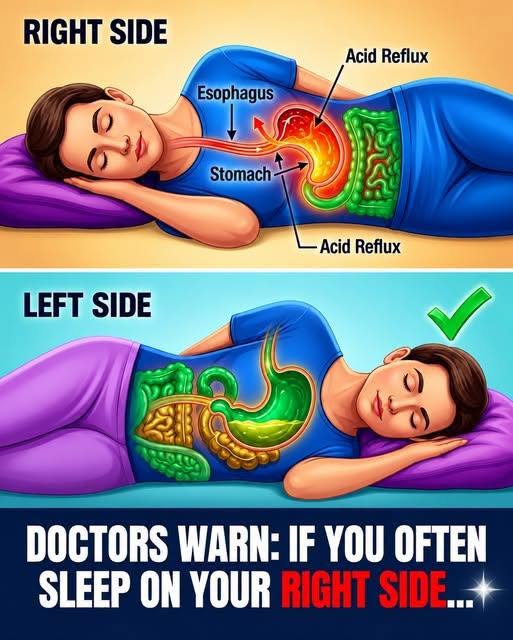
Sleeping on the left side may reduce nighttime acid reflux because of the relationship between the stomach and the esophagus. Research suggests that left-side sleeping can reduce acid exposure in the esophagus compared with right-side sleeping for some people.
By contrast, lying on the right side may make reflux episodes more likely or prolong acid exposure in certain individuals.
Although the left side may be helpful, results vary. People with frequent or persistent reflux should discuss their symptoms with a healthcare professional rather than relying on sleeping position alone.
What If You Experience Both Snoring and Acid Reflux?
If you experience both conditions, starting the night on your left side may be a reasonable option. This position may help with reflux while also reducing position-related snoring.
Other practical habits may improve sleep and digestive comfort:
- Avoid large meals before bed. Try to finish eating at least two to three hours before lying down if nighttime reflux is a problem.
- Elevate the head of the bed. Raising the upper part of the bed with a suitable wedge or bed risers may help reduce nighttime reflux.
- Limit alcohol close to bedtime. Alcohol can relax airway muscles and may worsen snoring in some people.
- Address nasal congestion. Treating an underlying nasal problem may make breathing more comfortable during sleep.
- Maintain a regular sleep schedule. Consistent sleep and wake times can support better sleep quality.
- Consider weight management if appropriate. For people who are overweight, weight loss may help improve both reflux and snoring.
These measures may help, but their effectiveness depends on the underlying cause of the symptoms.
When Should Snoring Be Evaluated?
Occasional snoring is common. However, loud and persistent snoring can sometimes be a sign of obstructive sleep apnea, a condition in which breathing repeatedly stops or becomes restricted during sleep.
Warning signs include:
- Pauses in breathing noticed by a bed partner
- Waking up gasping or choking
- Excessive daytime sleepiness
- Morning headaches
- Difficulty concentrating during the day
If you experience these symptoms, arrange an assessment with a healthcare professional. Sleeping on your side may help some people, but it is not a substitute for appropriate evaluation and treatment of sleep apnea.
When to Seek Advice About Acid Reflux
Occasional heartburn may improve with changes to meal timing and sleeping position. However, frequent symptoms deserve medical attention, especially if they regularly disturb sleep or require repeated use of over-the-counter medication.
Seek urgent medical care for chest pain that is severe, new, or unexplained, particularly if it occurs with shortness of breath, sweating, or pain spreading to the arm or jaw. Do not automatically assume chest pain is caused by acid reflux.
Difficulty swallowing, persistent vomiting, or unexplained weight loss should also be discussed promptly with a healthcare professional.
Final Thoughts
Both side-sleeping positions may help reduce snoring for some people, but the left side is generally the preferred option for people experiencing nighttime acid reflux. If you have both concerns, trying left-side sleeping may be a useful first step.
Good sleep habits and appropriate treatment can make a difference, but persistent snoring or frequent reflux should not be ignored. A healthcare professional can help identify the cause of your symptoms and recommend suitable treatment.