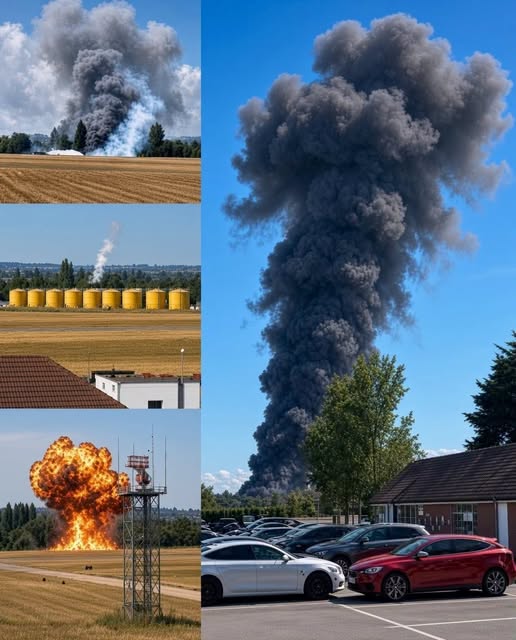
According to the UAE’s Air Accident Investigation Sector, the aircraft attempted a go-around after initially touching down. It then descended back onto the runway and traveled approximately 800 meters before coming to a stop. The aircraft was subsequently consumed by fire.
The distinction is important because the initial reports and the later investigation did not tell exactly the same story.
All 300 People Escaped
Despite the severity of the accident and the rapidly developing fire, everyone aboard the aircraft was evacuated.
Emirates confirmed that all 282 passengers and 18 crew members escaped safely. Several people suffered injuries, including members of the cabin crew, but there were no passenger or crew fatalities.
The successful evacuation became one of the defining aspects of the accident.
The aircraft itself, however, was destroyed by the impact and subsequent fire.
A Firefighter Lost His Life
While the people aboard the aircraft survived, the emergency response came at a terrible cost.
A firefighter was fatally injured while battling the blaze.
Emirates Chairman and Chief Executive Sheikh Ahmed bin Saeed Al Maktoum paid tribute to the firefighter, recognizing the emergency teams who responded to the accident.
The tragedy highlighted an often-overlooked reality of aviation emergencies: airport firefighters and rescue crews move toward danger while passengers are trying to escape it.
Their response can determine how quickly an aircraft is evacuated and how effectively a fire is contained.
A Flight Carrying Passengers From Around the World
EK521 was an international flight with travelers from numerous countries.
Indians made up the majority of passengers, with 226 Indian nationals aboard. The flight also included passengers from Britain, the United Arab Emirates, the United States, Saudi Arabia, and several other countries.
Because Dubai is one of the world’s major aviation hubs, the incident also caused disruption beyond the aircraft itself.
Flights were canceled or delayed, and passengers traveling through the airport had to deal with changes to their onward journeys while emergency operations continued.
What the Investigation Found
The initial investigation examined everything from the aircraft’s movements during the landing attempt to crew actions, training, aircraft systems, and operational conditions.
The preliminary report found that the aircraft had attempted a go-around and subsequently returned to the runway. At that stage, investigators had not yet reached final conclusions about the causes.
The final report, released in January 2020, provided a more detailed analysis.
Investigators found that the flight crew’s reliance on automation and their lack of training for a go-around performed very close to the runway surface significantly affected their performance during the critical sequence. The report also made safety recommendations concerning pilot training and assessment.
That conclusion helped move the story beyond the early speculation surrounding a possible mechanical or landing-gear problem.
Why the Accident Remains Significant
EK521 is remembered for the contrast between the severity of the accident and the survival of everyone aboard the aircraft.
The Boeing 777 was destroyed, flames engulfed the aircraft, and the incident produced scenes that were difficult for many observers to comprehend.
Yet the evacuation succeeded.
That outcome underscores the importance of aircraft evacuation procedures, cabin-crew training, airport emergency preparedness, and rapid coordination between airlines and emergency services.
It also demonstrates why aviation accident investigations look beyond a single suspected failure. Major accidents are often the result of a sequence of events involving human decisions, aircraft systems, environmental conditions, training, and emergency response.
Remembering the People Behind the Statistics
Years after the accident, the most important facts remain remarkably simple.
Three hundred people were aboard Flight EK521.
All 300 survived.
One firefighter did not.
The aircraft was destroyed, but the successful evacuation prevented what could have been a far greater loss of life.
The accident also became a case study in aviation safety, with investigators using the event to identify ways training and procedures could be improved.
Today, Flight EK521 stands as a reminder that the outcome of an aviation emergency is shaped not only by what happens in the cockpit, but also by the preparation and actions of cabin crews, airport responders, firefighters, investigators, and countless people working behind the scenes.
What began as a routine flight from India to Dubai became a defining emergency.
And while the aircraft was lost, the survival of every passenger and crew member remains one of the most important parts of its story.