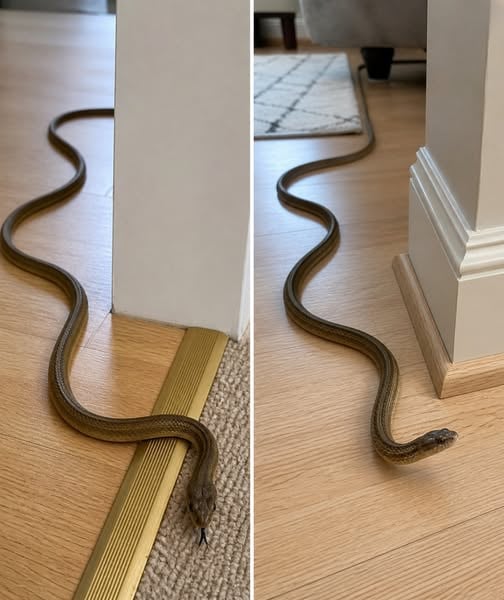
Discovering a snake inside your home can be an unsettling experience. One moment your day is proceeding normally, and the next you notice a long, quiet visitor near a doorway, under furniture, or along a wall.
While the situation may feel alarming, wildlife professionals emphasize that most snakes do not enter homes to interact with people. In many cases, they are simply looking for shelter, food, or a safe place to avoid harsh outdoor conditions.
Why Snakes Sometimes Enter Homes
According to wildlife and pest management experts, snakes are often drawn indoors for practical reasons rather than aggressive ones.
Like many wild animals, they seek environments that provide:
- Protection from extreme weather
- Access to water
- Safe hiding locations
- Reliable food sources
From a snake’s perspective, a house can offer all of these necessities.
Common Entry Points Around a Property
Many homeowners are surprised by how easily small animals can access a building.
Snakes may enter through:
- Gaps beneath exterior doors
- Cracks in foundations
- Openings around utility pipes
- Garage and basement access points
- Crawl spaces and vents
- Damaged weather stripping
Even small openings can provide enough space for certain species to enter.
What Attracts Snakes to Residential Areas?
In many cases, the biggest attraction isn’t the home itself—it’s the availability of food.
Properties with rodent or insect activity can unintentionally attract predators searching for an easy meal. Mice, rats, crickets, and other pests often serve as natural food sources for snakes.
Because of this, effective pest control and home maintenance can play an important role in reducing the likelihood of wildlife entering the property.
Seasonal Weather Can Increase Encounters
Environmental conditions also influence snake behavior.
During periods of extreme heat, snakes may seek cooler, shaded locations. In colder conditions, they often search for warmth and protected shelter.
Basements, garages, storage rooms, utility areas, and cluttered spaces can provide ideal environments where a snake can remain hidden and undisturbed.
What Experts Recommend If You See a Snake Indoors
Wildlife professionals generally advise homeowners to remain calm and avoid attempting to handle the animal.
Recommended steps include:
- Keep a safe distance.
- Prevent children and pets from approaching.
- Avoid cornering or provoking the snake.
- Monitor its location from a safe area.
- Contact local wildlife removal or animal control professionals if needed.
Proper identification is important because different species may require different handling procedures.
Preventing Future Encounters
Home maintenance and property management can help reduce the chances of future wildlife intrusions.
Consider:
- Sealing cracks and openings around the home
- Repairing damaged screens and weather stripping
- Reducing clutter in storage areas
- Managing rodent and insect populations
- Keeping vegetation trimmed near the foundation
- Inspecting garages, basements, and crawl spaces regularly
These measures can improve overall home safety and reduce opportunities for wildlife to enter.
Final Thoughts
Finding a snake inside your home can certainly be surprising, but experts note that such encounters are often driven by basic survival instincts rather than aggression.
Understanding why snakes seek shelter, how they enter structures, and what attracts them can help homeowners respond calmly and take practical steps to protect their property.
In most situations, prevention, proper home maintenance, and professional wildlife assistance remain the most effective solutions.