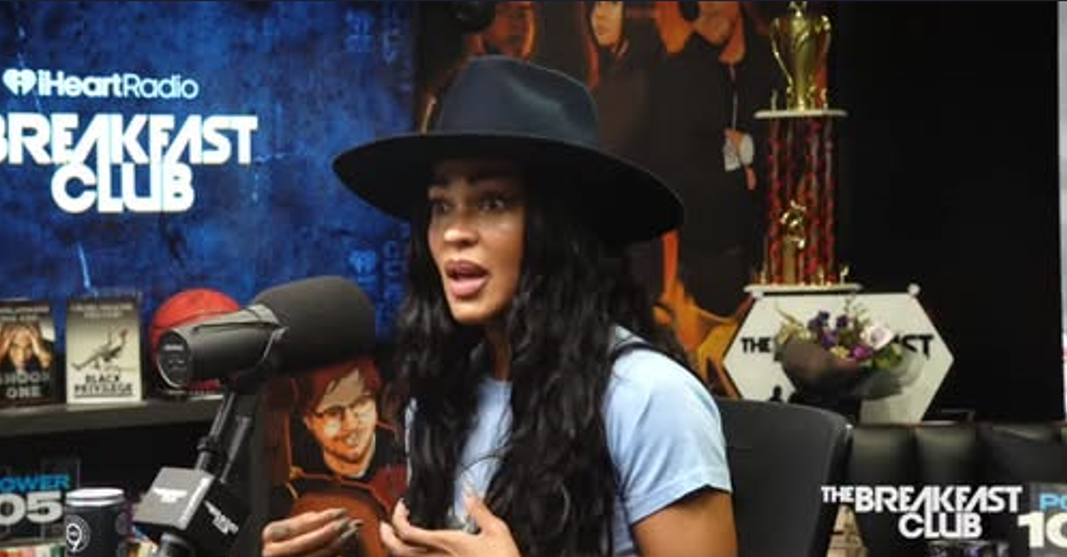
Meagan Good’s career and continued evolution
Despite the controversy, Good’s career has remained strong and steadily evolving. She first gained recognition as a child actress in Eve’s Bayou before becoming a household name through projects like Cousin Skeeter, Roll Bounce, and Stomp the Yard.
She later starred in major films including Think Like a Man and appeared in television dramas such as Deception. More recently, she’s taken on roles in projects like Shazam! and Shazam! Fury of the Gods, as well as Tyler Perry’s Divorce in the Black.
Now, she’s stepping into a new chapter with her role in the legal drama series Reasonable Doubt, continuing to expand her presence both on-screen and behind the scenes as a producer.
Her ability to navigate both personal and professional challenges speaks to her resilience in an industry that often demands perfection.
Love, controversy, and public life
Good’s personal life has also been in the spotlight, particularly her relationship with Jonathan Majors. The couple, who began dating in 2023, married in 2025 following a highly publicized engagement.
Majors himself has faced significant controversy, including a 2023 arrest and subsequent conviction related to assault and harassment charges. The fallout led to major career setbacks, including his departure from Marvel projects.
Despite this, Good has remained publicly supportive, further demonstrating her commitment to standing firm in her personal decisions regardless of public opinion—a theme that echoes her experience with the skin bleaching rumors.
The skincare mistake that sparked public backlash
Good revealed that she began working with an unlicensed esthetician who promised an anti-aging regimen. What started as a routine skincare experiment quickly turned into a nightmare.
“I start using the product and I instantly see that I’m getting lighter,” she explained. “I give it a few weeks and I look so pale and so crazy.”
The drastic change became even more noticeable when she traveled to New York for a shoot. Under bright lights and cameras, the difference in her complexion was undeniable.
“I just look white. I just look crazy,” she admitted.
As images circulated online, speculation intensified. Fans accused her of engaging in skin bleaching, with some even suggesting it was rooted in self-hatred—a deeply sensitive accusation within the Black community.
The emotional toll of public judgment
For Good, the backlash wasn’t just criticism—it was deeply personal. The idea that young Black girls might believe she altered her skin tone intentionally weighed heavily on her.
“As a Black woman, I would never do that to myself,” she said. “It broke my heart to think that young Black girls would think that I did that or that I don’t like myself.”
The situation was made worse by the fact that she couldn’t immediately correct the narrative. Unlike rumors that can be quickly addressed, her physical appearance became the “evidence” people used against her.
“The backlash I was seeing … it was so humiliating,” she shared. “I couldn’t do anything, but look crazy. I literally have to sit in this.”
This moment marked a shift for Good, forcing her to confront not only public perception but also her own relationship with external validation.
The broader conversation: Skin bleaching in Hollywood
The controversy surrounding Good also highlights a much larger issue: the ongoing debate around skin bleaching in entertainment and global beauty culture.
Skin lightening has long been a controversial topic, particularly within communities of color. In Hollywood and beyond, celebrities are frequently scrutinized for any perceived changes in complexion.
Sammy Sosa openly admitted to using skin-lightening creams, sparking widespread discussion about colorism and identity. Meanwhile, stars like Serena Williams have publicly denied similar accusations.
Perhaps the most famous case is Michael Jackson, whose changing appearance led to decades of speculation. Jackson consistently stated that his lighter skin tone was the result of vitiligo, a medical condition that affects pigmentation.
In today’s era of social media, these conversations have become even more amplified. Every photo, lighting change, or makeup choice can spark viral debates—often without full context.
For Black women especially, these discussions intersect with deeper issues of colorism, self-image, and societal pressure.
A spiritual awakening through adversity
Instead of letting the experience break her, Good says it ultimately led to a deeper personal and spiritual awakening. Known for her strong faith, she turned to prayer during one of the most difficult periods of her life.
“This is an answered prayer,” she recalled thinking. “You kept saying, ‘Lord, help me not care what people think.’ Now you don’t have a choice.”
The situation forced her to release the need for public approval and focus on maintaining her joy and quality of life, regardless of outside opinions.
It’s a lesson many celebrities learn the hard way—fame amplifies both praise and criticism, often leaving little room for nuance or understanding.
The reality of beauty standards in Hollywood
Good’s story underscores a critical reality: in Hollywood, appearance is often dissected more than talent.
From skincare treatments to lighting differences, many factors can influence how someone looks on camera. Yet, audiences often jump to conclusions without considering these variables.
For Black women, the pressure is even more layered. Eurocentric beauty standards, combined with colorism, create an environment where even natural variations in skin tone can spark controversy.
Good’s experience serves as a reminder that not every visual change is intentional—and that assumptions can have real emotional consequences.
A message bigger than the rumor
At its core, Good’s story isn’t just about clearing up a rumor—it’s about reclaiming narrative and identity.
By speaking openly, she not only corrected misinformation but also created space for a broader conversation about self-love, perception, and the weight of public scrutiny.
Her transparency offers a valuable lesson: sometimes the most powerful response isn’t immediate clarification—but growth, reflection, and choosing joy despite misunderstanding.
Final thoughts
Meagan Good’s candid revelation puts an end to years of speculation while shedding light on a deeper issue within both Hollywood and society at large.
What began as a skincare mistake turned into a defining moment—one that tested her confidence, faith, and resilience.
In an era where public opinion can shift in seconds, her story stands as a powerful reminder that perception isn’t always reality—and that even in the face of harsh criticism, authenticity will always win.