- Relatively easy to clean
- Durable in demanding barn environments
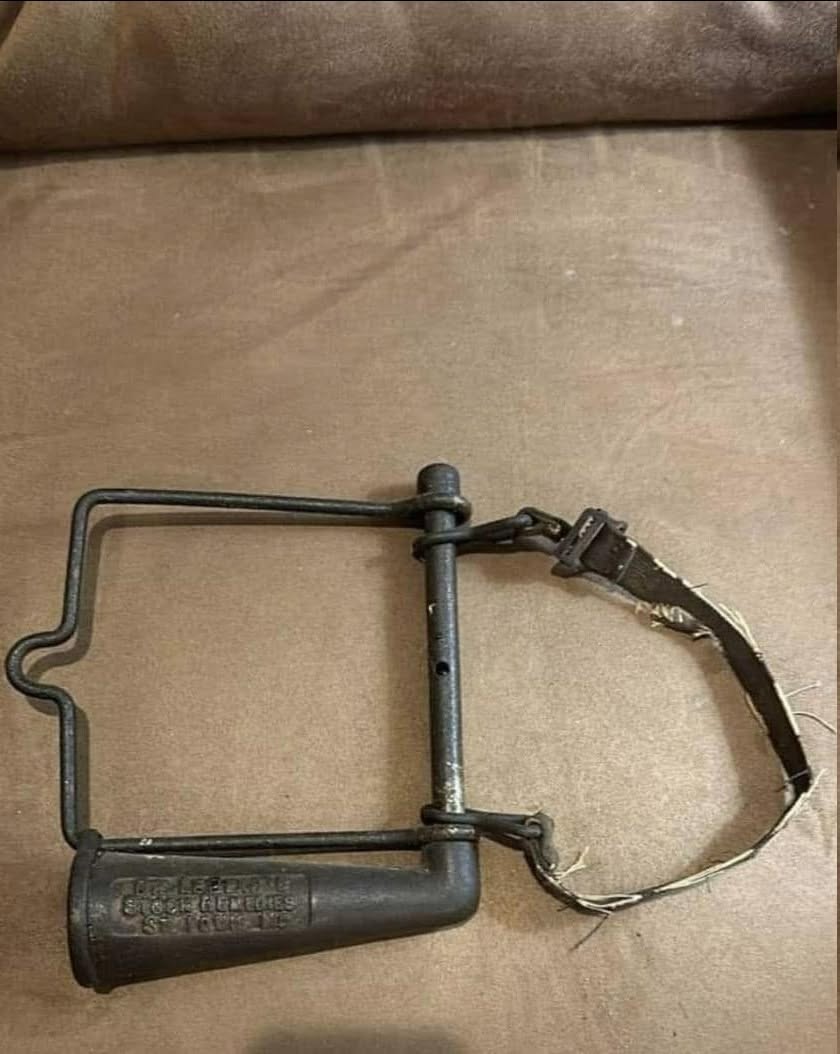
Many surviving examples also include leather components that helped secure the instrument during treatment.
From working equipment to collectible
Today, antique horse drenchers are collected by enthusiasts interested in:
- Agricultural history
- Veterinary history
- Antique horse tack
- Rural Americana
Collectors generally value pieces that retain:
- Original brass components
- Leather straps
- Funnel attachments
- Natural patina from age
Over-polishing brass can reduce historical character and, in some cases, collector value.
Identifying an authentic horse drencher
A genuine antique horse drencher typically features:
- A hollow internal passage
- A funnel connection or pouring port
- Heavy brass construction
- Attachment points for leather straps
Because they resemble oversized horse bits, they’re sometimes mistaken for ordinary tack.
Caring for an antique drencher
If you own one:
- Dust it gently with a soft cloth.
- Avoid abrasive cleaners or aggressive polishing.
- Store it in a dry environment.
- Condition leather only with products appropriate for historic leather if preservation is the goal.
A glimpse into rural history
The antique brass horse drencher reminds us how much everyday farming depended on healthy working animals. Before modern veterinary hospitals and specialized equipment, farmers and local veterinarians relied on practical tools like this to care for horses that powered nearly every aspect of rural life.
Today, these brass implements survive not only as collectibles but also as fascinating reminders of the ingenuity—and challenges—of caring for horses in an earlier era.