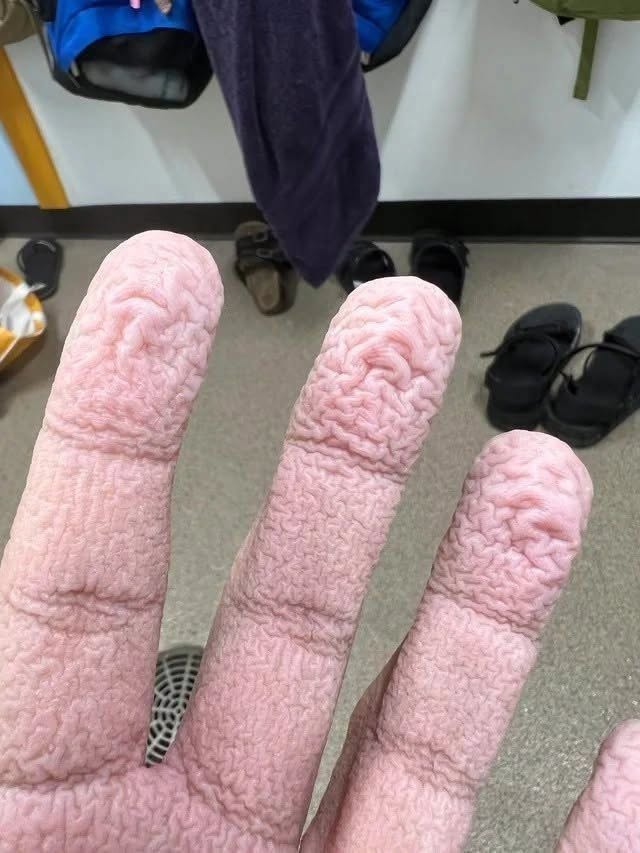
Instead, the process involves changes beneath the skin that are regulated by the nervous system.
What Happens Under the Skin?
After your hands or feet remain in water for several minutes, tiny blood vessels in the fingertips begin to narrow, a process known as vasoconstriction.
As these blood vessels constrict, the volume beneath the skin decreases slightly, causing the surface to fold into the familiar wrinkle pattern.
This response typically becomes noticeable after about five to ten minutes of water exposure, although the exact timing varies from person to person.
Why Does It Happen?
Researchers believe these temporary wrinkles may improve your ability to grip wet or slippery objects.
The folds created by wrinkled skin can channel water away from the fingertips, somewhat like the tread on a tire helps maintain traction on wet roads.
This may make it easier to hold objects in damp conditions.
A Possible Evolutionary Advantage
Scientists have suggested that this response may have offered practical benefits throughout human evolution.
Better grip in wet environments could have helped people:
- Pick up food from streams or rivers
- Handle wet tools
- Climb slippery surfaces
- Move more safely in rainy conditions
Although research continues, this remains one of the leading explanations for why the body developed this unique response.
Why Only Fingers and Toes?
Wrinkling occurs most noticeably on the fingers and toes because these areas contain specialized skin and are important for gripping and balance.
Other parts of the body may absorb water but typically do not develop the same pronounced wrinkle pattern.
The Effect Is Temporary
In most people, water-induced wrinkles disappear naturally after the skin dries and normal blood flow returns.
This process is completely normal and usually requires no treatment.
When Should You Pay Attention?
Occasional wrinkling after water exposure is expected.
However, if your fingers wrinkle unusually quickly, occur without water exposure, or are accompanied by other symptoms such as numbness, pain, or color changes, it’s a good idea to consult a healthcare professional. While these symptoms may have many possible causes, a medical evaluation can help determine whether further assessment is needed.
An Everyday Example of the Body at Work
Wrinkled fingertips may seem like a small and ordinary occurrence, but they demonstrate how the body constantly adapts to changing conditions.
Instead of being a simple side effect of getting wet, the process reflects a coordinated response involving the nervous system and blood vessels.
The Bottom Line
Finger wrinkles after spending time in water are a normal, temporary response controlled primarily by the nervous system. Researchers believe they may improve grip in wet conditions, making everyday tasks easier.
While the effect usually disappears on its own within a short time, it also serves as a reminder that even familiar changes in our bodies often have fascinating scientific explanations.