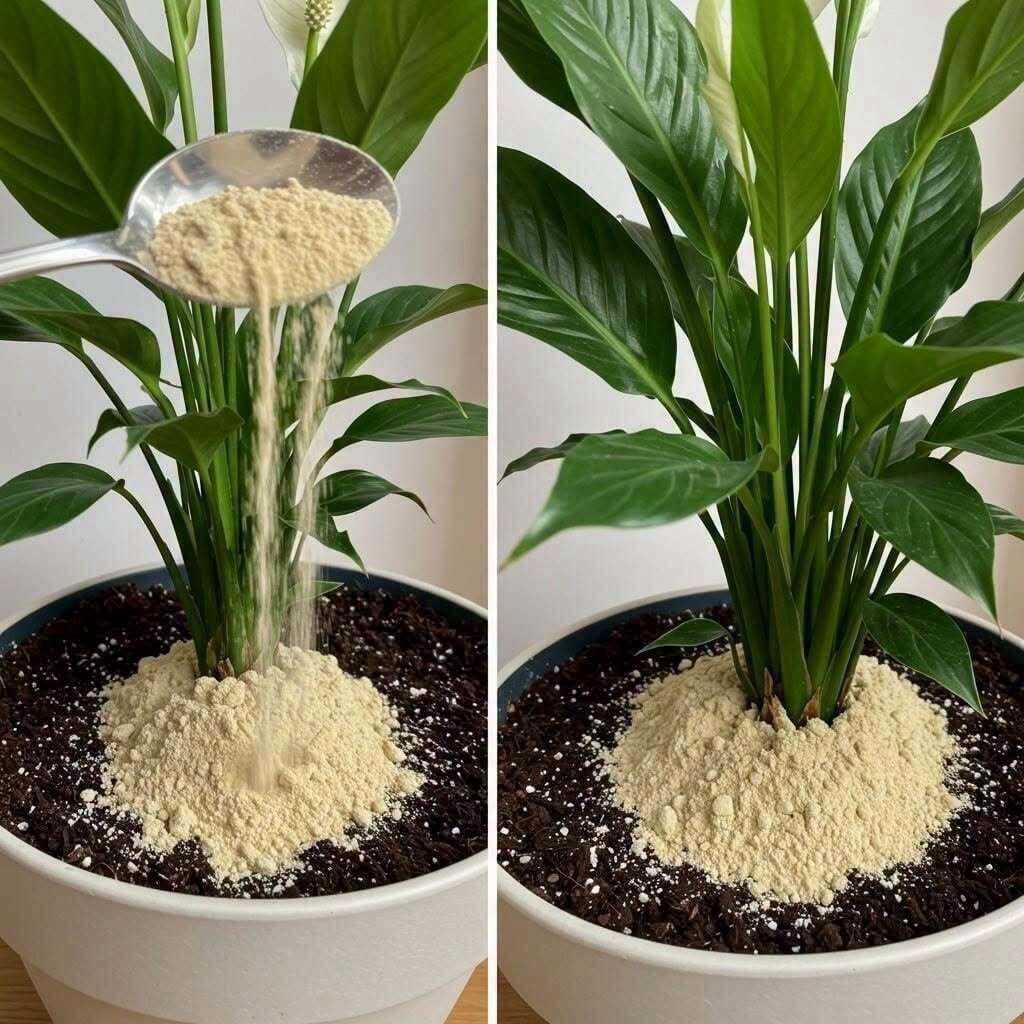
- Let the mixture sit for 24 to 48 hours.
- Remove and discard the peels.
- Use the infused water to water your peace lily every few weeks.
This creates a mild nutrient solution that many indoor gardeners use as an occasional supplement.
Avoid leaving the peels to soak for extended periods, as the water can begin to ferment and develop an unpleasant odor.
Light Makes a Bigger Difference Than Most People Think
If your peace lily isn’t blooming, lighting is often one of the first things to evaluate.
Peace lilies grow best in:
- Bright, indirect light
- Rooms with filtered sunlight
- Areas away from harsh afternoon sun
Too much direct sunlight can scorch the leaves, while very low light may reduce flowering and slow growth.
Finding the right balance often leads to healthier plants over time.
Water the Right Way
Peace lilies prefer evenly moist soil but dislike constantly soggy roots.
A good approach is to:
- Water when the top inch of soil begins to dry.
- Allow excess water to drain completely.
- Never let the pot sit in standing water.
Overwatering is one of the most common causes of yellow leaves and root problems.
Interestingly, peace lilies are also known for dramatically drooping when they become thirsty. In many cases, they recover quickly after proper watering.
Don’t Forget Humidity
Because peace lilies originate from tropical regions, they generally appreciate moderate to high humidity.
You can increase humidity by:
- Running a humidifier nearby.
- Grouping houseplants together.
- Placing the pot on a pebble tray with water (keeping the pot above the waterline).
Higher humidity can help support healthy foliage, especially during dry indoor heating seasons.
Feeding Supports Healthy Growth
Like most houseplants, peace lilies benefit from occasional feeding during the active growing season.
Banana peel water can provide a small nutrient boost, but it shouldn’t replace a complete fertilizer if your plant needs regular nutrition.
Using a balanced houseplant fertilizer according to the label directions, along with good watering and lighting practices, helps create the conditions for healthy growth.
Patience Is Part of the Process
Even healthy peace lilies don’t bloom continuously.
Like many flowering plants, they naturally move through periods of active growth followed by quieter resting phases.
If your plant isn’t producing flowers for a while, it doesn’t necessarily mean something is wrong.
Consistent care over time often produces the best results.
Small Habits, Big Results
Healthy peace lilies thrive because of regular attention—not miracle products.
For the best chance of success:
- Provide bright, indirect light.
- Keep the soil evenly moist but not soggy.
- Maintain moderate humidity.
- Feed occasionally during the growing season.
- Use banana peel water as an optional supplement rather than a complete fertilizer.
The Secret to a Thriving Peace Lily
The healthiest houseplants usually aren’t the ones receiving the most expensive products—they’re the ones receiving consistent care.
A simple banana peel won’t magically transform a struggling plant overnight, but it can become one small part of a thoughtful routine that supports healthy growth.
With the right light, proper watering, balanced nutrition, and a little patience, your peace lily can continue to reward you with lush green foliage and its signature white blooms for years to come.