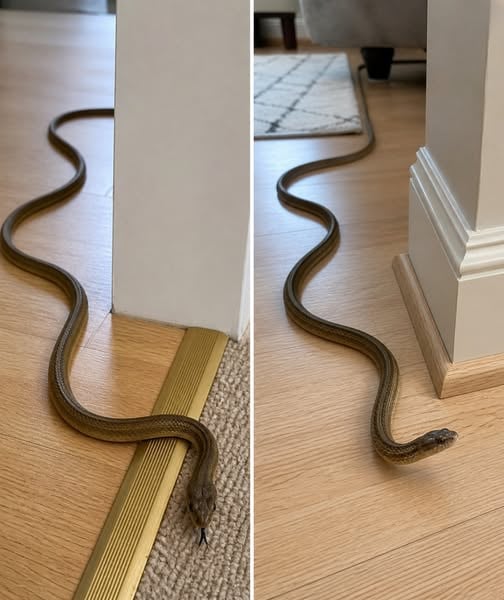
Of course, understanding why a snake entered does not make the experience less startling.
If you discover one indoors, experts recommend staying calm and creating distance immediately. Keep children and pets away from the area and avoid attempting to catch, corner, or handle the animal yourself. Even nonvenomous snakes may bite when frightened or trapped.
Instead, close off the room if possible and contact animal control, wildlife removal professionals, or local authorities trained to handle wildlife safely.
Experts also caution against trying to identify a snake by yourself from close range. Many species can look similar, and approaching an unfamiliar animal increases unnecessary risk.
Once the snake has been safely removed, prevention becomes the priority.
Homeowners are encouraged to inspect foundations, seal gaps and cracks, repair damaged screens, trim vegetation around the house, remove outdoor debris piles, and address any rodent activity. Reducing clutter inside storage areas can also eliminate attractive hiding spots.
These simple steps dramatically reduce the chances of future encounters.
The truth is that snakes are not usually looking for confrontation.
Most would rather avoid humans entirely.
They enter homes because conditions accidentally make those homes appealing. Change those conditions, and most snakes will move elsewhere in search of easier shelter.
In the end, the goal is not fear.
It is awareness.
You cannot prevent snakes from existing in the environment around you, but you can make your home far less inviting to them.
And sometimes the most effective solution is not reacting with panic when one appears — but understanding why it arrived in the first place.
Have you ever encountered a snake in or around your home? Share your experience and safety tips respectfully in the comments below.