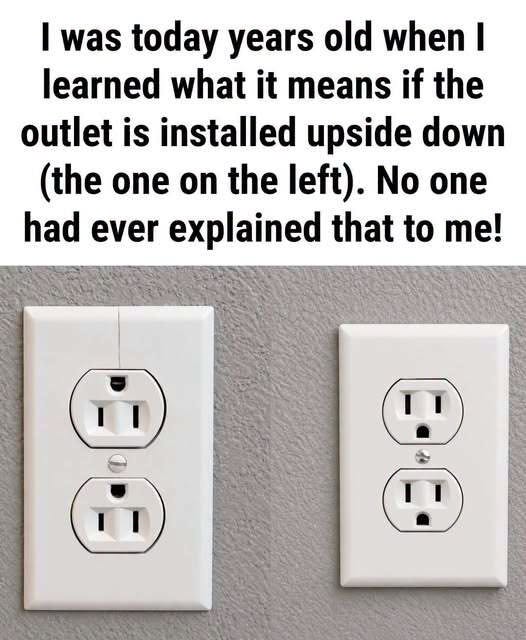
This arrangement allows a homeowner to connect a lamp to the switched portion while using the other receptacle for devices that need constant power, such as clocks or chargers.
In some cases, electricians may install an outlet upside down as a visual reminder that it has a different function from nearby outlets. This can make it easier to identify a switched receptacle without having to test it every time.
However, outlet orientation is not a universal indicator of how the receptacle is wired. Electrical installation practices can vary depending on the electrician, local conventions, building design, and homeowner preferences. An upside-down outlet may simply reflect an installer’s preferred method rather than a specific electrical configuration.
The most reliable way to determine how an outlet works is to test it safely. For example, you can plug in a lamp and check whether nearby wall switches affect its power. If you’re unsure about the wiring or notice anything unusual, it’s best to have a qualified electrician inspect it rather than attempting to modify the outlet yourself.
So, the next time you see an outlet installed in an unusual position, don’t automatically assume it was installed incorrectly. It may simply be the result of a practical wiring decision, an older electrical design, or the personal preference of the person who installed it.
What looks unusual can sometimes have a perfectly reasonable explanation.