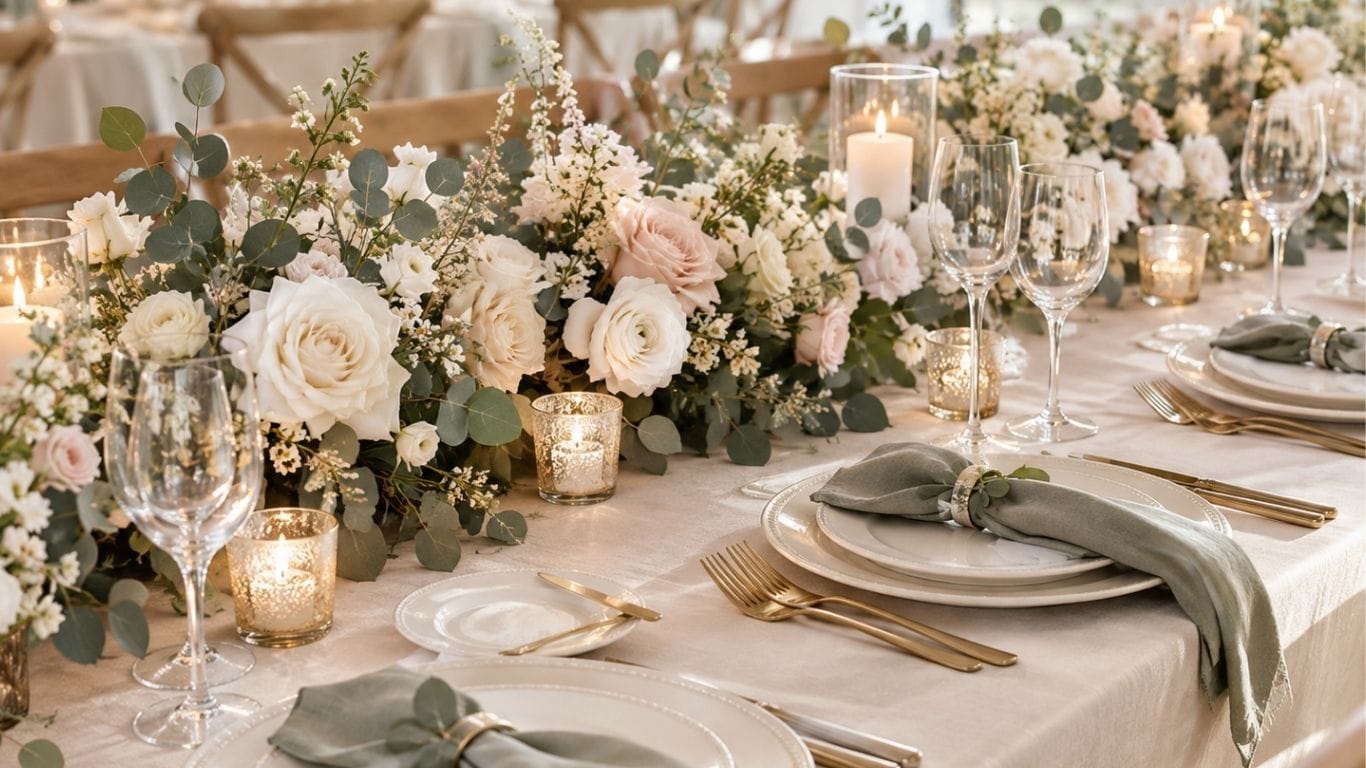
For a more relaxed reception, use two smaller floral arrangements instead of one large piece. Placing them about 24 inches apart leaves space for plates, glasses, and shared dishes while still giving the table a romantic rhythm. Blush tones pair especially well with oak, whitewashed wood, champagne gold, and warm beige.
2. Gold Place Settings With a Candlelit Glow
At an evening reception, candlelight can make a table feel warmer as the room lighting softens. Place three or five small glass votives between floral arrangements, leaving about 8 inches between each candle. Ivory plates, brushed gold flatware, and clear wine glasses create a classic look without making the metallic details feel too shiny.
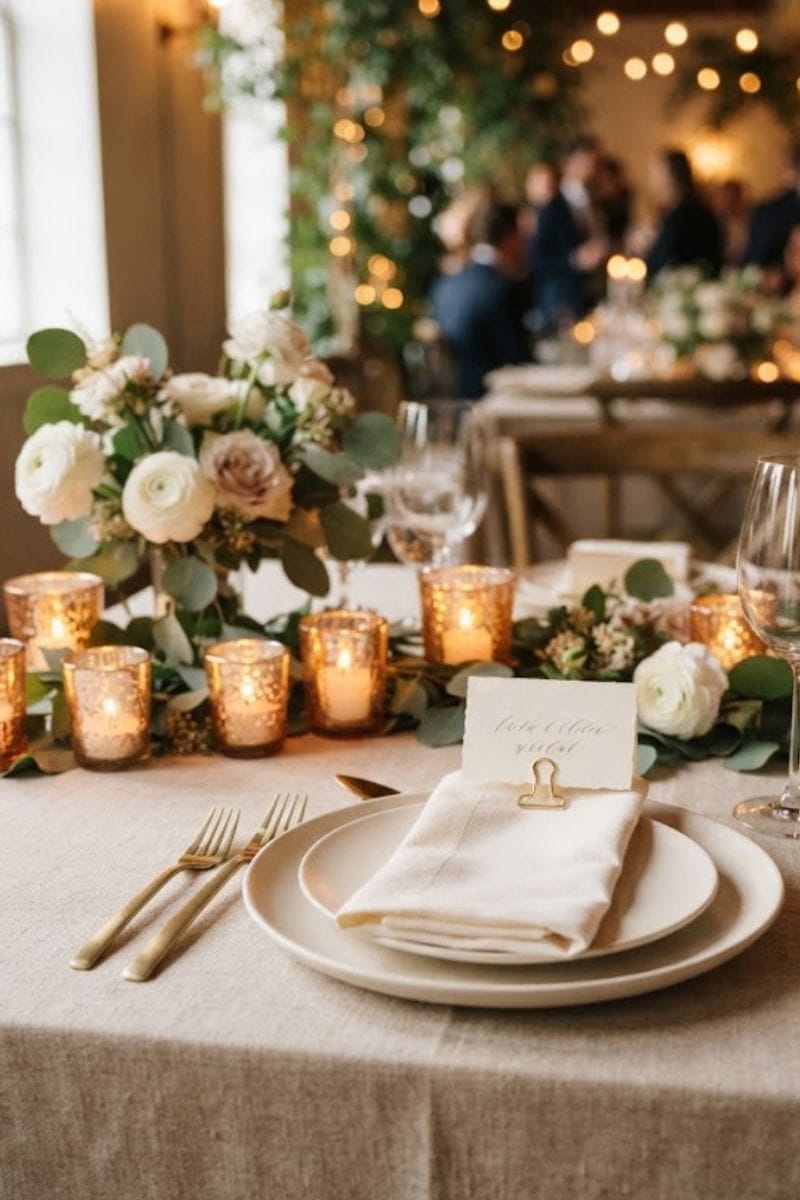
A folded ivory napkin beside each plate keeps the setting tidy, while a cream place card adds a personal note. If the venue does not allow open flames, warm-white LED candles are a practical alternative. Where real candles are permitted, choose enclosed glass holders to keep flames protected throughout dinner.
3. A Narrow Greenery Runner for Natural Texture
Fresh greenery is one of the easiest ways to create a natural reception table, especially for outdoor or garden weddings. Instead of a large floral centerpiece, run eucalyptus, olive branches, or ruscus down the center of a rectangular table.
Keep the greenery around 6 to 8 inches wide so it feels lush but does not take over the eating area. Add small white flowers every 18 to 24 inches for softness, then include white taper candles in simple brass holders for height and balance.
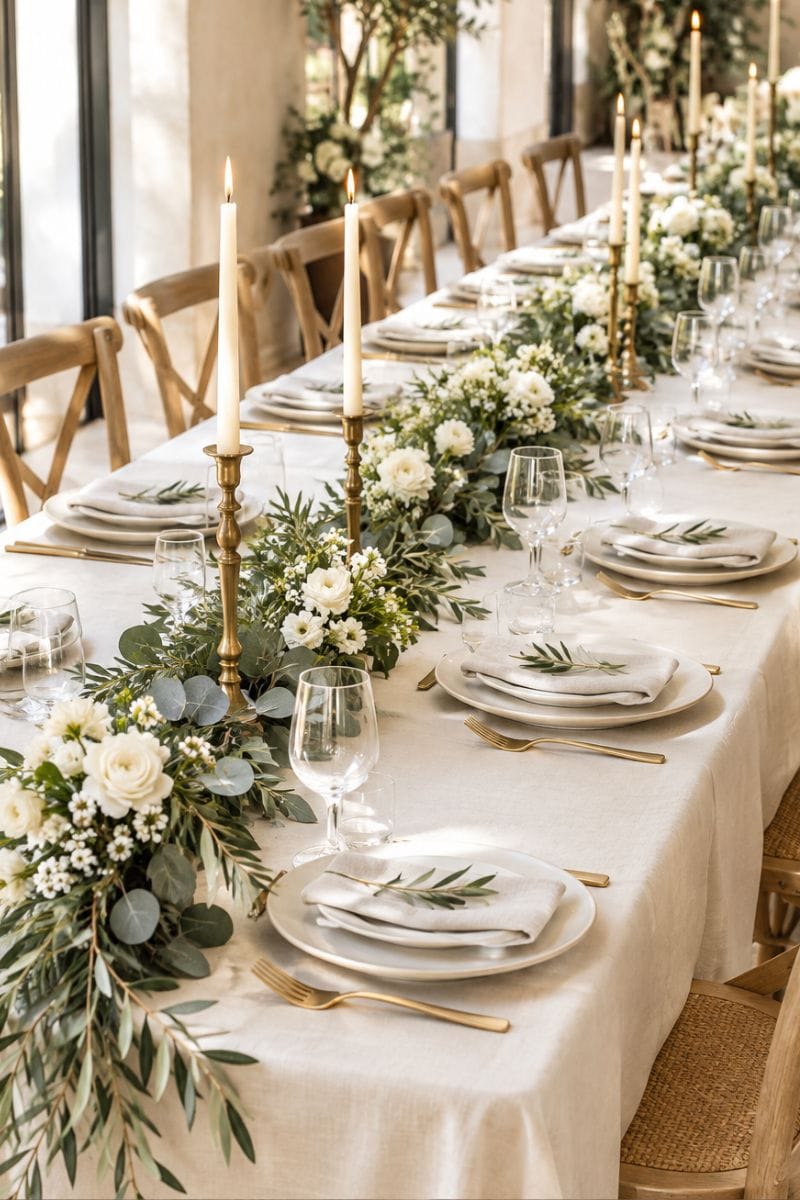
An oatmeal or warm ivory linen tablecloth works well beneath greenery because it lets the leaves remain the main feature. If the venue already has wood tables or chairs, this style feels especially cohesive with cream napkins, woven details, and light oak tones.
4. Vintage-Inspired Glassware With Subtle Color
Colored glassware can add personality without requiring large decorations. Pale amber, dusty rose, smoky gray, and soft sage glasses all bring gentle color while keeping the table visually light. Pair them with clear dinner plates and simple ivory napkins so the glassware becomes the detail guests notice.
For a vintage-inspired look, mix glass shapes within the same color family. A pale amber water glass, a taller champagne glass, and a clear wine glass can sit together beautifully if the rest of the setting stays simple.
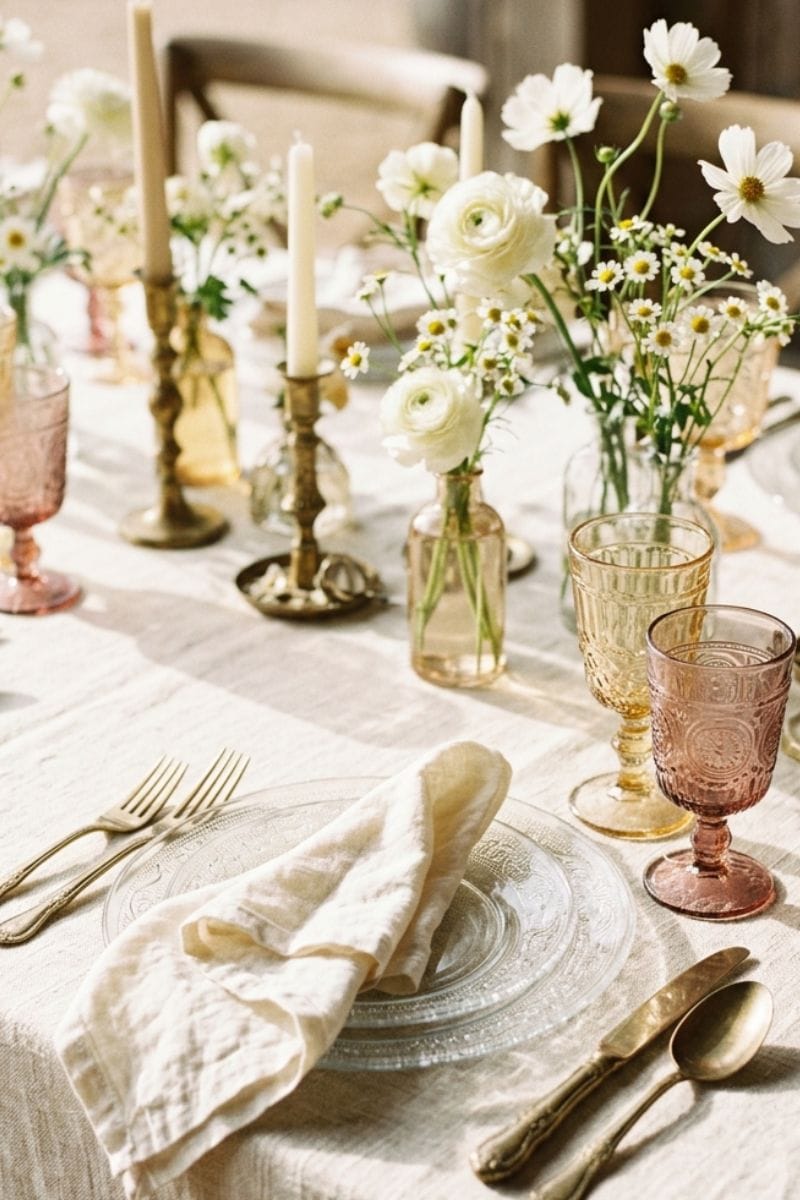
A cream tablecloth and antique brass flatware add warmth. In a venue with traditional architecture, this approach also works well near botanical art or classic framed pieces, as long as the surrounding decor does not compete with the table.
5. White and Green for a Clean, Minimal Table
Minimal wedding table decor is a strong choice when the venue already has dramatic architecture, beautiful views, or detailed interiors. Begin with a crisp white tablecloth, ivory plates, clear glasses, and white linen napkins. Then add small arrangements of white roses, baby’s breath, or hydrangeas with a few eucalyptus stems.
Keep each centerpiece about 10 to 12 inches wide and repeat several small arrangements down the table rather than using one oversized display. Matte white ceramic vessels help the flowers feel soft and natural rather than overly formal.
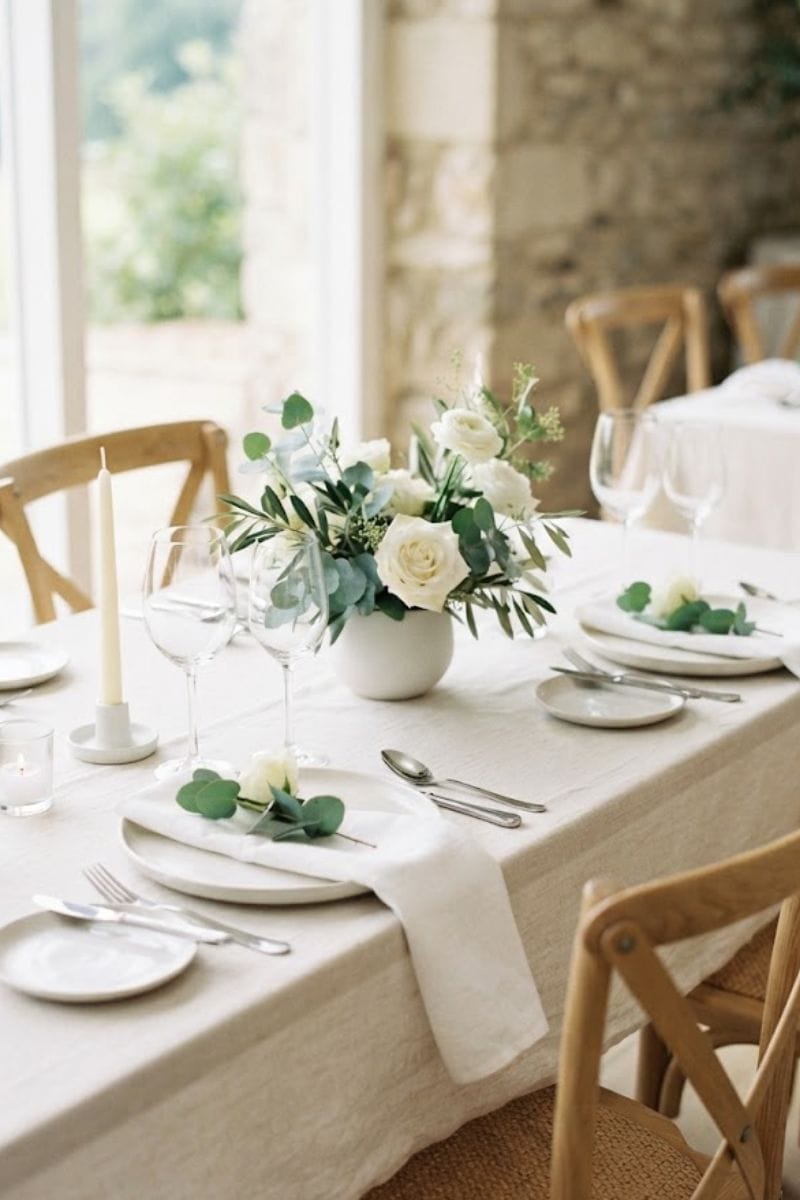
This pared-back style also photographs well because there are fewer competing colors. The couple, food, florals, and table details can remain the focus.
6. Rustic Wood, Linen, and Simple Green Sprigs
For a barn, countryside, or backyard reception, rustic decor works best when the materials stay honest and simple. Leave a solid wood table uncovered, then add oatmeal linen napkins, cream plates, and small ceramic vases.
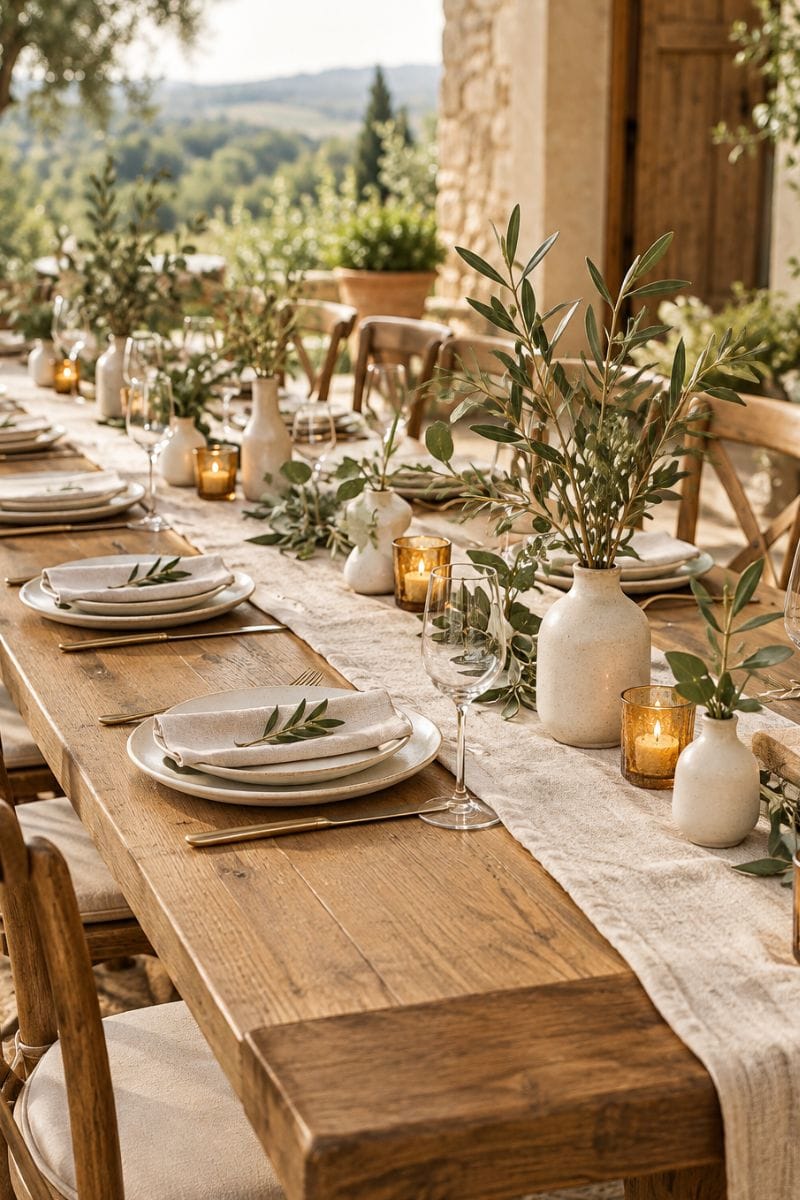
Sprigs of olive, rosemary, or eucalyptus can give the table an organic finish without turning the design into a theme. Instead of a full tablecloth, try a narrow linen runner about 10 inches wide down the center. Amber glass votives placed every 18 inches add a warm glow for the evening.
Wooden charger plates can also work well with simple white dinnerware. The key is to keep some wood visible, since a rustic table loses much of its character when it is completely covered with fabric and accessories.
7. Rows of Taper Candles for Height Without Bulk
Tall taper candles create a sense of height and romance without needing oversized flowers. Place ivory or white taper candles in slim brass holders along the table’s centerline, spacing the holders about 10 to 14 inches apart. The result is a continuous glow that still leaves room for the meal.
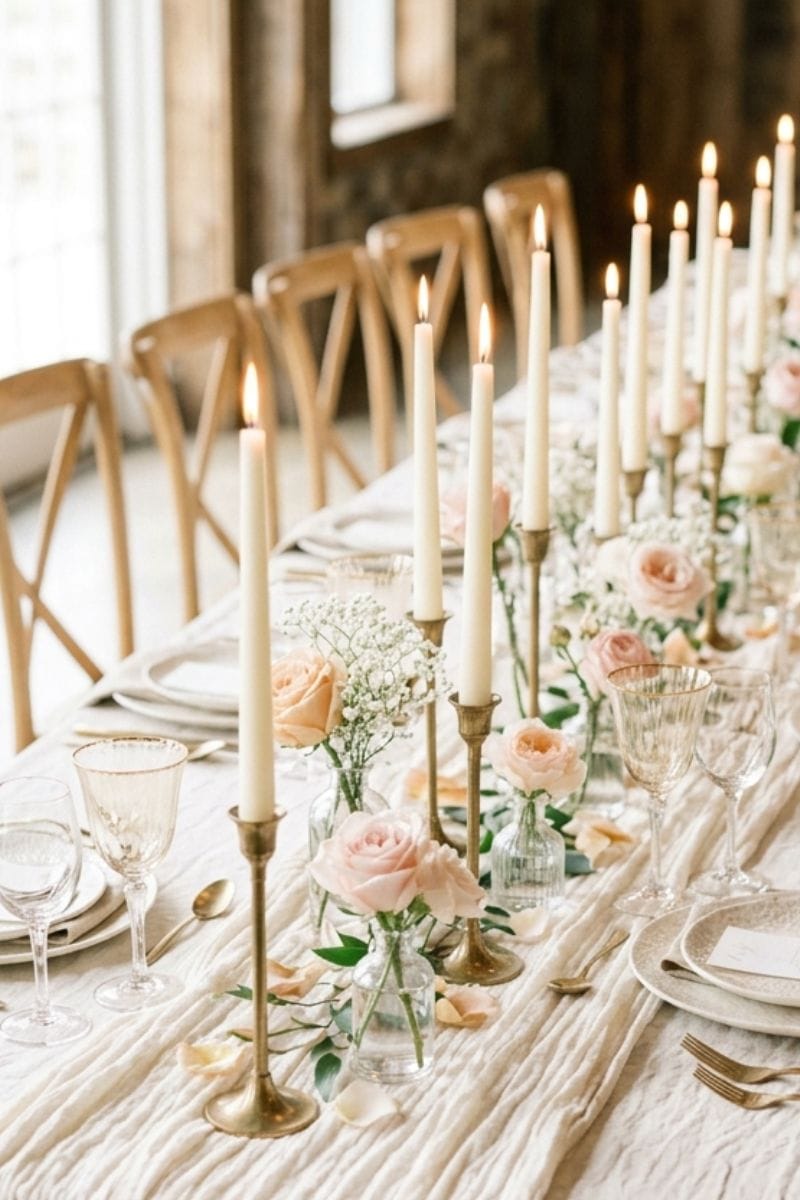
Between the candles, add small bud vases with one or two flowers in each. White ranunculus, blush roses, and baby’s breath work well because their scale keeps the table open. A champagne or cream linen base adds warmth to the brass and candlelight.
On long tables, repeat this arrangement in sections rather than building one large centerpiece in the middle. That way, guests at both ends of the table get the same visual experience.
8. Place Cards That Add Meaning Without Clutter
Personalized place cards can make a reception table feel thoughtful while still staying practical. Folded cream cardstock with each guest’s name in dark brown or muted sage is easy to read and fits many wedding palettes.
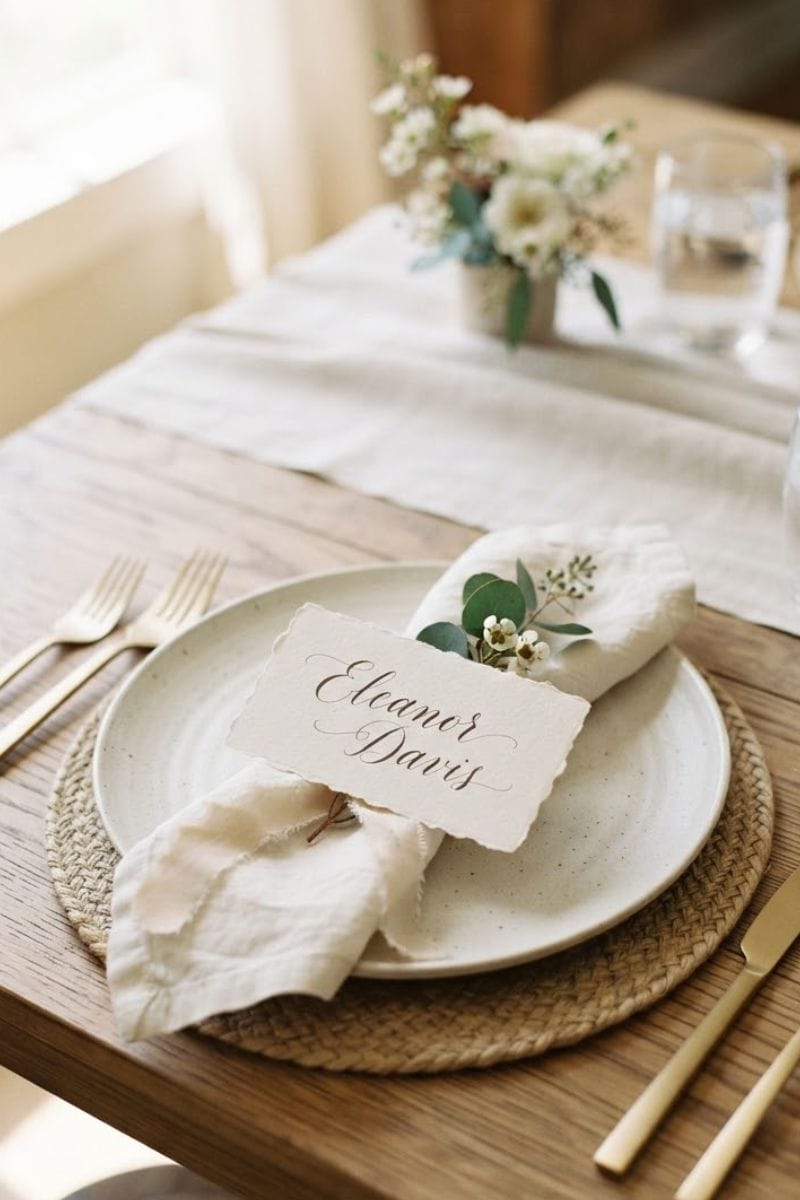
Place each card above the napkin or at the upper-left side of the place setting. For a softer handmade look, choose deckled cardstock with simple serif lettering. Another option is a small 2-inch oval tag tied to a linen napkin with thin cotton ribbon.
Keep the lettering dark enough to read in low reception lighting. A small white flower or a single eucalyptus stem beside the card adds a finished detail without crowding the plate.
9. Fruit and Flowers for a Seasonal Centerpiece
Fresh fruit can bring color and an unexpected detail to summer, garden, or vineyard receptions. Use a low stone or ceramic bowl filled with lemons, pears, figs, or small peaches, then tuck white or blush flowers between the fruit.
The arrangement should stay low and wide so guests can still see across the table. For summer, lemons with white roses and olive branches create a Mediterranean feel. For early fall, pears with cream roses, eucalyptus, and warm beige linens create a softer seasonal palette.
Choose one main fruit color and repeat it in small ways instead of mixing too many shades. A controlled palette keeps the centerpiece elegant rather than making it look like a produce display. Natural stone or aged ceramic vessels add more depth than a shiny container.
10. A Garden-Party Table With Collected Details
A garden-party table brings several elegant details together in a relaxed way. Start with a soft sage tablecloth, ivory plates, clear ribbed glasses, natural linen napkins, and small arrangements of white flowers with leafy greenery.
Use low vintage-style ceramic vessels so the setting feels collected rather than perfectly matched. Add two or three brass candle holders between the floral arrangements, keeping the tallest candles around 12 inches high. Woven chargers or natural rattan accents can add texture beneath the plates.
A small menu card at each place setting gives the table a more finished event feel. This style also works well for a smaller wedding breakfast or bridal celebration, especially when paired with a simple drinks or dessert table nearby.
How to Keep Wedding Table Decor Elegant and Usable
The best wedding tables do not need decoration on every inch. A thoughtful mix of flowers, candlelight, linen, glass, and one or two personal touches is usually enough to make the setting feel complete while leaving room for dinner and conversation.
Let the venue guide the design. A wood table suits greenery and linen. A classic ballroom works well with ivory flowers and brass. An outdoor garden reception feels natural with soft colors, ceramic vessels, and fresh foliage.
What colors work best for wedding table decor?
Ivory, blush, sage, champagne, soft peach, dusty blue, and warm beige all work well. Choose two or three main colors and repeat them through flowers, linens, glassware, or place cards.
How tall should wedding centerpieces be?
Low centerpieces are usually better for conversation. Floral arrangements around 8 to 12 inches high work well for seated tables. Taller candle arrangements need careful spacing so they do not interrupt sightlines.
How do you stop a wedding table from looking crowded?
Keep clear space around each place setting and make the centerpiece narrow. Tables need room for plates, glasses, cutlery, napkins, and serving dishes. A few larger, well-placed details often look better than many tiny decorations.
Should every reception table look exactly the same?
No. Repeating the same colors, flowers, vessels, or candle style creates a consistent look while allowing small variations between tables. The reception can feel coordinated without every table appearing copied.