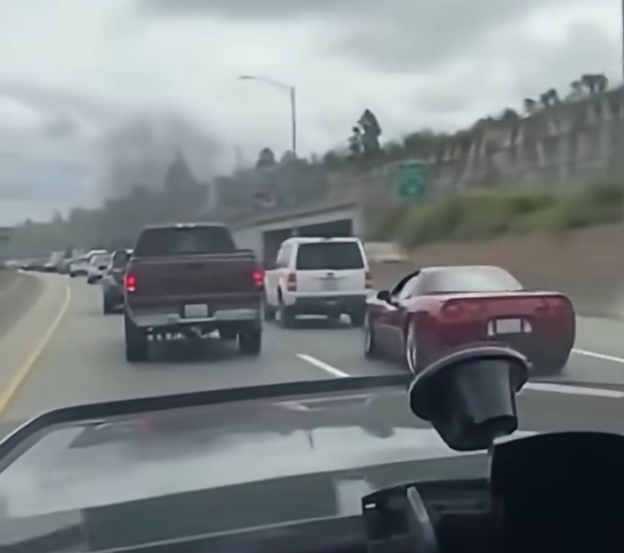
Such reactions rarely improve the situation.
A motorist who receives an insulting gesture may interpret it as a personal challenge. If that person responds with anger, a minor disagreement can develop into a confrontation between two strangers.
The problem is that neither driver knows how the other person might react. What seems like a harmless expression of annoyance to one motorist could provoke a much stronger response from someone else.
That is why it is worth thinking before reacting. A gesture takes only a moment, but its consequences can last much longer.
Why Road Rage Is Not Worth the Risk
Feeling frustrated while driving does not automatically make someone an aggressive motorist. Most people experience irritation on the road occasionally.
The important issue is how they manage that feeling.
Road rage becomes particularly dangerous when anger influences driving decisions. Examples include following another vehicle too closely, deliberately blocking someone, making threatening gestures, or attempting to continue an argument while driving.
These behaviors can put drivers, passengers, pedestrians, and cyclists at risk.
Vehicles are powerful machines, and even a brief lapse in judgment can have serious consequences. When a driver becomes focused on an argument, attention may shift away from traffic conditions and potential hazards.
No disagreement is worth creating that kind of risk.
A rude gesture might hurt someone’s pride, but responding aggressively can turn a temporary annoyance into a much more serious incident. Remaining calm is not a sign of weakness. It is a sensible way to protect everyone sharing the road.
Different Vehicles, the Same Responsibility
A Chevrolet Corvette and a pickup truck may look very different, but their drivers share the same responsibilities on public roads.
The Corvette is known for its sports-car performance and distinctive design. Pickup trucks are commonly used for everyday transportation, carrying equipment, and work that requires additional cargo space.
However, the type of vehicle someone drives does not determine their personality or how responsibly they behave.
Owning a sports car does not give someone special privileges on the road. Driving a larger vehicle does not give anyone the right to intimidate other motorists.
Every driver must follow traffic laws, remain aware of their surroundings, and make decisions that protect others.
It is also important to avoid stereotypes. A vehicle alone cannot tell us whether its driver is impatient, considerate, experienced, or aggressive. The best approach is to judge driving behavior rather than make assumptions about the person behind the wheel.
When another motorist behaves unpredictably, leaving sufficient space and avoiding confrontation are usually safer choices.
Why Having the Last Word Is Not Important
People sometimes feel compelled to respond when they believe someone has disrespected them. They may worry that ignoring an insult makes them appear weak or that failing to respond means accepting blame.
On the road, however, this way of thinking can create unnecessary danger.
Driving is not a competition, and there is no reward for winning an argument with a stranger. Responding to an offensive gesture with another one rarely resolves anything.
The other driver may have misunderstood what happened, may be having a difficult day, or may simply be behaving badly. Whatever the explanation, a confrontation is unlikely to improve the situation.
Choosing not to respond can prevent a disagreement from escalating.
This does not mean drivers should ignore genuine safety threats. If another motorist creates a dangerous situation, it is appropriate to take reasonable steps to protect yourself and contact the authorities when necessary.
There is an important difference between responding responsibly to a threat and engaging in an angry exchange.
Sometimes, the best decision is to create distance, keep your attention on the road, and continue your journey.
Practical Ways to Handle an Aggressive Driver
When another motorist behaves aggressively, a calm response can help reduce the risk of further conflict.
1. Avoid returning offensive gestures.
Responding with another insult may encourage the other driver to continue the confrontation. Keep your hands on the wheel and your attention on driving.
2. Maintain a safe distance.
If another vehicle is following too closely or behaving unpredictably, leave space whenever traffic conditions allow. Avoid sudden maneuvers or attempts to block the other driver.
3. Do not compete for position.
Racing to get ahead, deliberately slowing down, or preventing another vehicle from passing can make a dangerous situation worse. Allowing an aggressive driver to move away may be the simplest way to reduce tension.
4. Stay focused on the road.
Avoid prolonged staring, shouting, or communicating through gestures. Pay attention to surrounding traffic, pedestrians, intersections, and possible hazards.
5. Seek help if you feel threatened.
If another driver appears to be following or threatening you, do not stop in an isolated location or get out to argue. When it is safe, move toward a populated public place and contact local authorities if you believe you are in danger.
These steps cannot guarantee that every encounter will end peacefully, but they can help prevent an already uncomfortable situation from becoming more serious.
Patience Is an Important Driving Skill
Driving skills are often measured by a person’s ability to steer, brake, park, and understand traffic signs. These abilities are essential, but emotional control also plays an important role in road safety.
A patient driver understands that not every inconvenience requires a reaction.
A vehicle may merge slowly. A traffic light may take longer than expected. The driver ahead may stop because they have noticed a pedestrian or another hazard.
Getting angry does not make traffic move faster. It does not undo another driver’s mistake or guarantee that the situation will improve.
In many cases, patience allows a frustrating moment to pass without creating another problem.
It also matters to passengers. Children, friends, and family members may feel uncomfortable when someone behind the wheel begins shouting or driving aggressively. Remaining calm helps make the journey safer and more pleasant for everyone.
Younger drivers can also learn from these examples. Demonstrating patience and responsible behavior helps establish habits that may stay with them throughout their driving lives.
Like other driving skills, emotional control can improve with practice.
A Simple Reminder for Every Motorist
The reported encounter between the Corvette driver and the pickup truck driver highlights an issue that affects people who use public roads every day.
Drivers come from different backgrounds and may be dealing with personal challenges that other motorists cannot see. A brief interaction does not provide enough information to judge someone’s entire character or intentions.
That is why restraint matters.
Drivers do not have to approve of unsafe or disrespectful behavior. They simply need to recognize that responding with hostility often makes a difficult situation harder to manage.
The next time another motorist makes a mistake or behaves disrespectfully, it may help to remember what is actually important.
A few seconds of anger are not worth risking a safe journey. An insult does not need to become an argument, and a disagreement does not need to follow anyone home.
The best outcome is often the simplest: both drivers continue on their way without further conflict.
The Takeaway: Safety Matters More Than Winning an Argument
The story involving the Corvette and pickup truck drivers is a reminder that actions behind the wheel can have consequences beyond the moment in which they occur.
Although the exact circumstances of the encounter remain unclear, it offers a useful lesson about managing frustration while driving.
Would an offensive gesture solve anything? Would an angry response make the journey safer? In most situations, neither is likely to help.
Driving requires good judgment as well as technical ability. It means staying attentive, allowing room for other people’s mistakes, and resisting the temptation to turn every disagreement into a personal contest.
When frustration begins to build behind the wheel, take a breath, maintain a safe distance, and focus on reaching your destination.
You may never know why another driver behaved the way they did, and you do not need to settle the matter before continuing your journey.
Ultimately, the most important thing on the road is not having the last word. It is making sure everyone has the opportunity to arrive safely.