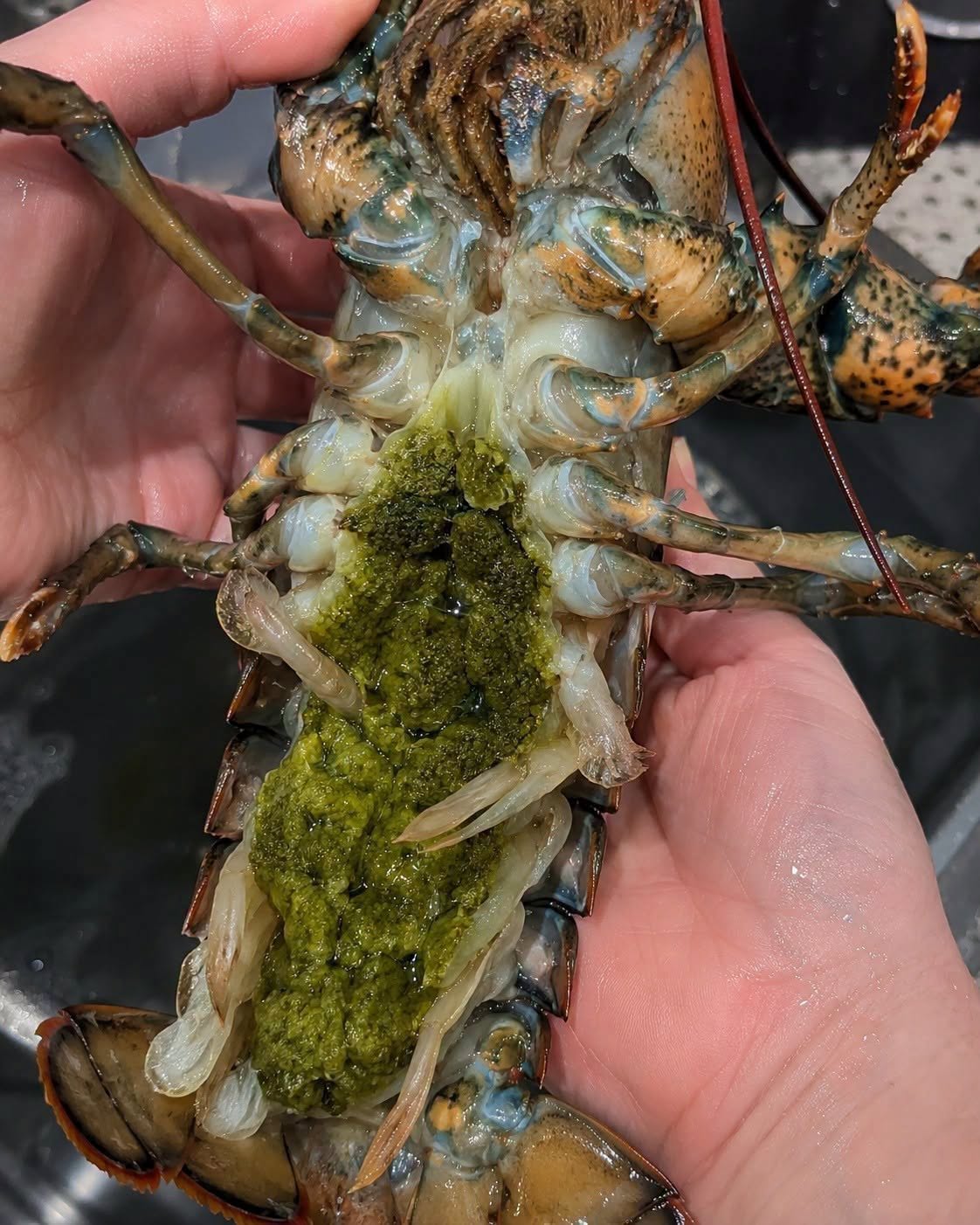
Why Do Some People Eat Lobster Tomalley?
In some seafood traditions, tomalley is valued for its rich texture and distinctive ocean flavor. People who enjoy it may spread a small amount on toast, incorporate it into seafood sauces, or mix it into dishes to add depth.
Others prefer to remove it because of its strong taste or unusual texture. Both preferences are common, and eating tomalley is not necessary to enjoy lobster.
Its popularity as a culinary ingredient, however, does not automatically mean it is safe to consume in every circumstance.
Is Lobster Tomalley Safe to Eat?
Food safety is the main reason for caution. Tomalley can accumulate environmental contaminants, including certain heavy metals and other harmful substances. It may also contain marine biotoxins associated with harmful algal blooms.
The level of risk can vary depending on where the lobster was harvested and the environmental conditions in those waters. Cooking does not reliably eliminate every type of marine biotoxin, so preparing the lobster thoroughly does not guarantee that its tomalley is safe.
For this reason, seafood safety authorities have issued warnings about consuming lobster tomalley in certain regions or during particular periods. Local advisories may recommend avoiding it altogether when contamination or toxin concerns arise.
How Can You Make a More Informed Choice?
If you enjoy lobster, a few practical precautions can help you make a more informed decision:
- Check local seafood advisories: Look for current guidance from the food safety authority responsible for the area where the lobster was harvested.
- Know the source: Buy seafood from reputable sellers who follow applicable harvesting and food safety requirements.
- Pay attention to warnings: Avoid tomalley when local authorities advise against eating it, even if the lobster meat itself is considered suitable for consumption.
- Remember that appearance is not a safety test: A normal color or fresh smell cannot confirm that tomalley is free from contaminants or marine toxins.
If you are unsure about the safety of tomalley from a particular source, the more cautious option is to leave it uneaten and enjoy the lobster meat instead.
Can You Enjoy Lobster Without Eating Tomalley?
Absolutely. Lobster meat remains the main attraction in many seafood dishes and can be prepared in a variety of ways, including steaming, grilling, baking, or serving it chilled.
Removing the green digestive material is a personal choice that allows diners to enjoy the rest of the lobster without consuming tomalley. Restaurants and recipes may also omit it entirely.
For anyone who wants to explore lobster’s flavor without taking unnecessary food safety risks, focusing on the meat is a straightforward alternative.
The Bottom Line
The green substance inside a lobster is called tomalley, a natural digestive organ that some people enjoy for its rich flavor and creamy texture. However, it can accumulate contaminants and may contain harmful marine toxins, making food safety guidance important.
Whether to eat tomalley is ultimately a personal decision informed by local advisories and the source of the seafood. When safety information is uncertain, avoiding the tomalley is the more cautious choice. Understanding what it is and why health authorities sometimes recommend avoiding it can help you enjoy seafood with greater confidence.