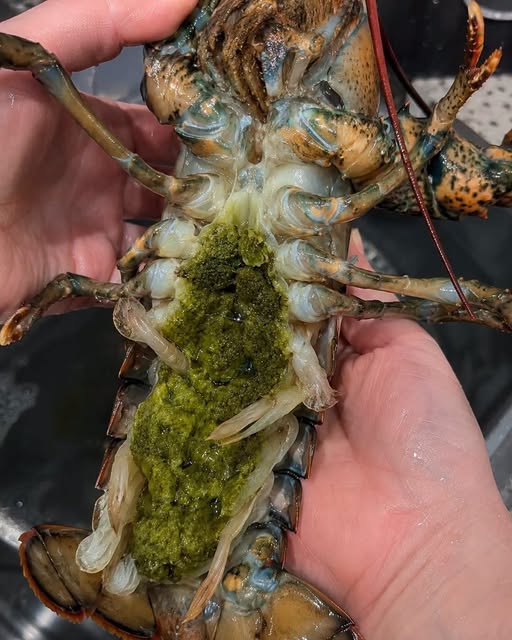
Why Do Some People Eat It?
For people who enjoy it, tomalley has a rich, concentrated seafood flavor and a creamy consistency. It may be eaten directly with the lobster meat or incorporated into dishes such as sauces, soups, and seafood spreads.
However, enjoying tomalley is entirely a matter of personal preference. Some diners prefer to remove it because of its appearance, texture, or concerns about consuming the digestive organ.
Are There Any Safety Concerns?
There is an important reason to be cautious with lobster tomalley.
Because the digestive gland can accumulate certain contaminants from the marine environment, food-safety authorities have issued warnings about eating lobster tomalley from some areas, particularly when harmful algal blooms or elevated marine toxins are a concern.
Safety guidance can vary depending on where the lobster was harvested and current local conditions. For that reason, it is a good idea to check official seafood advisories for the area where the lobster was caught.
Should You Eat It?
There is no requirement to eat tomalley. If you enjoy it and local food-safety guidance does not advise against consuming it, you may choose to include it as part of your meal.
If you are uncertain about the source of the lobster or there is an active advisory concerning seafood from that area, the safest choice is to follow the guidance of local health or food-safety authorities.
A Surprisingly Interesting Part of the Lobster
The green substance inside a lobster may look unusual, but it is a natural part of the animal’s anatomy rather than a mysterious ingredient.
Whether you consider tomalley a delicacy or prefer to leave it behind, understanding what it is—and paying attention to local seafood safety advice—can help you make an informed choice at the dinner table.