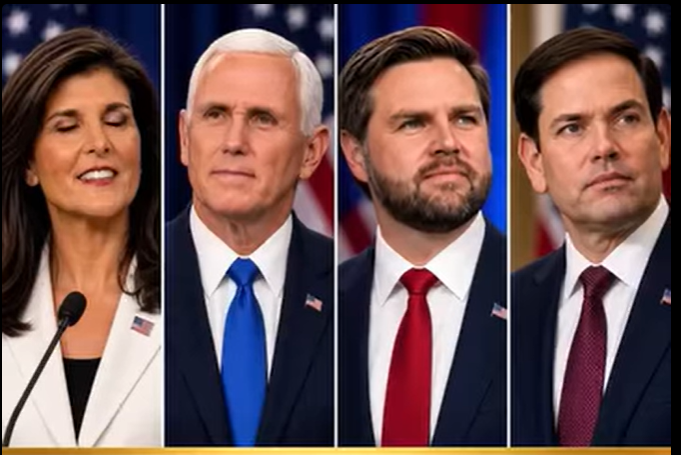
The survey suggests that Vance and Rubio were among the most frequently selected options at the time of polling, although the preferences of Republican voters may change considerably before the 2028 nomination process.
Democratic Voters Show Greater Uncertainty About 2028
The same survey also examined early presidential preferences among Democratic primary voters.
A substantial 45% said they did not know whom they would support.
Former Vice President Kamala Harris received 12%, making her the most frequently selected named candidate.
California Governor Gavin Newsom followed with 9%.
Former Transportation Secretary Pete Buttigieg received 7%, while New York Congresswoman Alexandria Ocasio-Cortez attracted 6%.
Georgia Senator Jon Ossoff received 4%, and Arizona Senator Mark Kelly received 3%.
Another 15% volunteered candidates outside the listed options.
These findings indicate that a large proportion of surveyed Democratic voters had not settled on a preferred candidate.
However, early polling should not be treated as a prediction of the eventual nominees or general election outcome.
What Issues Could Shape the 2028 Presidential Election?
Although the next presidential election is still two years away, several major policy areas are already part of national political discussions.
Housing affordability remains an important concern for Americans facing high home prices, rental costs, and mortgage expenses.
Immigration policy continues to generate debate over border enforcement, employment visas, and the economic effects of migration.
Energy infrastructure, artificial intelligence development, federal spending, and taxation are also likely to feature in discussions among prospective candidates.
Fishback’s previous campaign focused on several of these issues, particularly housing costs, immigration restrictions, and opposition to large data centers.
Other potential candidates may approach the same subjects differently, reflecting the competing priorities within their parties.
Questions Remain About Fishback’s Eligibility and Campaign Plans
In addition to questions about whether Fishback will formally enter the race, his age has attracted attention.
The U.S. Constitution requires a president to be at least 35 years old.
Fishback was reported to have been born in January 1995, which would make him 34 on Inauguration Day in January 2029 if that date is accurate.
As a result, questions have emerged about whether he would meet the constitutional age requirement.
His exact eligibility would depend on verified biographical information and the applicable constitutional requirements.
Fishback has not yet publicly presented a complete presidential campaign organization or detailed national platform.
The Road to the 2028 Election
The next United States presidential election is scheduled for November 7, 2028.
Before then, both major parties will go through a nomination process involving prospective candidates, debates, campaigning, and primary elections.
Early opinion polls can provide useful information about current voter preferences, but they capture views at a particular moment.
Candidate announcements, economic developments, policy disagreements, and other events may influence those preferences during the next two years.
Fishback’s statements add another name to the discussion about the Republican Party’s political future.
For now, his plans remain at an early stage, while polling shows that many voters in both parties have yet to make firm decisions about the 2028 presidential race.