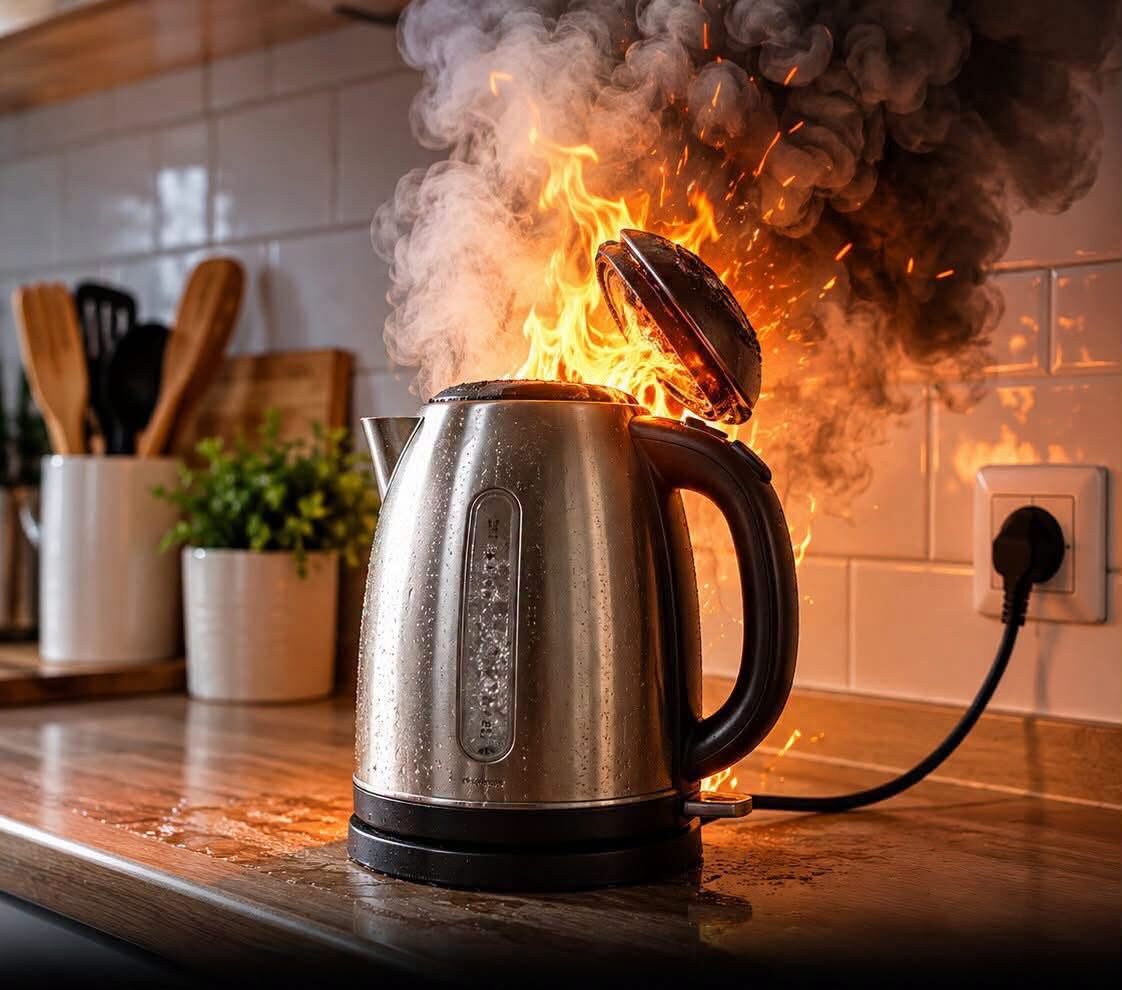
Heating an empty or nearly empty kettle can cause overheating and may damage its heating element or other components.
What to do instead: Always check the water level before turning the kettle on. Never operate it empty, and follow the manufacturer’s instructions for minimum filling levels.
3. Ignoring Limescale Buildup
If you live in an area with hard water, you may notice a white or chalky deposit forming inside your kettle. This is usually limescale, which develops when minerals in the water accumulate during heating.
Limescale is generally not considered a major health concern in ordinary drinking-water conditions, but heavy buildup can affect heating efficiency, create visible flakes in the water, and make the appliance harder to clean.
What to do instead: Descale the kettle regularly according to its instruction manual. Some manufacturers recommend using a suitable descaling product or a diluted vinegar solution, but you should only use methods approved for your specific model. Rinse the kettle thoroughly afterward.
4. Neglecting the Kettle’s Exterior and Electrical Base
Cleaning the inside of the kettle is important, but the outside and electrical connection also deserve attention. Water spilled onto the base or allowed to enter electrical components can create a safety hazard.
Using wet hands to handle the plug or leaving the appliance in a damp area can also increase the risk of electrical accidents.
What to do instead: Switch off and unplug the kettle before cleaning it, then allow it to cool. Wipe the exterior with a slightly damp cloth and keep the electrical base dry. Never immerse the kettle’s electrical base, plug, or cord in water unless the manufacturer explicitly specifies otherwise.
5. Repeatedly Reboiling Water Without Considering Your Needs
Many people boil a full kettle even when they only need one cup. Others repeatedly reboil water throughout the day without considering how much they actually use.
Reboiling water that is safe to drink is not automatically dangerous. However, repeatedly heating more water than necessary wastes electricity, and leaving water standing for long periods may affect its taste.
What to do instead: Measure the amount of water you need before switching on the kettle. If the remaining water has been standing for a long time, consider refreshing it according to your normal household practices and local drinking-water guidance.
A Few Simple Habits Can Help Your Kettle Last Longer
Electric kettles are generally straightforward appliances, but safe use depends on following the manufacturer’s instructions and keeping the appliance clean and in good condition.
Avoid overfilling, never operate the kettle without enough water, remove limescale when necessary, keep electrical components dry, and heat only the amount of water you need.
These small habits can help maintain your kettle’s performance and reduce avoidable risks in the kitchen. Most importantly, if you notice a damaged cord, a leaking body, unusual electrical behavior, or other signs of a fault, stop using the appliance until it has been checked or replaced.
A little care can go a long way toward making your everyday kitchen routine safer and more efficient.