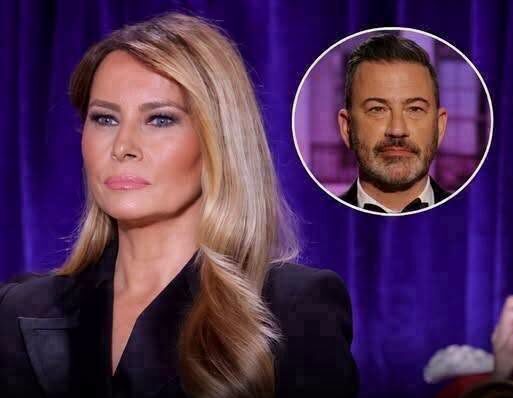
What Happened at the Dinner?
On April 25, gunfire was heard near the ballroom at the Washington Hilton while President Donald Trump, Melania Trump, Vice President JD Vance and other prominent officials were attending the dinner.
Secret Service agents immediately moved senior officials to safety. Attendees were ordered to take cover, and the event was abruptly interrupted. Authorities later identified a suspect and treated the incident as an attempted attack on the president.
The incident understandably changed the context in which many people viewed Kimmel’s earlier joke.
However, there is no evidence in the reporting cited here that Kimmel’s joke caused or motivated the attack. The joke occurred two days beforehand, and authorities’ investigation into the security incident is separate from the controversy surrounding the television segment.
Melania Trump Responds
On April 27, Melania Trump publicly criticized Kimmel and called on ABC to take action against him.
She described his comments as “hateful and violent rhetoric” and argued that the remarks contributed to an increasingly hostile political environment. She also called Kimmel a “coward” and said his comments about her family went beyond acceptable comedy.
Donald Trump also criticized Kimmel and called for him to be removed from ABC.
The dispute therefore quickly expanded beyond one joke and became part of the larger political argument over whether entertainment personalities should face consequences for controversial commentary about public officials.
Kimmel Defends the Joke
Kimmel rejected the suggestion that the joke was intended to encourage violence.
He explained that the routine was satire and that the remark was connected to his observations about Donald and Melania Trump’s age difference and public image. He also argued that comedians should not be held responsible for violent actions committed by other people.
That distinction is central to the debate.
Critics see the wording as unnecessarily provocative, particularly given the heightened security concerns surrounding the president. Supporters of Kimmel argue that political satire routinely uses exaggeration, dark humor and provocative language to comment on powerful figures.
Why the Controversy Became So Intense
The issue isn’t simply whether the joke was funny.
It sits at the intersection of comedy, political polarization, free expression and public safety.
A joke made in isolation might have generated a familiar cycle of criticism and online debate. But because an actual security emergency occurred shortly afterward at an event involving the people referenced in the joke, the comments acquired a much more serious emotional context.
That does not establish a causal connection.
It does, however, explain why the controversy became significantly larger than an ordinary late-night comedy dispute.
A Debate With No Easy Answer
Political comedians have long challenged presidents, politicians and other powerful figures. Satire can be deliberately uncomfortable, and restricting it simply because a powerful person finds it offensive raises legitimate free-expression concerns.
At the same time, critics argue that public figures and major broadcasters have a responsibility to consider how inflammatory language can be received in an increasingly polarized environment.
Those positions can coexist.
A person can defend Kimmel’s right to make the joke while still believing the joke was insensitive. Likewise, someone can strongly criticize the remark without claiming that comedy caused the later security incident.
The Bigger Picture
The Kimmel-Melania Trump dispute ultimately reflects a much broader tension in American public life.
Political disagreements increasingly spill across television, social media and entertainment. A single sentence can move from a late-night monologue to millions of social-media feeds within hours, where its original context may be lost.
In this case, chronology matters especially.
Kimmel made the controversial joke before the White House Correspondents’ Dinner security incident—not afterward.
The debate over whether the joke crossed a line is legitimate. But separating that question from the facts surrounding the later incident is equally important.
The controversy therefore remains less about proving that one caused the other and more about a difficult question facing modern political culture: How far should political comedy go when public discourse is already intensely divided?