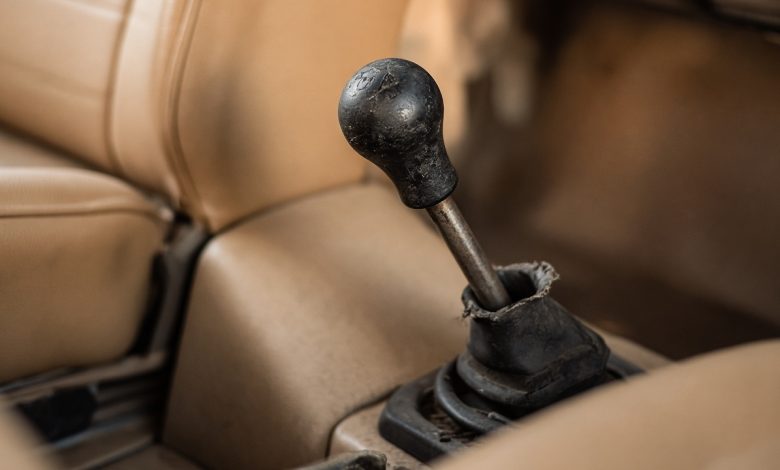
The purpose of a crawler gear is controlled, slow movement.
A lower gear ratio allows the engine to turn more times relative to the wheels. This creates greater torque multiplication at the wheels while the vehicle travels at a relatively low speed.
That can be useful when a vehicle needs to move carefully across difficult ground rather than travel quickly along an ordinary road.
Think about the difference between cruising on a highway and carefully negotiating a rough section of terrain. These situations require very different driving characteristics.
A normal road gear is designed for everyday movement at useful speeds. A crawler gear serves a more specialized purpose, helping the driver maintain slow progress when ordinary gearing may not be ideal.
The G position is therefore not about making the vehicle faster. It is about making certain types of low-speed movement more manageable.
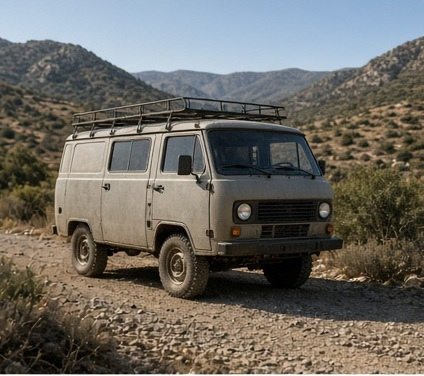
How Can Crawler Gearing Help Off-Road?
Driving over uneven surfaces can require careful control. Steep sections, loose ground, and rough tracks may make it difficult to maintain steady movement using ordinary road gearing.
A dedicated low gear can help the vehicle move at a slower pace while providing useful torque multiplication.
However, gearing alone cannot guarantee that a vehicle will successfully cross difficult terrain.
Other factors remain important, including:
- Tire grip: The tires must provide sufficient traction for the surface.
- Ground clearance: The vehicle needs enough space beneath it to avoid obstacles.
- Road conditions: Mud, loose stones, water, and steep gradients can change the level of difficulty.
- Vehicle condition: The gearbox, drivetrain, tires, and other components must be in suitable working condition.
- Driver judgment: Choosing an appropriate route and knowing when not to proceed are essential.
A crawler gear can provide a useful mechanical advantage, but it cannot make an unsuitable route safe.
Low-speed gearing can be useful in demanding terrain, but it does not replace careful driving or proper vehicle preparation.
Is the G Gear the Same as a Low-Range Transfer Case?
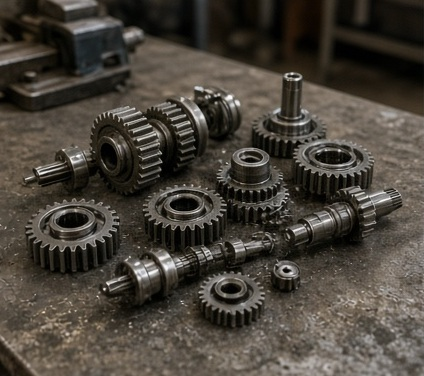
Not necessarily.
Different four-wheel-drive vehicles use different mechanical arrangements to achieve low-speed driving.
In some vehicles, low-range gearing is selected through a separate transfer case. In the documented T3 Syncro example, the G position is a special low gear within the gearbox arrangement.
These systems may serve related purposes, but they should not automatically be treated as identical.
There is another important distinction: a crawler gear is not the same thing as a differential lock.
A gear ratio affects the relationship between engine speed and wheel speed. A differential lock is a separate system that changes how wheel rotation is managed across an axle or drivetrain.
The two features can be relevant to off-road driving, but they perform different mechanical jobs.
Where Does the Word Gelände Come From?
The German word Gelände translates broadly as terrain, ground, or countryside, depending on context.
That meaning helps explain why it is associated with a specialized low gear intended for difficult surfaces.
Some online explanations also connect the marking to the history of military off-road vehicles and Mercedes-Benz designs. However, the available gearbox references establish the Volkswagen Syncro example more clearly than they establish that broader historical origin.
It is therefore better to separate the confirmed technical explanation from an origin story that requires additional historical evidence.
The word itself is a useful clue, but it does not prove where the particular gearbox design first appeared.
Why the Gear-Stick Photograph Can Be Misleading
An unusual gear pattern can reveal something interesting about a vehicle, but a photograph alone cannot establish every detail.
A shift knob may have been replaced, modified, or fitted to a different gearbox. Older vehicles may also have undergone repairs or drivetrain changes during their lifetime.
That means the marking on the knob should not be treated as definitive proof of the transmission installed underneath it.
If you are trying to identify a real vehicle, useful information includes its model year, gearbox code, drivetrain configuration, and maintenance history.
The original owner’s handbook or reliable technical documentation is a much better guide than an isolated photograph.
An old gear stick can provide useful clues, but the vehicle’s actual gearbox specifications are needed for reliable identification.
Should You Use the G Gear on an Unfamiliar Vehicle?
Never assume that a G marking has the same function across different makes and models.
Before operating an unfamiliar vehicle, check the correct handbook or ask someone qualified to explain the controls.
The operating conditions and selection procedure depend on the specific transmission. A general explanation of crawler gearing cannot tell you exactly when or how to select a particular gear.
If a control behaves unexpectedly, do not force it. Stop somewhere safe and seek appropriate assistance.
This is especially important with older vehicles, where wear, previous repairs, or modifications may affect how the transmission operates.
The Simple Answer Behind the G Gear Mystery
The unusual letter G is not a mysterious extra performance setting.
In the documented Volkswagen T3 Syncro gearbox example, it represents Gelände, meaning terrain, and identifies a specialized low crawler gear.
Its purpose is to support controlled, slow movement rather than increase highway speed.
That small marking reveals an interesting detail about how vehicles designed for demanding conditions can differ from ordinary road cars.
But the most important lesson is that gear markings are not universal. Always identify the actual transmission before assuming what an unfamiliar control does.