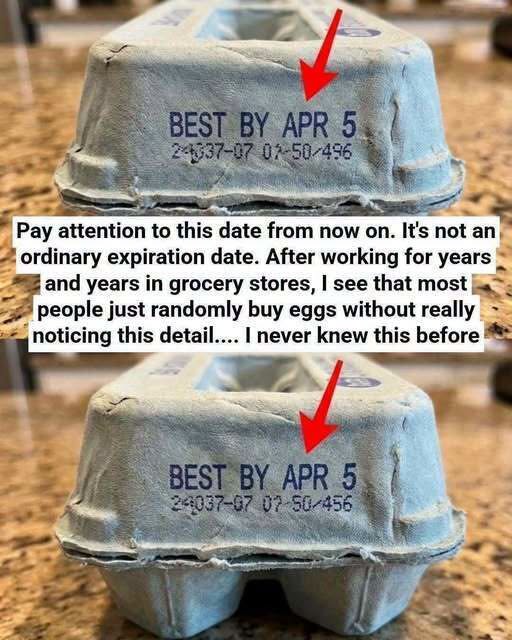
What Does the “P” Code Mean?
Some cartons also display a code beginning with the letter “P.” This identifies the plant where the eggs were processed or graded.
You may also find terms such as “Sell By,” “Best By,” or “Best Before.” These markings can serve different purposes. A sell-by date is primarily intended to help retailers manage inventory, while best-by dates generally relate more to quality than to a guarantee of safety.
How Long Do Eggs Last?
Proper refrigeration is one of the most important factors in maintaining egg quality and safety.
According to USDA guidance, raw shell eggs can generally be kept in the refrigerator for approximately three to five weeks. The refrigerator should be maintained at 40°F (4°C) or below.
For best results, keep eggs in their original carton and store them on an interior refrigerator shelf rather than in the refrigerator door, where temperatures can fluctuate more frequently.
Freshness Is Not the Same as Safety
An egg may look and smell normal and still contain harmful bacteria, including Salmonella. For that reason, appearance and smell should not be treated as reliable safety tests.
You may have also heard of the water float test. While this test can provide an indication of an egg’s age, it cannot determine whether the egg is safe to eat. Older eggs develop a larger air cell, which can cause them to float in water.
In other words, a floating egg is generally an older egg—not necessarily a spoiled or unsafe one.
Safe Handling Matters
How eggs are handled can be just as important as the date printed on the carton.
Keep eggs refrigerated and avoid using eggs with cracked or heavily contaminated shells. After handling raw eggs, wash your hands, utensils, countertops, and other surfaces that may have come into contact with them.
These simple steps can help reduce the risk of cross-contamination.
Cook Eggs Thoroughly
For safer preparation, FDA guidance recommends cooking eggs until both the whites and yolks are firm.
Egg-containing dishes should also be refrigerated promptly after cooking. Cooked egg dishes generally keep for around three to four days in the refrigerator, while hard-cooked eggs can generally be refrigerated for about one week.
The Bottom Line
The numbers on an egg carton can provide useful information, but they are only one part of determining how eggs should be handled.
The most important habits are straightforward:
- Keep eggs refrigerated at 40°F (4°C) or below.
- Pay attention to carton dates and codes, but don’t rely on them alone to determine safety.
- Avoid using eggs with badly cracked or heavily contaminated shells.
- Prevent cross-contamination when handling raw eggs.
- Cook eggs thoroughly.
- Refrigerate cooked egg dishes and leftovers promptly.
Understanding carton codes can help you manage the eggs in your refrigerator more effectively. But when it comes to food safety, proper storage and handling are more important than any single number printed on the carton.